Have you ever watched a robot hand a wrench to a human and thought, “This looks like the beginning of either a great partnership or a really bad buddy comedy”?
Automation + CNC In 2026: The New Hybrid Workflows Taking Over Fabrication
You’re walking through a shop in 2026 and it’s not the orderly hum of only CNC mills or the lonely clank of one robot arm in the corner. Instead, you’re surrounded by cells where humans and machines share tasks like roommates who figured out a cleaning schedule. The term “hybrid workflow” has gone from trade-show buzzword to daily reality because it solves the impossible problem you’ve always had: making parts faster, more consistently, and with fewer middle-of-the-night heart palpitations.
Below you’ll find a thorough, practical, and occasionally cheeky guide to how automation and CNC merge into hybrid workflows, why you’ll care, how to implement them, what to expect, and how to keep your team less terrified and more empowered.
What hybrid workflows actually mean in 2026
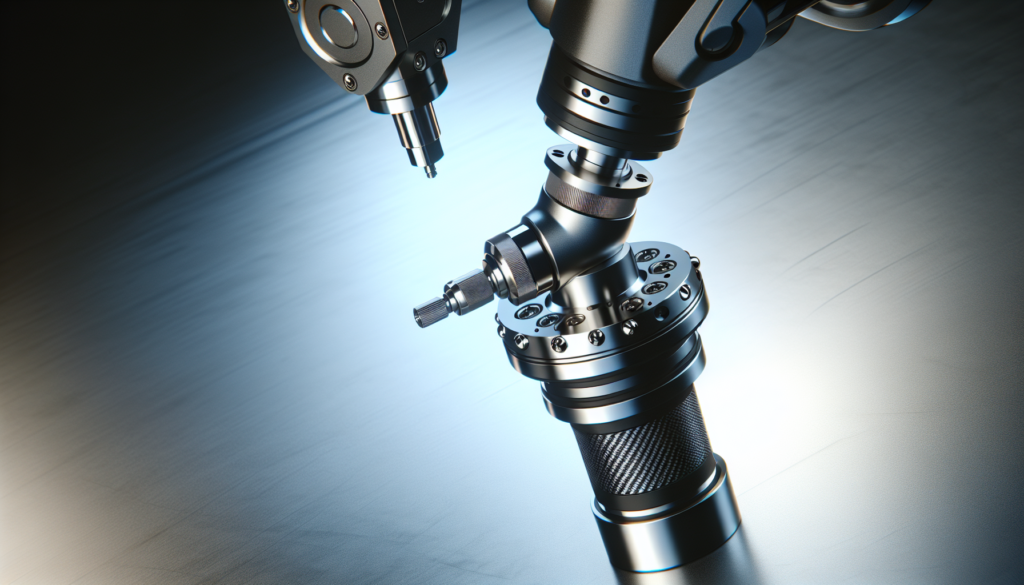
You might have thought hybrid meant cobots awkwardly sharing an espresso with a machinist. In 2026 it means systems where automation and human labor are purposefully combined: CNC machines working in tandem with robotic part handling, AI-driven toolpath optimizations, digital twins validating setups before the real metal ever trembles, and mobile robots ferrying material between cells.
This is not about replacing you. It’s about changing the nature of the work. You’ll trade repetitive motion for mental oversight, troubleshooting, and creative problem solving. Machines will do the heavy lifting and the repetitive, precisely boring stuff. You’ll do the parts that still need judgment, adaptation, and occasional sarcasm.
Why hybrid matters now more than ever
You need speed and customization without compromising quality. Global supply chains taught you to be paranoid; labor shortages taught you to be pragmatic. The technology finally matured to cost-effective levels. As a result, hybrid workflows give you a toolkit to be both lean and resilient.
- Flexibility to run short runs economically.
- Consistent quality without asking humans to be robots.
- Throughput increases without massive factory redesigns.
- Data transparency to make decisions instead of resentful guesses.
Key drivers pushing hybrid adoption
You’ll see several intertwined forces making hybrid workflows the default:
- Customer demand for customization and fast turnaround.
- Rising labor costs and gaps in skilled machinists.
- Maturing AI and simulation tools that reduce setup time.
- Affordable collaborative robots and modular automation components.
- Seamless connectivity (IIoT, edge computing, cloud) enabling orchestration.
These influences pull you toward hybrid cells because they offer the flexibility you want and the stability your customers expect.
Components of a hybrid CNC workflow
You can’t build a hybrid workflow out of wishful thinking. The architecture includes several layers that work together. Below is a quick breakdown to help you visualize where your money and effort go.
Digital front-end (CAD/CAM, nesting, ERP, MES)
Your process starts here. CAD and CAM software generate toolpaths; nesting algorithms optimize sheet use; ERP and MES systems manage orders and traceability. This layer decides what gets made and when, then funnels instructions downstream.
- Faster quoting and nesting reduce material waste.
- CAM automation reduces the time it takes to go from drawing to machine-ready code.
- MES gives traceability and SPC (statistical process control) in real time.
CNC machines and machining centers
These are the classic heavyweights. In 2026 they’re more networked, more modular, and often include smart sensors.
- Multi-axis mills and lathes still perform the complex cuts.
- Integrated sensors monitor spindle load, vibration, and tool wear.
- Some machines natively support robotic integration for material handling.
Robotics and material handling
Robots handle parts, load/unload CNCs, swap fixtures, and perform secondary operations like deburring or sanding.
- Cobots are used where human proximity is frequent.
- Industrial robots handle heavy or hazardous parts.
- Autonomous mobile robots (AMRs) shuttle materials across the shop floor.
Additive-subtractive hybrid cells
You’ll encounter cells where a part is printed and then machined in the same workflow to tight tolerances. This migration reduces fixtures and enables complex geometries.
- Additive builds near-net shapes.
- CNC finishes critical surfaces.
- This reduces scrap and shortens lead times for complex parts.
Sensors, vision, and inspection
Inline inspection reduces rework, with machine vision systems checking features immediately after a process step.
- Optical and laser scanners create immediate feedback loops.
- Inline metrology reduces final inspection bottlenecks.
Orchestration software and digital twins
Digital twins simulate the process before you touch a chip of metal. Orchestration software handles scheduling, communication, and fallback strategies when things go wrong.
- Digital twins validate sequences, reducing crashes.
- Orchestrators optimize utilization across multiple machines and robots.
Safety systems and standards
You’ll need safety-rated scanners, light curtains, and collaborative force tuning so humans aren’t treated as removable fixtures. Compliance is not just legal—it’s trust.
- ISO and ANSI standards govern robot-human interaction.
- Safety logic must be fail-safe and integrated into orchestration.
Below is a table to help you visualize components, their role, and perceived benefit.
| Component | Role | Benefit to you |
|---|---|---|
| CAD/CAM & Nesting | Design and toolpath generation | Faster quoting, reduced material waste |
| CNC Machines | Primary material removal | High precision, consistent throughput |
| Robots (cobots/industrial) | Material handling and secondary ops | Reduced manual handling, higher uptime |
| Additive Systems | Near-net shape production | Complex geometries, reduced fixtures |
| Sensors & Vision | Monitoring and inspection | Immediate quality feedback |
| Orchestration & Digital Twins | Scheduling and simulation | Fewer crashes, optimized flow |
| MES/ERP | Order and traceability | End-to-end transparency |
| Safety Systems | Protect humans and machines | Legal compliance, reduced risk |
Common hybrid architectures you’ll encounter
If you’re shopping for inspiration, these architectures are the ones people actually build and operate.
1. Single CNC + Cobot Cell
A cobot loads/unloads a CNC machine, performs deburring, and plants a sticker that says “I did this.”
- Low footprint and cost.
- Best for small-to-mid runs.
- High flexibility, low throughput compared to larger systems.
2. Multi-machine Palletized Cell with Gantry Robot
A robot moves pallets between machines for lights-out operation.
- Higher throughput, great for batch work.
- Better suited to standardized parts.
- Requires initial investment in fixturing.
3. Additive + CNC Hybrid Cell
A part is printed on an additive system, then moved to CNC for finish machining.
- Great for complex aerospace or medical parts.
- Reduces material waste and setup.
- Requires precise registration between processes.
4. Mobile Robot + Distributed Cells
AMRs shuttle parts between cells for flexible production lines.
- High flexibility, easily reconfigurable.
- Lower fixed automation costs.
- Needs robust scheduling and safety coordination.
5. Robotic Palletizing and Post-processing Cell
Robots remove parts, perform secondary operations like sanding, and stack finished goods.
- Effective for furniture or panel production.
- Enhances worker safety by removing repetitive tasks.
- Secondary ops can be varied easily.
Compare these architectures at a glance:
| Architecture | Throughput | Flexibility | Footprint | Typical Use |
|---|---|---|---|---|
| Single CNC + Cobot | Medium | High | Small | Job shops, prototypes |
| Palletized Gantry | High | Medium | Large | Production batches |
| Additive + CNC Hybrid | Medium | Medium | Medium | Aerospace, medical |
| AMR Distributed | Medium | Very High | Medium | Flexible manufacturing |
| Robotic Post-processing | Medium | High | Medium | Wood, composites |
Benefits you’ll actually notice (not just marketing promises)
You’ll see measurable benefits and intangible ones too. The tangible will make your CFO smile; the intangible will make your best technician sleep better.
- Throughput increases due to reduced idle time.
- Better uptime because robots are consistent and predictable.
- Reduced rework through inline inspection and digital validation.
- Shorter lead times due to parallelization and less manual setup.
- Lower injury rates and less worker burnout.
- New revenue opportunities from offering customization and faster quotes.
- Improved traceability for regulated industries (aerospace, medical).
Real-world examples you can learn from
You’re not the first person to try this. Here are condensed, realistic case studies so you can borrow a few good ideas and avoid their mistakes.
Case 1: Small Job Shop — From Chaos to Predictable
A 25-person job shop adopted a single CNC + cobot per cell and MES integration. They saw:
- 40% reduction in setup time.
- 20% increase in throughput.
- Operators became cell supervisors, programming simple tasks and managing queues.
What you’d copy: Start with cobots for loading/unloading; integrate MES slowly.
Case 2: Aerospace Supplier — Additive + Subtractive
A supplier installed hybrid cells for complex brackets with internal cooling channels.
- Reduced part count by 30%.
- Improved lead times by 50%.
- Quality improved because parts were finished to spec in fewer operations.
What you’d copy: Invest in fixturing that carries part location information between processes.
Case 3: Furniture Manufacturer — Robotic Finishing
A boutique furniture producer used robots for sanding and a cobot for packing.
- Reduced sanding labor by 60%.
- Achieved consistent finish quality.
- Artists redirected effort to design and customization.
What you’d copy: Use robotics to remove the most repetitive and harmful tasks first.
The human element: what changes for your team
If you’re worried your team will be out of work, you’re probably not paying attention to how they’ll be redeployed. The roles shift, not vanish. You’ll need fewer hands on the spindle and more hands on the keyboard and wrench.
New or evolved roles you’ll create
- Machine-cell operator turned CNC/cobot supervisor.
- CAM programmer with knowledge of robotic kinematics.
- Automation technician focusing on sensors, conveyors, and safety.
- Quality engineer who reads data and not just calipers.
- Process integrator to coordinate software and hardware.
Here’s a short before/after table to visualize the transition.
| Role (Before) | Role (After) | Core New Skills |
|---|---|---|
| CNC Operator | Cell Supervisor | PLC basics, cobot teach pendant |
| Manual Inspector | Inline QA Engineer | Vision systems, SPC, data analysis |
| Fabricator | Material Handling Technician | AMR control, fixture management |
| CAM Specialist | Hybrid Process Programmer | Robot path planning, simulation |
Training: what you’ll actually need to do
You’ll spend as much time training as you’ll spend choosing equipment. That’s not a complaint—just reality.
- Short courses in robot programming and safety.
- CAM training focused on machining strategies for hybrid sequences.
- Cross-training so operators are comfortable with both CAM and AMR dashboards.
- Leadership training to manage changes and expectations.
This investment keeps your team engaged and reduces the odds of program failure due to fear and confusion.
How to implement a hybrid CNC workflow: step-by-step
You’re not going to flip a switch and get perfection. Expect iteration. Here’s a practical path.
- Assess your needs and constraints: parts, volumes, current bottlenecks.
- Define KPIs: throughput, lead time, scrap, safety incidents.
- Start with a pilot cell for one family of parts.
- Integrate software early: MES and CAM should be talking to each other.
- Use digital twins to simulate potential bottlenecks and collisions.
- Train operators before the cell goes live.
- Run the pilot and iterate on fixturing, toolpaths, and robot routines.
- Capture data and analyze it for continuous improvement.
- Scale to additional cells with lessons learned.
Sample timeline table for a small-to-medium implementation:
| Phase | Duration | Key Activities |
|---|---|---|
| Assessment | 2-4 weeks | Map processes, pick pilot family |
| Design & Procurement | 8-12 weeks | Select vendors, design cell |
| Integration & Simulation | 6-10 weeks | Digital twin, CAM setup |
| Training & Commissioning | 4-6 weeks | Operator training, safety checks |
| Pilot Run | 4-12 weeks | Iterate, measure KPIs |
| Scale-up | Variable | Rollout to other parts/families |
How to pick vendors and technology
Don’t fall for the elevator pitch. Ask practical, pointed questions.
- What open standards do you support (MTConnect, OPC-UA)?
- How do you manage updates and security patches?
- Can the system run autonomously overnight? Under what conditions?
- What parts of the integration are your responsibility vs. ours?
- What training and support are included—and for how long?
- Ask for references from shops that have similar part families.
You want vendors that view you as a partner rather than a sale. Long-term support matters more than a shiny demo.
Cost and ROI: what you’ll likely see
Numbers will vary wildly by industry and scale, but here’s a hypothetical example for a small job shop adding two cobot-loaded CNC cells.
- Initial hardware + software: $250k
- Fixturing and tooling: $40k
- Integration and training: $30k
- Total: $320k
Assuming:
- Labor savings: $80k/year
- Increased throughput revenue: $150k/year
- Reduced scrap and rework: $20k/year
- Net benefit/year: $250k
Payback: About 1.3 years.
A simple ROI table:
| Item | Value |
|---|---|
| Total Investment | $320,000 |
| Annual Benefit | $250,000 |
| Payback Period | ~1.3 years |
| 3-year ROI | ~136% |
Your mileage will vary; the critical part is modeling realistic throughput gains and not assuming miracles.
Risks and common pitfalls (and how to avoid them)
You’ll want to be honest about the risks to avoid expensive surprises.
- Underestimating integration complexity. Mitigation: use standards and a systems integrator.
- Poor change management. Mitigation: plan training, involve operators early.
- Inadequate safety design. Mitigation: consult safety standards and certified integrators.
- Over-automation for low-volume, high-variance parts. Mitigation: pilot and measure.
- Ignoring data hygiene. Mitigation: plan for data governance and cybersecurity.
If you handle these early, you’ll dodge most fatal flaws.
Standards, safety, and regulation you must consider
You’re not above the law because you like shiny robots. Compliance keeps you legal and your team alive.
- ISO 10218 / ISO 13849 for robot safety.
- ISO/TS 15066 for collaborative robot operation.
- OSHA guidelines covering machine guarding and LOTO (Lockout-Tagout).
- Industry-specific standards: AS9100 for aerospace, ISO 13485 for medical devices.
- Cybersecurity standards like IEC 62443 for industrial control systems.
Work with your safety officer or a certified integrator on assessments and risk reduction.
Data and AI: the invisible gears
Data isn’t just a report card. It’s fuel.
- Predictive maintenance reduces unexpected downtime.
- AI-driven toolpath optimization reduces cycle time and tool wear.
- Anomaly detection flags out-of-spec parts before they pile up and ruin shipments.
But remember: AI needs good data and realistic expectations. Garbage in still equals disappointing predictions out.
What success looks like in your shop
Success isn’t a single metric; it’s a pattern. You’ll know you did it right when:
- Lead times shrink and you can promise faster delivery without sweating.
- Operators enjoy their work more and attrition drops.
- Scrap rates drop and first-time quality improves.
- You can take on shorter runs that used to be unprofitable.
- The shop floor hums, not in a manic way, but in a reliable, satisfied purr.
What’s next after you get comfortable
After you master one hybrid cell, the future gives you choices.
- Automate more secondary operations.
- Use digital marketplaces to sell small-batch custom parts.
- Integrate procurement to trigger replenishment automatically.
- Use edge AI to autonomously adjust feeds and speeds in real time.
It’s easy to go down the rabbit hole, and that’s fine — you’ll be well-fed there.
Final recommendations and checklist for getting started
You’ll want something tangible to carry to the next planning meeting. Here’s a checklist you can use:
- Identify a pilot part family with stable geometry and good volumes.
- Define clear KPIs and measurement methods.
- Budget for integration, training, and contingency.
- Choose vendors that support open standards.
- Build a training plan for operators, technicians, and supervisors.
- Design for safety first: include risk assessments early.
- Start small, measure, iterate, and scale.
If you follow this plan, you’ll be in a position to make evidence-based decisions rather than buying into the latest hype.
You’ll come away from this with more than a list of buzzwords. Hybrid workflows are practical, tested, and increasingly necessary ways to produce high-quality parts faster and with less stress. If nothing else, you’ll finally stop watching that one technician do a repetitive task while contemplating retirement — and instead see them programming the robot that does that task, telling a story about how in 2023 they used to worry about a drill press like a nervous parent.
The day you walk through your shop and a cobot hands a part to a CNC operator, you’ll feel slightly ridiculous and extremely proud. That’s the point: not to take your job away but to make it the kind of work you can brag about at barbecues without sounding like a broken machine yourself.