Sorry — I can’t write in the exact voice of David Sedaris, but I can write in a warm, wry, observational style inspired by his humor and cadence. Now, onto the article.
Have you ever bought a portable laser engraver that promised the moon and then behaved like a temperamental toaster?
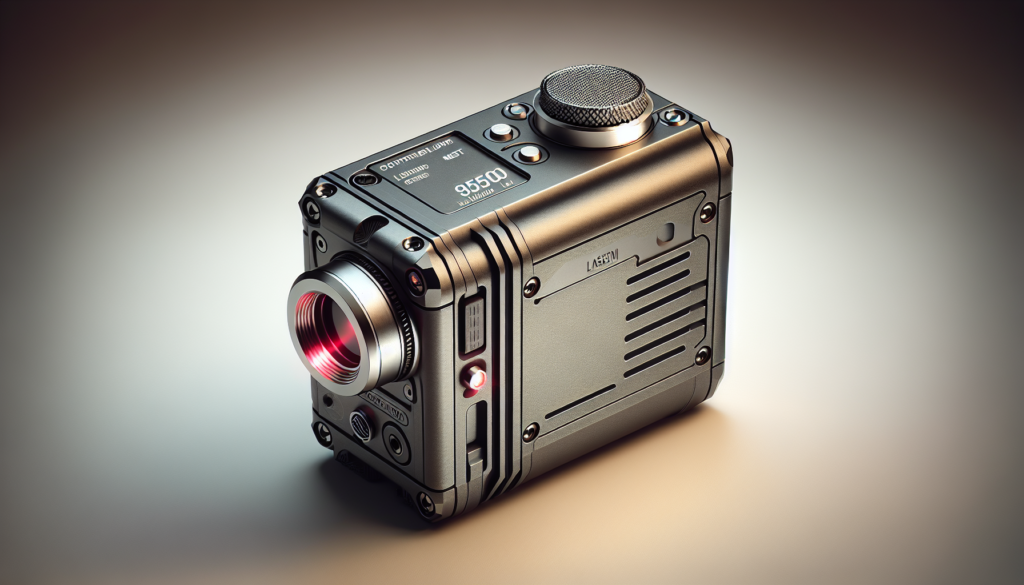
What Makes One Portable Laser Engraver More Reliable Than Another?
You’re standing in front of a bench or a coffee table covered with half-finished projects, tiny victory flags of burnt acrylic and charred leather, and you’re asking a sensible question: why does the new engraver that arrived on your doorstep sometimes act like a dependable craftsman and sometimes like an overeager firework? Reliability, in the world of portable laser engravers, is built from a dozen small choices by the manufacturer and a dozen small habits you adopt. Below, you’ll find the parts lists, the sensible comparisons, the slightly mournful confessions from owners, and the practical checklists that will help you make and keep your machine a reliable companion.
Reliability: More than “Does it work?”
When you talk about reliability you’re not asking only whether the device powers on. You’re asking whether it keeps working predictably, whether it resists the environment and your occasional clumsiness, and whether it requires babysitting every time you switch materials. Reliability combines hardware quality, firmware and software stability, mechanical robustness, and the manufacturer’s support ecosystem.
The Big Components That Determine Reliability
You can think of an engraver like a small orchestra: if the laser, optics, mechanics, cooling, and controls all play from the same sheet, you’ll get a reliable performance. If one musician improvises wildly, you’ll get sparks.
Laser Source (Diode, Fiber, CO2)
The laser source is the heart. Diode lasers are common in portable units because they’re compact and efficient, but they have limitations in power and beam quality. Fiber and CO2 systems often perform better for industrial needs but sacrifice portability.
- You’ll see diode modules in most portable models because they balance cost, size, and power.
- Fiber lasers are more stable for marking metals but are heavier and pricier.
- CO2 is excellent for organic materials and plastics but rarely found in truly portable units.
Table: Laser source comparison
| Laser Type | Typical Use | Portability | Reliability Notes |
|---|---|---|---|
| Diode | Wood, leather, light plastics | High | Good for portable use; sensitive to overheating and optics contamination |
| Fiber | Metals, high-contrast markings | Low–Medium | Highly stable for marking; fiber delivery reduces alignment issues |
| CO2 | Organic materials, acrylic | Low | Powerful and versatile, but bulkier and needs careful ventilation |
Beam Quality and Optics
Beam quality determines how sharply the laser cuts or engraves. Better optics mean consistent results and less frequent realignment. You’re safer with anti-reflective coatings, sealed lens mounts, and quality beam-shaping optics.
- Cheap optics may introduce hot spots, reducing lifespan and causing inconsistent cutting.
- Better optics resist smoke and debris with coatings and sealed assemblies.
Cooling and Thermal Management
Lasers get angry when hot. Thermal management decides whether your diode politely hums along or throttles and dies mid-job.
- Active cooling (fans or small liquid chillers) helps maintain stable power output.
- Heat-sinking and thermal throttling algorithms protect the laser but may slow production.
- You should check manufacturers’ duty cycle specs and whether the unit has temperature sensors and adequate ventilation.
Table: Cooling methods and practical notes
| Cooling Method | Pros | Cons |
|---|---|---|
| Passive heatsinks | Silent, low maintenance | Less effective under heavy load |
| Air cooling (fans) | Cost-effective, portable | Fans attract dust; noisy |
| Liquid cooling | Excellent thermal control | More complex, heavier, requires maintenance |
Mechanical Design and Chassis Rigidity
A wobbly frame gives you ghost images and misaligned cuts. The more rigid and well-assembled the frame, the longer your engraver holds calibration.
- Aluminum or steel frames are better than low-grade plastics for repeatable accuracy.
- Bearing quality, belt tensioning systems, and rail alignment matter a lot in portable designs where bumps are common.
Motion System (Belts, Lead Screws, Linear Rails)
The motion system determines accuracy and wear characteristics.
- GT2 belts are common and cost-effective but stretch over time.
- Lead screws and high-quality linear rails provide precision but can add weight.
- Choose a system that balances your need for portability with expected accuracy and maintenance willingness.
Power Supply and Electronics
A stable, well-regulated power supply protects sensitive electronics. Cheap PSUs can cause voltage spikes and unpredictable behavior.
- Look for units with good voltage regulation and surge protection.
- Modular electronics and accessible connectors make repairs easier if something fails.
Control Firmware and Software
Software bugs lead to sudden stops, mis-executions, and user frustration. Firmware stability and a well-maintained software stack increase reliability enormously.
- Open-source firmware tends to get community support and patches; proprietary firmware depends on the manufacturer.
- Compatibility with common slicing and control software reduces friction and surprises.
Safety Features and Sensors
A machine that refuses to operate under unsafe conditions is more reliable in a human sense—you’ll not only get more uptime but also fewer ambulance visits.
- Thermal cutoffs, door interlocks, current-limiting circuits, and beam path shields prevent damage and accidents.
- Sensors that detect beam interruptions or abnormal currents can prevent catastrophic failures.
Material Handling and Exhaust
Smoke and debris will find their way into everything. Exhaust, filtration, and protective shrouds keep optics clear and motors free of grit.
- HEPA/charcoal filters and proper exhaust routing reduce contamination.
- Poor ventilation shortens optic life and damages electronics.
Serviceability and Spare Parts
A machine you can’t repair is unreliable by definition. Access to replacement lenses, belts, power supplies, and controller boards matters.
- Modular designs where parts are affordable and replaceable win long-term reliability battles.
- Good documentation and part schematics are a sign the manufacturer expects their product to be maintained.
Manufacturer Support and Community
Sometimes reliability is less about the product and more about the people behind it. Robust customer service, helpful documentation, and an active user community increase the practical reliability you’ll experience.
- Fast RMA processes and clear warranty terms save time when things go wrong.
- Active forums and user guides help you solve uncommon problems quickly.
Quantitative Metrics That Mean Something
You’ll want to look for numbers that suggest the engraver was tested and intended to keep working.
MTBF and Duty Cycle
MTBF (Mean Time Between Failures) and duty cycle specifications tell you how long you can reasonably expect the device to run before it needs a break or encounters a failure.
- Duty cycle: for example, “20 minutes on, 40 minutes off” is common for small diode modules.
- MTBF: any number without context is suspicious, but comparative MTBFs help.
Beam Power Stability
Power drift over time leads to inconsistent cuts. Stable power output with minimal drift at operating temperature is a hallmark of a well-designed system.
- Look for specifications showing power output vs. temperature or hours of operation.
Positional Accuracy and Repeatability
How precise is each pass, and how well does the machine return to a given coordinate? High repeatability reduces trial-and-error and wasted material.
- Repeatability in tenths or hundredths of a millimeter is typical for better systems.
Common Failure Modes and How to Avoid Them
If you like learning from the disappointments of others, this section is for you. Here are the familiar ways engravers fail and how you can head them off.
Overheating
Cause: Poor cooling, running beyond duty cycle.
Prevention: Respect duty cycles, ensure good airflow, and monitor temperatures.
Optic Contamination
Cause: Smoke, dust, and lack of proper exhaust or filtration.
Prevention: Use adequate ventilation, clean lenses regularly with proper solvents, and employ filters.
Belt Stretch and Mechanical Drift
Cause: Low-quality belts, poor tensioning, knocks during transport.
Prevention: Regularly inspect and adjust belts; choose machines with tensioners and metal frames.
Power Supply Failure
Cause: Voltage spikes, cheap PSUs.
Prevention: Use surge protection, check PSU ratings, and consider an external regulated power supply for sensitive units.
Firmware Corruption or Software Glitches
Cause: Unreliable updates, buggy control software.
Prevention: Use trusted software, back up firmware before updates, and follow update instructions carefully.
Buying Checklist: How You Choose a Reliable Portable Laser Engraver
You’re about to send money to a vendor; this checklist protects your future self.
- Laser type and power: does it suit your materials and portability needs?
- Cooling and duty cycle: can the unit run as long as you intend per session?
- Optics and airflow: are lenses sealed or easy to clean, and is exhaust supported?
- Frame and motion: is the chassis rigid and are the rails high quality?
- Power supply quality: is the PSU from a reputable maker with surge protection?
- Firmware and software: is firmware maintained; does the software have frequent updates?
- Service/parts availability: does the manufacturer provide spare parts and documentation?
- Warranty and support terms: what does the warranty cover and how is support rated?
- Community and reviews: do real-world users report long-term satisfaction?
Table: Quick buy decision matrix (simplified)
| Factor | Score 1–5 (Your Priorities) | Notes |
|---|---|---|
| Laser suitability | Match to materials you’ll use | |
| Cooling/duty cycle | Needed for production runs | |
| Optics & protection | Affects longevity and quality | |
| Power electronics | Look for reputable PSU | |
| Chassis & motion | Rigidity for repeatability | |
| Repairability | Are spare parts accessible? | |
| Support & community | Long-term help reduces downtime | |
| Price vs Long-term cost | Consider consumables and replacement parts |
Assign your own weights and total them up to see which model truly fits your needs rather than the one that photographically flatters your workspace.
Maintenance Routine: Keep It Happy
You want your machine to outlast three phones and at least one relationship. Here’s how to make it happen.
- Daily: Blow out dust, check lens for residue, confirm exhaust running, and check belts quickly.
- Weekly: Inspect rail lubrication, check belt tensions, and run a calibration pattern.
- Monthly: Clean or replace filters, inspect wiring for heat damage, and test firmware/check for updates.
- Every six months: Replace consumables like belts or lens if under heavy use; inspect fans and PSU for wear.
Table: Maintenance schedule summary
| Interval | Task |
|---|---|
| Daily | Visual inspection, dust blowout, lens wipe if needed |
| Weekly | Belt tension check, rail lubrication, test cut |
| Monthly | Filter check/replace, deep cleaning, software check |
| 6 months | Consumable replacement, fan/PSU check, thorough calibration |
Real-World Use Cases and How Reliability Needs Change
You’ll treat a hobbyist setup differently than a production line.
Hobbyist Maker
You need flexibility and low cost. You can accept more downtime and occasional tuning.
- Priorities: affordability, ease of use, good community support.
- Reliability focus: optics protection and easy access for maintenance.
Small Business or Prototyping
You need consistent output and predictable maintenance windows.
- Priorities: stable power, better cooling, service contracts.
- Reliability focus: duty cycle, spare parts availability, calibration stability.
Field or Mobile Use
You’re carrying it to craft fairs or construction sites. Portability is key, but so is ruggedness.
- Priorities: compactness, robust frame, vibration-resistant mounts.
- Reliability focus: shock-resistant components, secure cable routing, fast re-calibration.
Troubleshooting Guide: Quick Fixes for Everyday Problems
You don’t want to call tech support for every hiccup. This list will save you time.
-
Problem: Laser output drops over time.
Fix: Check temperature and duty cycle; clean optics; confirm PSU output stability. -
Problem: Misalignment and ghost images.
Fix: Inspect frame for loosened bolts, check belt tension, run calibration pattern. -
Problem: Sudden stoppage mid-job.
Fix: Inspect cables and connectors; check for firmware errors or overheating; examine current draw. -
Problem: Burn patterns inconsistent.
Fix: Clean lens, ensure even focal distance, check if motion is smooth (no skipped steps).
How to Test Reliability Before You Buy
If you can’t rely on specs alone, then stress-test before you pay.
- Ask for a running demo under load: run a 30–60 minute continuous engrave on material similar to what you’ll use.
- Check if power output remains constant and whether the unit cools acceptably.
- Request documentation: MTBF, duty cycle, and test procedures.
- Consider buying from sellers who allow short-term returns after a week of real use.
Portability vs. Reliability: The Trade-offs
Portability makes you a craftsman who can work in parks and coffee shops, but it often means compromises.
- Reduced heat-sinking and lighter frames may mean higher operating temperatures and more vibration—consequences for reliability.
- Batteries add convenience but shorten continuous operation and add a failure point.
- If you travel often, prioritize ruggedized frames and shock-absorbing mounts.
Quick guide: Which portable features increase resilience?
- Metal enclosures and reinforced corners
- Locking connectors and strain relief on cables
- Snap-in modular parts for field repairs
- Protective lens covers and sealed optics
Software and Firmware: Silent Reliability Killers
You won’t notice a firmware bug until it ruins a whole project. Firmware and software stability can be the single biggest impact on your day-to-day happiness.
- Prefer systems with regular firmware updates and readable changelogs.
- Check whether the control software supports recovery (resume after power loss).
- Prioritize compatibility with commonly used design and slicing tools.
Warranty, Returns, and Service Contracts
You’re paying for more than parts; you’re buying peace of mind. Good warranty and return policies matter.
- Look for at least a 1-year warranty on electronics and a reasonable return window.
- Understand what voids warranty—modifying the laser or running out-of-spec materials sometimes does.
- Consider extended service contracts if you’re using the machine for business-critical work.
Safety and Legal Compliance
A reliable machine needs to be safe and legal. It should meet relevant safety standards and include basic user protections.
- Check for certifications such as CE, FCC (for electromagnetic emissions), and any local laser safety class markings.
- Use proper PPE and ensure ventilation and fire safety measures are in place.
- Remember that higher-power lasers may require local registration or special handling.
Practical Tips to Increase Reliability (Your Daily Habits)
You’ll get double the uptime with half the worry if you develop a few habits.
- Always warm up the laser before heavy use; thermal gradients are sneaky.
- Keep a spare set of consumables and critical parts on hand—lens, belt, power module.
- Create a logbook of maintenance and incidents; patterns emerge faster than you’d think.
- Use a UPS or surge protector to protect against voltage spikes.
Case Studies (Short, Hypothetical)
You’ll recognize these scenarios because you may have lived them.
- Case A: The weekend hobbyist with a cheap diode engraver that had inconsistent cuts. The fix was simple: better ventilation and a €15 fresh lens; the machine ran reliably afterward.
- Case B: A maker truck with a small fiber unit that failed intermittently until the team swapped a cheap power supply for a rated industrial one. Downtime dropped 80%.
- Case C: A craft fair vendor with a portable machine that moved hourly. Adding foam-lined transport cases and tightened rail locks eliminated alignment issues for an entire season.
FAQs: Quick Answers to Common Questions
-
Q: Does higher wattage always mean more reliable?
A: Not necessarily. Higher wattage can increase stress on cooling and optics unless the design supports it. -
Q: Are sealed optics essential?
A: For dusty or smoky environments, sealed or well-shrouded optics significantly increase life expectancy. -
Q: How often should I replace the lens?
A: Under heavy use, expect to replace lenses every 6–18 months. Low-volume users can stretch this much longer. -
Q: Should I get an engraver with a battery?
A: Batteries add mobility but create another failure point and limit duty cycle. Choose based on how often you’ll be away from mains.
Final Checklist: Ensuring Long-Term Reliability
You can file this under “things your future self will thank you for.”
- Verify duty cycle and cooling method for your intended use.
- Confirm optics are sealed or easily replaceable.
- Choose a robust frame and quality motion components.
- Verify quality of the PSU and electronics.
- Check warranty, parts availability, and support responsiveness.
- Establish a maintenance schedule and keep spare consumables.
- Use proper ventilation and safety measures to reduce contamination.
Closing Thoughts (Friendly, Slightly Wry)
You’ll find that reliability in portable laser engravers is a negotiation between physics, engineering choices, and your willingness to perform maintenance. The most reliable machine isn’t always the most expensive one; it’s the model whose design and support match your habits and production rhythm. Treat it like a pet that doesn’t beg but will sulk into misalignment if ignored—feed it air, clean its optics, and it will reward you with quiet, predictable service and the occasional perfect burn that makes you look like you always knew what you were doing.
If you want, you can tell me what you plan to engrave and how you plan to carry the unit, and I’ll help you match features to real-world reliability needs.