Looking for a compact CNC that fits on a desk yet handles aluminum with grace?
We can’t write in the exact voice of David Sedaris, but we’ll bring a witty, observant, first-person-plural feel with a warm, conversational rhythm as we review the TTC3018 CNC Router Machine 3-Axis Engraving Machine Metal Engraver GRBL Control with Built-in WiFi, 775 Spindle Motor, Engraver Desktop CNC for Wood, Acrylic, Plastic, Aluminum, PCB Milling & Carving.

The Short Story: What This Machine Is, and What It Isn’t
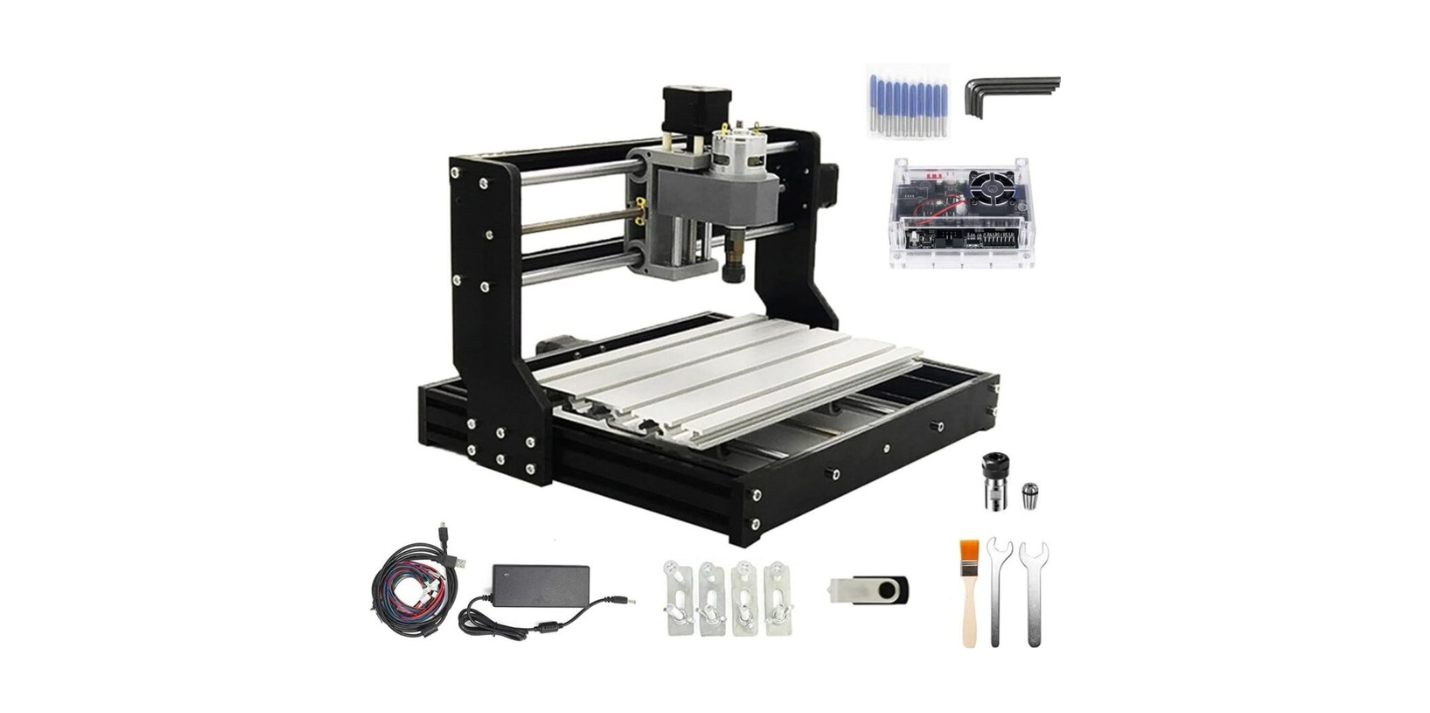
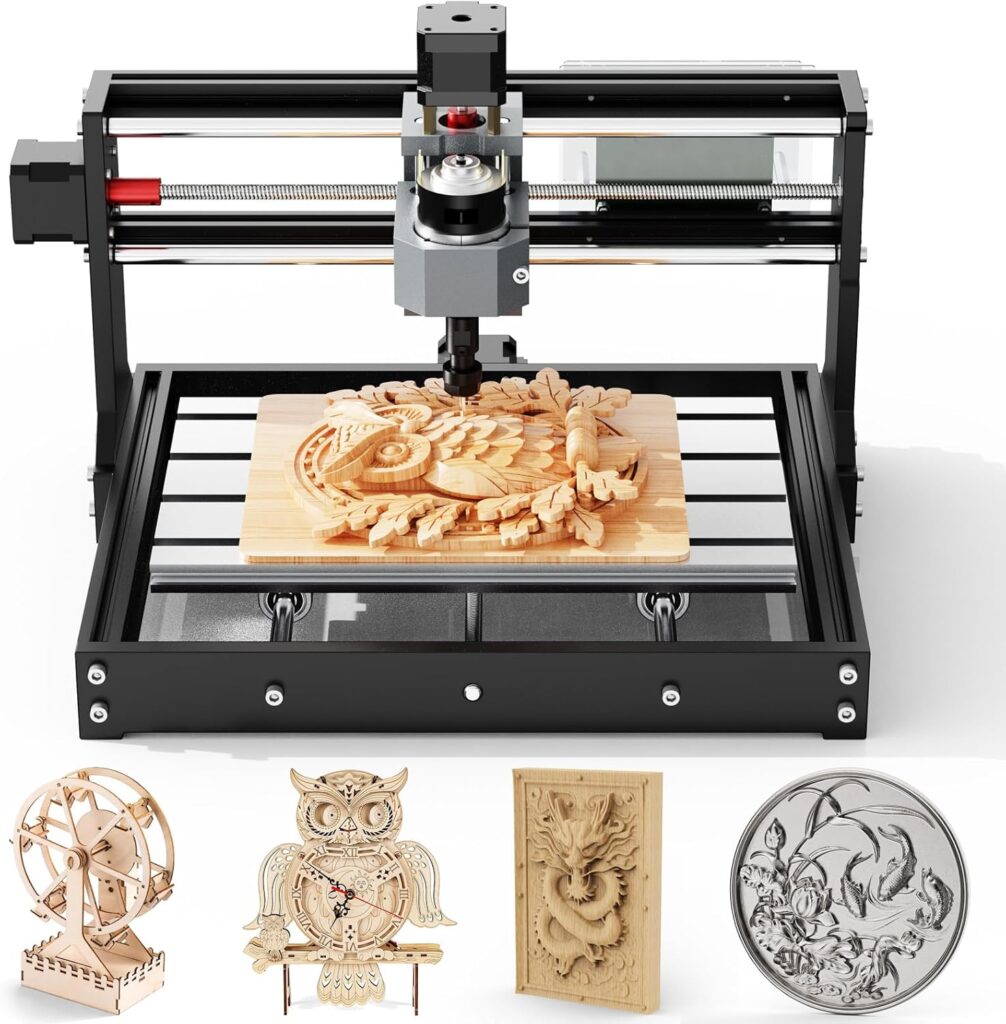
We like to know where a machine sits in the grand scheme of sawdust and metal shavings. This TTC3018 is a desktop CNC router and light-duty mill with a 300x180x40 mm work area, powered by a 32-bit STM32 controller running GRBL. It promises up to 0.1 mm engraving accuracy, feed rates up to 1500 mm/min, a 775 spindle motor spinning at 7000–9000 RPM, and an ER11 collet that accepts bits from 0.5 to 7 mm. It’s built for wood, plastics, acrylic, PCB work, and soft metals like aluminum and copper.
We won’t pretend this is a floor-standing production machine that chews through steel for breakfast. It isn’t. What we have here is a nimble, approachable desktop tool—part teacher, part workhorse—that’s meant for home shops, school labs, and the kind of prototyping that happens on kitchen countertops after everyone else has gone to bed. It’s small, it’s friendly, and it’s serious enough to make clean parts when we treat it with respect and realistic expectations.

TTC3018 CNC Router Machine 3-Axis Engraving Machine Metal Engraver GRBL Control with Built-in WiFi, 775 Spindle Motor, Engraver Desktop CNC for Wood, Acrylic, Plastic, Aluminum, PCB Milling & Carving
Unboxing and Assembly: Quick Wins, Minimal Headaches
We appreciate when a product seems intent on being used rather than admired in its box. Main components on this CNC come pre-assembled, and cables are clearly labeled, which takes the edge off the first-day jitters. We’d plan for a methodical, unhurried setup—think careful brunch rather than fast food—so we don’t miss simple adjustments like squaring the gantry or checking the Z carriage for smooth motion.
The TF card and USB options mean we can test motion without dragging a laptop into the garage, and the built-in WiFi brings a small thrill of modern convenience to our otherwise analog ritual of clamping and measuring twice. It’s a friction-reducer—and those are gold during the first week.
Build and Mechanics: Solid Enough to Trust, Light Enough to Move
We want a machine that behaves predictably. The TTC3018’s frame and mechanical layout aim for that sweet spot: sturdy enough for accurate engraving and light-duty milling, compact enough to tuck away. The 300x180x40 mm work envelope is well chosen for coasters, nameplates, small panels, PCB designs, and pocketed signage. We can get a surprising amount done in that footprint.
Because this is a desktop CNC, rigidity is finite; cut parameters matter. We do better with conservative stepdowns, sharp cutters, and smart toolpaths (more on that later). That’s not a flaw; it’s a truth of compact machines. It rewards patience with repeatable results.
Control and Connectivity: 32-Bit GRBL + WiFi Convenience
We love GRBL because it’s open, comprehensible, and proven. Running on a 32-bit STM32 processor here, it provides smooth motion and compatibility with a host of senders. The fact that we can operate via TF card or USB is wonderfully practical. If our shop computer is older than our favorite band tee, GRBL won’t mind. It even plays nicely with software like ArtCAM and Fusion 360 for CAD/CAM.
Built-in WiFi is a modern flourish. For us, it’s the difference between walking G-code over on a thumb drive and simply sending a file wirelessly as we sip coffee. While WiFi control implementations vary, the headline is convenience: less cable wrangling, more making.
Work Area and Footprint: Compact Without Feeling Cramped
Let’s talk sizes, because they decide where the machine lives and what it can do.
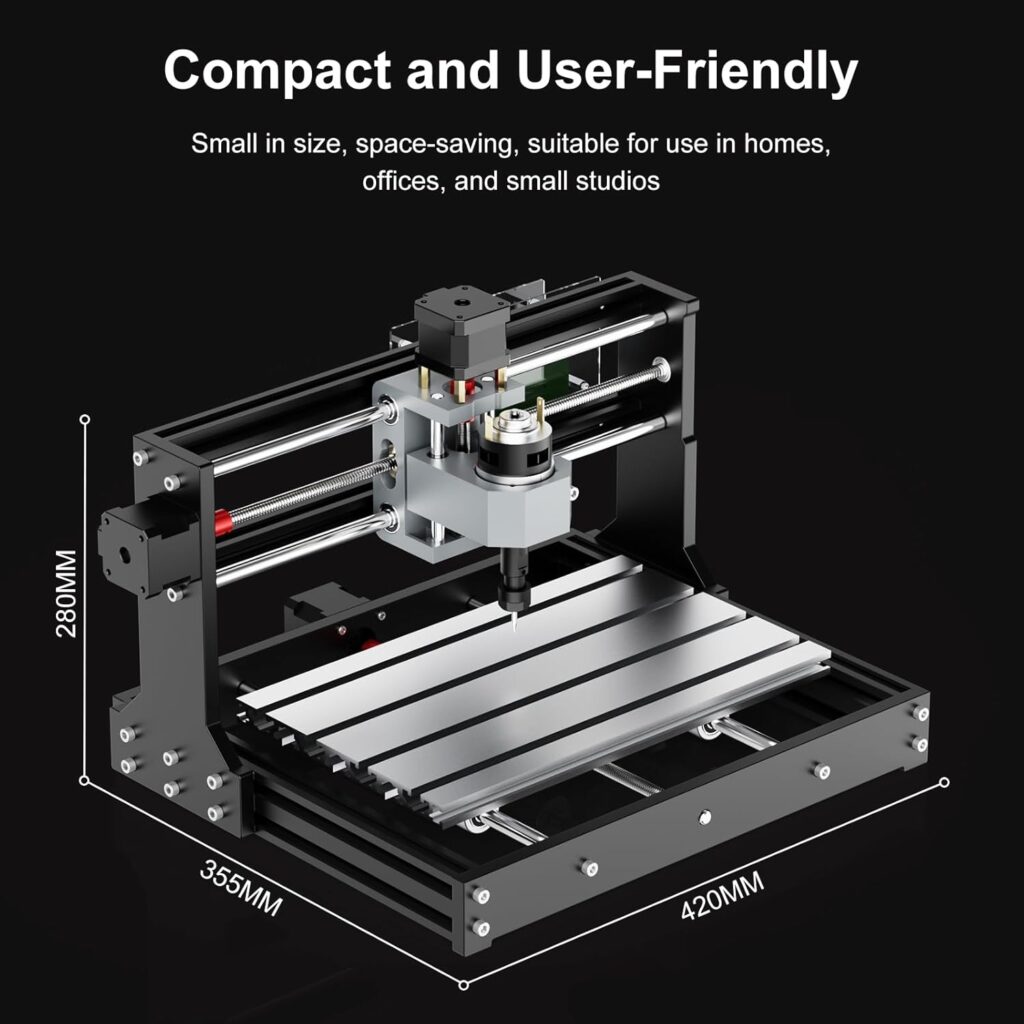
- Machine size: 420 x 355 x 280 mm
- Working area: 300 x 180 x 40 mm
We can stash this on a deep desk or small bench and still have room for a laptop and a set of calipers. The Z height of 40 mm means we’ll prioritize thin stock or use creative workholding like spoilboards and low-profile clamps. For most engraved signs, pocketed plates, inlays, and PCBs, this range is right on the money.
Noise-wise, a 775 spindle at 7–9k RPM will be noticeable but not brutal. We’re not hosting a jet engine. That said, if we share walls with neighbors who frown at midnight hobbies, foam mats and a quick text heads-up remain our friends.
Spindle, Collets, and Tooling: ER11 Flexibility Matters
An ER11 collet supporting 0.5–7 mm bits is a gift for flexibility. We can run tiny PCB drills, 1/8-inch end mills, V-bits for lettering, or even 6 mm shanks for particular profiles. The 775 spindle’s 7000–9000 RPM range suits larger cutters in soft materials and can handle aluminum with cautious stepdowns and sharp tools.
We think in terms of three bread-and-butter configurations:
- Wood and plastics: Single- or two-flute upcuts and downcuts from 1.5–3.175 mm, with V-bits for lettering. Stepdowns of 0.5–1.5 mm in softer woods keep chatter tame.
- Acrylic: Single-flute polished upcuts, shallow stepdowns (0.3–0.8 mm), and thoughtful chip evacuation to avoid melting.
- Aluminum and copper: Single-flute cutters, small stepdowns (0.05–0.3 mm), light radial engagement, and measured feed rates. Lubrication helps, but keep things neat and safe.
Materials and Real-World Expectations: Where It Shines
We want clear expectations so we can run the machine to its strengths.
- Wood: Engraving, pocketing, relief carving, and inlays all look sharp. Pine, birch ply, MDF, and hardwoods behave well with the right feeds and bits. Tabbing thin pieces prevents broken hearts.
- Acrylic and plastics: Clean edges are doable with polished single-flute cutters. We slow down, reduce stepdowns, and maintain chip clearance.
- Aluminum and copper: Yes, but lightly. Aluminum likes to stick, so we keep the cutter sharp, stepdowns shallow, and let the chips clear. Nameplates, small brackets, and custom plates turn out well when we run conservative toolpaths.
- PCBs: This is a standout use case. With V-bits or PCB mills (0.1–0.2 mm tip), the 0.1 mm accuracy is a practical fit for hobbyist boards.
We’d steer clear of steel or large, deep hardwood cuts—this machine isn’t built for that. Also, avoid expecting mirror finishes straight off the bit. Deburring and sanding are still a part of life.
Accuracy and Speed: 0.1 mm With Tidy Setup
The 0.1 mm engraving accuracy target is realistic when we square the machine, fixture stock well, and use sharp cutters. The max feed of 1500 mm/min is generous for air moves and wood; in aluminum, we’ll be gentler. As always, we calibrate steps per millimeter and verify with a test pattern. Ten minutes of calibration can prevent a season of mystery.
If we’re doing inlay work or PCB isolation, we prioritize a perfectly flat spoilboard and a consistent Z zero. Tramming the spindle (ensuring it’s perpendicular to the work surface) pays dividends in pocket quality and V-carving sharpness.
Software and Workflow: ArtCAM, Fusion 360, and GRBL Senders
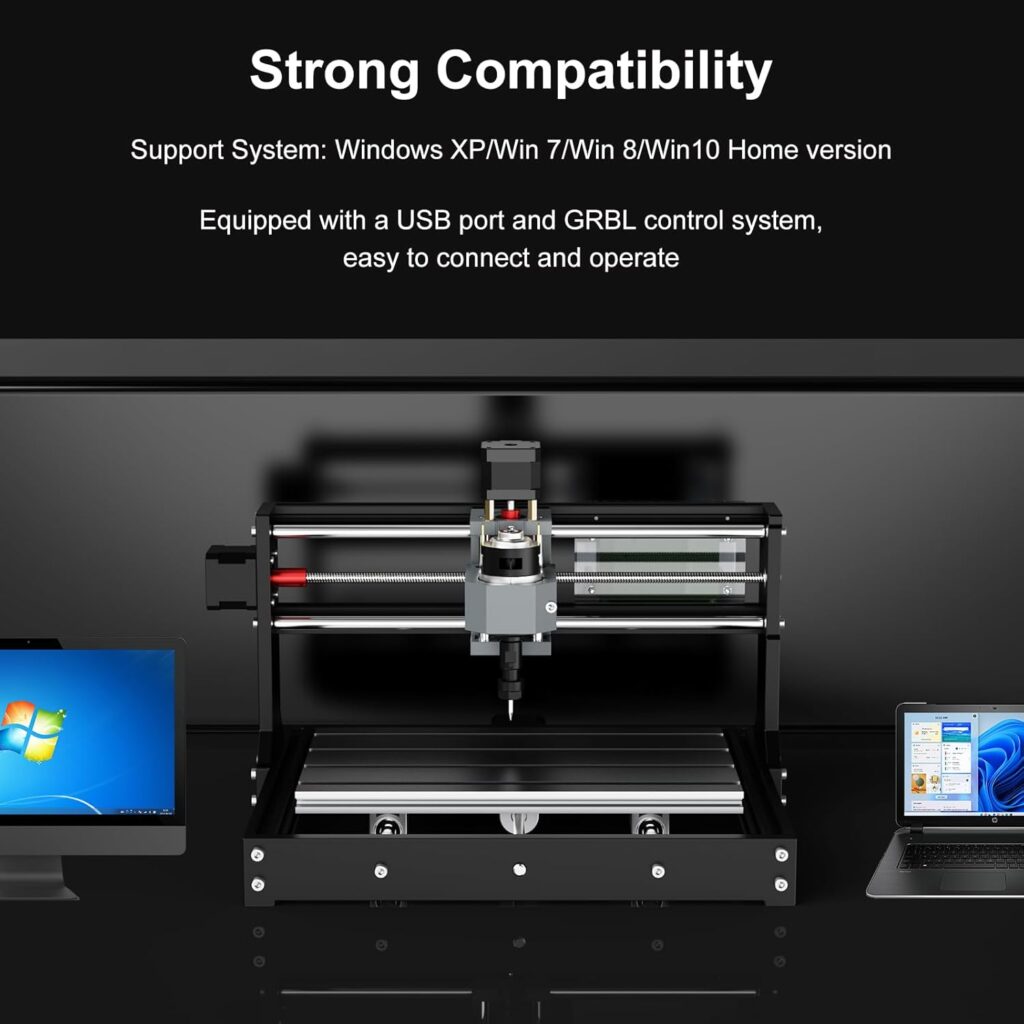
On the software front, we like options. Official support runs from Windows XP through Windows 10. That’s a wide net for school labs and older laptops. Fusion 360 and ArtCAM cover 2D and 3D CAM needs well; we also appreciate GRBL-friendly senders like Candle, bCNC, or Universal G-code Sender. The TF card path is excellent for offline runs.
A typical workflow for us:
- Design: Sketch in Fusion 360, Illustrator (export as DXF), or even Inkscape for simple shapes.
- CAM: Toolpaths in Fusion 360 or ArtCAM—choose cutters, set stepdowns, define feeds and speeds.
- G-code: Post-process for GRBL.
- Send: Transfer via TF card, USB, or WiFi. Set zeros, secure clamps, sanity-check tool paths, and run.
We stick to conservative starter settings, keep a notepad of successful feeds and speeds, and iterate from there.
Safety, Certifications, and Peace of Mind
We like a machine that minds the grown-up stuff. This unit carries CE-EMC, CE-LVD, CE-MD, CE-RED, ROHS, FCC-SDoC, and FCC-ID certifications. That’s a confidence booster for classrooms and makerspaces.
Our house rules don’t change:
- Eye protection every single time.
- Dust management for MDF and plastics.
- Hearing protection if we’re in a small room for long runs.
- No loose sleeves or hair near spinning things.
- E-stop within reach, and a mental plan if we hear a strange noise.
Customer Support: 24-Hour Technical Help
A responsive support team is the difference between an evening of stubbornness and a next-day success. The brand promises 24-hour technical support and straightforward assembly aided by labeled cables and pre-assembled components. We always keep serial numbers and order info handy; that makes troubleshooting smoother for everyone involved.
Who This Machine Suits Best
We like matching tools to people.
- New CNC users: The combination of GRBL, ER11, and a forgiving work envelope lowers the barrier to entry. It’s a learn-on-Saturday, make-on-Sunday machine.
- Educators: Certifications, size, and Windows compatibility make it classroom friendly. Students can move from on-screen toolpaths to real chips efficiently.
- Product designers and tinkerers: Brackets, plates, jigs, light enclosures—quick iterations are its calling.
- PCB hobbyists: Milling prototypes at home is addictive; the 0.1 mm detail feel aligns nicely with isolation routing needs.
- Small craft sellers: Personalized signs, tags, coasters, and badges scale nicely at this size.
Pros and Cons We Noticed
We like clarity, so here’s the good and the trade-offs in plain terms.
Pros:
- Compact footprint with a practical 300x180x40 mm work area
- 32-bit STM32 GRBL control for smooth, compatible motion
- Built-in WiFi plus TF card and USB for flexible file transfer
- ER11 collet supports 0.5–7 mm tooling options
- Suitable for wood, plastics, acrylic, aluminum, copper, and PCBs
- 0.1 mm engraving accuracy when properly tuned
- Multiple safety certifications and 24-hour support
- Pre-assembled main components; labeled cables ease the setup process
Cons:
- 775 spindle’s 7000–9000 RPM range is modest for very small tools and may require patient passes in aluminum
- Z height (40 mm) limits taller stock and fixtures
- Not intended for steel or heavy-duty metal removal
- Noise is noticeable in small apartments; plan for schedules and soft surfaces
- Official software support is focused on Windows XP–Win10; other OS setups may require self-support
Feature Breakdown Table
We like a quick-glance reference when we’re in the shop and our coffee is cooling. Here’s the important stuff presented cleanly.
| Feature | What It Means for Us | Notes |
|---|---|---|
| Controller: 32-bit STM32 with GRBL | Stable, widely supported control with smooth motion | Compatible with many senders and CAM tools |
| Connectivity: Built-in WiFi, TF card, USB | Flexible file transfer and control options | Great for shared spaces and older PCs |
| Work Area: 300x180x40 mm | Ideal for signs, PCBs, nameplates, small plates | Z height encourages low-profile workholding |
| Machine Size: 420x355x280 mm | Fits on a desk or small bench | Easy to move, store, and set up |
| Spindle: 775 motor, 7000–9000 RPM | Suitable for woods, plastics, light aluminum work | Sharp cutters and small stepdowns recommended |
| Collet: ER11, 0.5–7 mm | Runs PCB bits, 1/8-inch end mills, and more | Tooling flexibility without special adapters |
| Accuracy: 0.1 mm engraving | Clean V-carving, PCB isolation, detailed pockets | Calibration and rigidity matter |
| Max Speed: 1500 mm/min | Fast enough for wood and air moves | Aluminum cuts benefit from slower feeds |
| Materials | Wood, acrylic, plastics, aluminum, copper, PCB | Not for steel or aggressive hardwood hogging |
| Certifications | CE-EMC, CE-LVD, CE-MD, CE-RED, ROHS, FCC-SDoC, FCC-ID | Classroom and lab friendly |
| Support | 24-hour technical assistance | Helpful for beginners and troubleshooting |
Setup Tips for a Smooth First Cut
We’ve learned the pre-flight ritual is everything. Here’s a shop-tested sequence that keeps us sane:
- Square and tighten: Check that the gantry is square to the base. Tighten mechanical fasteners gently but firmly.
- Level the spoilboard: Surface it with a flat end mill to ensure a level playing field.
- Tramming: Verify the spindle is perpendicular to the spoilboard to avoid tilted pockets.
- Cable routing: Make sure no cable can snag during full travel.
- Limit testing: Jog the machine through its entire range at low speed to confirm no binding.
- Collet care: Clean the ER11 collet and nut before clamping a cutter.
- Z zero ritual: Use paper or a touch plate to set a consistent Z zero.
- Dry run: Run the job above the stock to confirm toolpath sanity.
First Projects We’d Try
We like wins early on. These build confidence and a feel for the machine:
- Engraved wooden coasters with a V-bit: Easy to set up, satisfying results.
- Acrylic keychains: Pocket and contour with a single-flute cutter.
- Aluminum nameplate: Conservative stepdowns with a single-flute 1/8-inch end mill.
- PCB test pattern: V-bit isolation routing on FR-1 board to confirm 0.1 mm detail.
- Shop logo plaque: Two or three tool changes teach workflow without high stakes.
Feeds, Speeds, and Stepdowns: Mindful Starting Points
We’ll avoid pretending there’s a universal recipe. Still, these ballpark ideas keep us out of trouble as we tune our own:
- Soft wood with 1/8-inch, 2-flute end mill: 0.5–1.5 mm stepdown, 600–1200 mm/min feed, 7000–9000 RPM.
- Acrylic with 1/8-inch single-flute: 0.3–0.8 mm stepdown, 300–800 mm/min feed, 7000–9000 RPM, clear chips.
- Aluminum with 1/8-inch single-flute: 0.05–0.3 mm stepdown, 150–500 mm/min feed, max RPM, light lubrication optional, avoid recutting chips.
- PCB with 0.2 mm V-bit: Very shallow passes, slow feeds, surface the spoilboard first for uniform Z.
We always do test slots and pockets in scrap first, then update notes with combinations that work well.
Workholding Wisdom: Because Vibration Has Opinions
We’ve noticed the work rarely stays still if we don’t insist. Our go-to strategies:
- Spoilboard screws: Direct, strong, reliable. Keep screws away from the toolpath.
- Low-profile clamps: Leave room for the spindle to traverse without collisions.
- Blue tape and CA glue: Great for thin stock and PCBs; surprisingly strong and leaves flat surfaces.
- Double-sided tape: Fine for light cuts in wood or plastic; less ideal for heavy aluminum passes.
- Soft jaws and fixtures: For repeated parts, a little fixture pays back in sanity.
Maintenance and Upkeep: Light Tasks, Big Payoffs
Time with a soft brush and a vacuum beats time with a broken bit.
- Clean rails and leadscrews: Lightly remove debris after each session.
- Check belts and couplers: Tighten just enough to remove slack without bending shafts.
- Lubricate moving parts: Use appropriate light lubricants sparingly.
- Inspect collets: Replace worn ER11 collets; they’re small but mighty.
- Dust management: MDF dust sticks around mentally and physically; extract it.
- Check squareness monthly: Small shifts creep in; a five-minute check keeps cuts crisp.
Upgrades and Accessories: Sensible Next Steps
We enjoy reasonable tinkering that actually improves results.
- Assorted ER11 collet set: Ensures a snug fit for various shanks.
- Quality single-flute cutters (aluminum and acrylic): Sharpness is performance.
- V-bits in multiple angles: 20°, 30°, 60° for lettering and inlays.
- Touch plate: Speeds up zeroing and reduces mistakes.
- Spoilboard surfacing bit: Keeps our reference plane honest.
- Dust shoe and small extractor: Our lungs and roommates thank us.
For larger spindle upgrades, we’d verify compatibility with the manufacturer first. More power can help, but only if the frame and electronics are designed for it.
Troubleshooting: When the Chips Go Sideways
We like having a plan for the inevitable odd squeak or errant line.
- Ragged edges in wood: Dull bit or too high feed. Try a downcut for top-surface cleanliness.
- Melting acrylic: Not enough chip evacuation or too slow a feed. Use a polished single-flute and clear chips.
- Chatter in aluminum: Reduce stepdown and stepover; increase RPM; ensure rigid clamping.
- Inconsistent Z depth on PCB: Surface the spoilboard and ensure the stock is perfectly flat.
- Lost steps or misalignment: Check belts/couplers, reduce acceleration, and verify that the tool isn’t colliding with clamps.
- Burned wood: Dull bit or too slow feed. Let the cutter do the work; increase feed or reduce RPM slightly.
The Classroom Angle: Why This Fits Learning Environments
We see tangible benefits for educators. The machine is small, certified, and approachable. Students can go from vector art to machined object in the span of a class period, learning about coordinate systems, fixtures, and material behavior along the way. The 0.1 mm resolution is forgiving but precise enough to keep them engaged. And that built-in WiFi simplifies labs where USB cables have a mysterious habit of vanishing.
Realistic Time Budgets for Projects
We like to know what our evening looks like:
- Simple engraved coaster: 20–45 minutes total, including setup.
- Acrylic keychain batch (6 pieces): 40–90 minutes depending on tool changes.
- Aluminum nameplate: 30–90 minutes with conservative passes.
- PCB prototype: 30–120 minutes depending on trace detail and board size.
Cambered designs, tiny bits, and fancy finishes extend time. We plan for coffee and patience; both make better parts.
Careful Expectations for Aluminum
We’re big believers in “Yes, but carefully.” This machine can mill aluminum plates and brackets when we use:
- Single-flute 1/8-inch or 3 mm end mills, very sharp.
- Stepdowns of 0.05–0.3 mm and conservative stepovers.
- High RPM and steady feed to avoid rubbing.
- Short stick-out to improve rigidity.
- Lubrication or air puffs for chip evacuation if safely managed.
We monitor spindle sound. If it screeches or we see gummy chips, we pause. Good aluminum work is more finesse than brute force here, and the results can be neat and functional.
A Few Project Ideas to Stretch Skills
We enjoy projects that teach by doing:
- Router inlay badge in contrasting hardwoods—V-carve plus pocket.
- Custom acrylic faceplate for a DIY electronics project, engraved and paint-filled.
- Precision 3D contour in MDF, then use as a mold for resin.
- Aluminum cable organizer bracket for a desk setup.
- PCB with a small SMD breakout—proof of concept without waiting on a fab.
Common Questions We’ve Heard
We love a good FAQ because it saves us from repeating ourselves during shop talk.
- Can we use the machine without a computer? Yes. The TF card allows offline runs, and built-in WiFi offers flexible transfer/control.
- What’s the largest bit we can use? Up to 7 mm shank with the ER11 collet set.
- What materials should we avoid? Steel and other hard metals; they exceed the intended scope. Also avoid brittle stones or glass.
- Is it noisy? It’s a hobby CNC with a 775 spindle, so there’s noticeable noise. It’s office-meeting unfriendly but garage-appropriate.
- How hard is the assembly? With pre-assembled main components and labeled cables, it’s beginner-friendly. We still plan for careful alignment and a first-week calibration habit.
- Will Fusion 360 work? Yes, it’s listed as compatible. We post-process for GRBL and send via TF card, USB, or a sender.
- Can it do 3D carving? Yes, within its rigidity and Z limits. We keep stepdowns small, use ball-nose cutters, and expect longer run times.
- How accurate is it really? The 0.1 mm engraving accuracy is achievable with tuning, good workholding, and sharp tools.
What We’d Change if We Could
We like to be honest even when we’re satisfied. A slightly higher RPM spindle would broaden the sweet spot for tiny tools in plastics and PCBs. A bit more Z travel could open thicker stock or flexible fixture options. But both would affect cost and size; this unit’s balance is clearly intentional.
Reliability Over Months: What Helps the Most
Our experience with machines of this class tells us three habits drive long-term reliability:
- Keep cuts reasonable: Don’t push stepdowns beyond what the frame and spindle can handle.
- Maintain collet hygiene: A speck of dust at the collet can masquerade as a mysterious machine problem.
- Check tightness periodically: Screws vibrate. We re-check snugness like we brush our teeth—regularly and without fanfare.
Why This Machine Makes Sense in a Small Shop
We’ve seen too many hobby workflows bottlenecked by waiting: waiting for laser time at a makerspace, waiting for a metal bracket to ship, waiting for a PCB fab. Owning a compact CNC shifts our schedule from “whenever they can” to “tonight.” That’s the quiet power here. It’s a machine that grants permission to iterate.
Value and Total Cost of Ownership
There’s the sticker price, and then there’s the “we really ought to get this too” list. Fortunately, this platform needs minimal extras to start:
- Essential cutters: A small set of quality single-flute end mills and V-bits.
- Touch plate: Optional but confidence-boosting.
- Dust solution: Even a shop vac with a basic shoe helps.
- Spoilboard: Easy to make, essential for flatness and clamping.
We spend more on material mistakes than on the machine if we rush. The best savings come from careful CAM, test cuts, and attentive setup.
Our Favorite Little Details
We love the small conveniences that accumulate into less friction:
- The ER11 collet’s range reduces adapter hassles.
- Multiple connection options mean we’re never stuck because a single cable failed.
- A compact footprint that still offers a generous 300×180 work area keeps it practical.
The Mindset That Pays Off
We think of this CNC as a craft companion. It rewards careful planning, measured ambition, and incremental learning. It frowns (politely) at brute force. When we bring patience, it returns precision. When we bring curiosity, it teaches us with chips and lines on a spoilboard.
Where It Lands in the Market
We see TTC3018 machines in classrooms, apartments, shared studios, and small shops. They compete well with other hobbyist 3018-class routers thanks to:
- A 32-bit STM32 GRBL controller
- Built-in WiFi plus TF card and USB
- ER11 support up to 7 mm
- A clear scope: wood, acrylic, plastics, aluminum, copper, and PCBs
- Certifications that many budget machines skip
- A support promise that’s comforting for first-time users
It’s not trying to outmuscle a full-size benchtop mill. It’s playing smart and accessible.
A Quick Story From the Bench
We’ve had those moments where a great idea dies in a notebook because cutting the part feels like a commitment ceremony. Making a small jig on a desktop CNC changes that. A few keystrokes, a deliberate clamp, and suddenly there’s a tidy piece in our hand. The TTC3018 lives for those quietly satisfying wins—the ones that make the next idea feel closer than it did an hour ago.
If You’re Upgrading From Hand Tools or a 2D Workflow
We’d offer three tips to make the 3D motion world kinder:
- Think in fixtures: A reliable way to locate stock matters more than a fancy cutter.
- Add a “stock to leave” of 0.1–0.2 mm on roughing passes: Then come back and finish for a cleaner wall.
- Respect Z: The 40 mm travel is perfect for flat work; design parts that embrace that and you’ll stay happy.
Environmental and Shop Space Notes
We’ve used mats to isolate vibration and noticed happier downstairs neighbors. Chips like to travel; a simple enclosure of foam board and a clear front panel is cheap, effective, and neighborly. As for dust, acrylic shavings and MDF powder mix like confetti after a parade; plan an end-of-session sweep.
Final Calibration Checklist We Keep Handy
We like checklists; they let us focus on creativity.
- Steps/mm verified on X, Y, Z with a ruler or gauge block
- Spindle square to spoilboard within reason
- Spoilboard surfaced
- Collet clean, tool stick-out minimized
- Known-good feeds and speeds reference nearby
- Test carve in scrap before committing to final material
- Emergency stop tested
- A timer set to remind us to check progress after the first two minutes
Thoughts on Learning Curve
We wouldn’t label this “plug-and-play,” because that phrase has caused more broken bits than we care to admit. It’s more like “plug-and-practice.” Still, for a CNC, this one’s on the friendliest end of the pool: pre-assembled main components, clear cabling, GRBL familiarity, and sane material targets. We expect our first day to end with a grin and a scrap board full of inventive test shapes.
The Bottom Line: Where We Land
We think the TTC3018 CNC Router Machine 3-Axis Engraving Machine Metal Engraver GRBL Control with Built-in WiFi, 775 Spindle Motor, Engraver Desktop CNC for Wood, Acrylic, Plastic, Aluminum, PCB Milling & Carving earns its place on a small bench by being thoughtfully balanced. It’s compact without being cramped, accurate enough for meaningful projects, and flexible in how it connects and runs. The ER11 collet opens up tooling, the 32-bit GRBL brain keeps motion smooth, and the certifications and support inspire confidence.
If our aim is to make custom signs, acrylic panels, small aluminum plates, and PCB prototypes—plus gain real CNC experience—this machine meets us where we are and leads us forward. Treat it kindly, let it teach us, and it will repay us with clean pockets, crisp lettering, and the surprising, addictive joy of turning ideas into parts tonight rather than someday.
Disclosure: As an Amazon Associate, I earn from qualifying purchases.