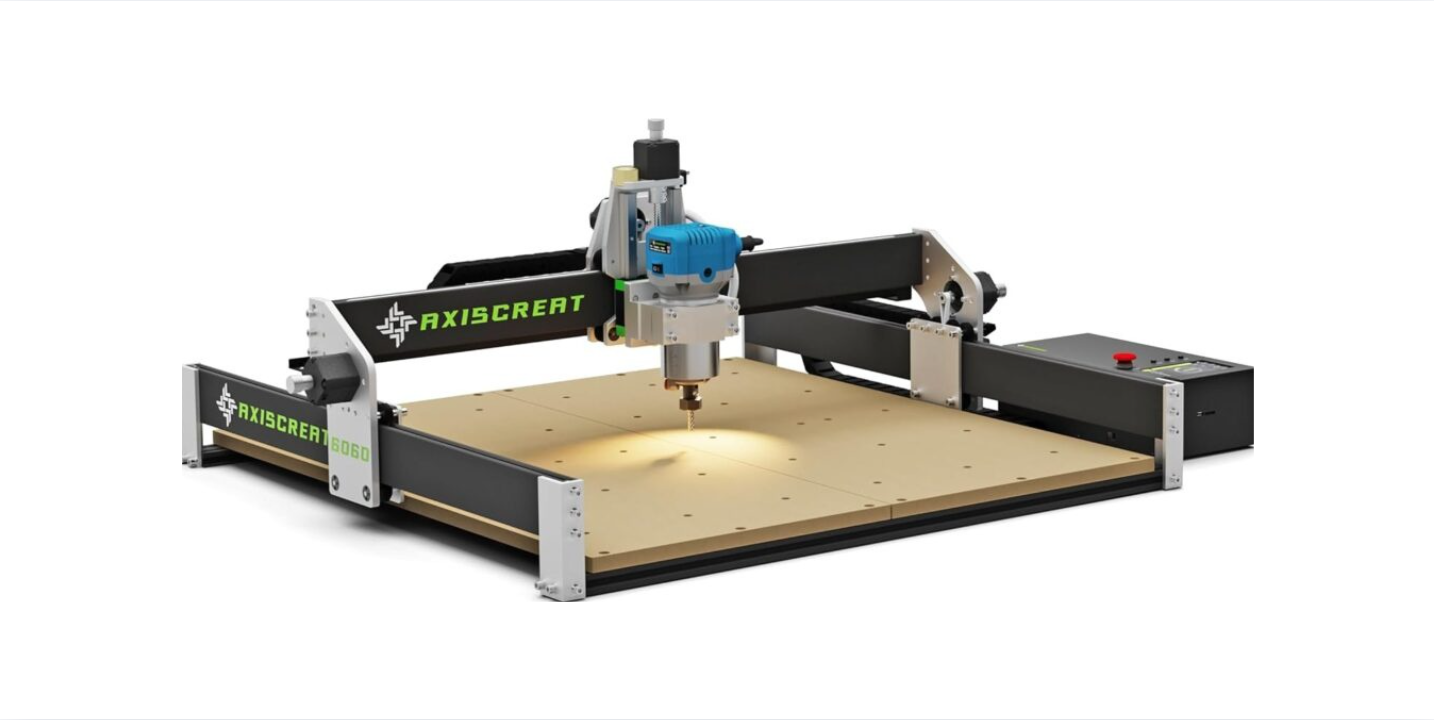
?Have you ever watched a CNC machine finish a part and felt like it was playing its own version of Tetris, except the blocks were tiny screws and the score was measured in dollars?

How Machine-Learning Algorithms Are Rewriting CNC Efficiency In 2026
You might think that a CNC machine is just a glorified stapler with better accents, but by 2026 those machines have developed the kind of efficiency that would make a Swiss watch blush. This article walks you through how machine-learning (ML) algorithms are changing CNC operations, what you need to collect and change, and how to think about the people and processes that will be standing between you and a slightly suspiciously perfect production line.
Why 2026 is different
You’re not imagining things: tooling, sensor fidelity, and connectivity combined with more sophisticated ML models have converged. The result is not incremental improvement but a noticeable shift in how CNC shops run. Models now learn from live processes, adapt in real time, and provide prescriptive actions that reduce waste, increase uptime, and make your morning coffee look like an analog relic.
What this article will give you
You’ll get a practical map — a mix of technical detail, implementation steps, risk management, and the weird little human stories that make high-tech feel like an office potluck. If you run a shop, design parts, manage operations, or simply enjoy watching machines do things you would fail at for emotional reasons, you’ll find something useful here.
The statement of change: ML + CNC
You probably learned the old rules: set a program, change a tool, measure, iterate. In 2026 those rules still exist, but they’re now partnered with algorithms that watch, learn, and recommend. Rather than reacting after a tool breaks, you get a warning with a likelihood score and suggested RPM adjustments. Rather than running long test cycles, your system adapts cutting strategies based on material batches. Machines aren’t sentient — unless you count emergent behavior as sentiment — but they are remarkably better at minimizing human error and maximizing machine life.
Key machine-learning techniques reshaping CNC
You’ll see several ML approaches in production CNC today. Here’s an overview of the most common techniques and why they matter.
Supervised learning for predictive maintenance
Supervised models use labeled data to predict outcomes like tool wear or spindle failure. You feed the model examples (sound patterns that preceded failures, vibration signatures from worn bearings) and it learns correlations. In practical terms, this means less surprise downtime and fewer emergency calls at 3 a.m.
You’ll often see gradient boosting machines and convolutional neural networks (for time-series transformed into spectrograms) used here. The models don’t get everything right, but they give you probabilities and confidence bands that let you decide whether to stop production or adjust parameters.
Unsupervised learning for anomaly detection
Sometimes you don’t know what “normal” looks like until it goes wrong. Unsupervised models like autoencoders and clustering algorithms establish a baseline of normal behavior from raw sensor data. When something deviates, they flag it.
For you, that translates to early detection of unexpected tool chatter, coolant issues, or even improper part loading before scrap builds up.
Reinforcement learning for adaptive control
Reinforcement learning (RL) optimizes control strategies by trial and error in simulated or controlled real environments. In CNC, RL can tune feed rates and spindle speeds in real time to maximize throughput while minimizing tool wear.
If you’re cautious about letting a model tweak physical machines, RL is often first tested in digital twins — high-fidelity simulations of your machine and process — then carefully allowed to influence the real system.
Transfer learning and few-shot learning
You don’t have to train a model from scratch for every new machine or material. Transfer learning enables you to apply knowledge from similar tasks, drastically reducing the volume of labeled data you need.
That’s why a shop that switches to a new titanium alloy can get reasonable performance quickly, rather than waiting months for a robust dataset.
Bayesian optimization and meta-learning for hyperparameter tuning
Models are fussy creatures. You’ll use Bayesian optimization to tune process parameters and ML hyperparameters efficiently. Meta-learning offers the ability to learn how to learn, so systems can generalize across part families and shop floors.
For you, that means fewer cycles of trial-and-error and faster time-to-effectiveness.
Edge computing and online learning
Latency kills. With edge compute and online (streaming) learning, models can update in real time without cloud roundtrips. This is essential when milliseconds matter — for example, avoiding a catastrophic collision or stopping a spindle minutes before catastrophic wear.
You’ll find these architectures in shops where network reliability is not something you want to gamble on.
Sensors and data: the foundation you can’t ignore
You cannot succeed with ML without the right sensors and disciplined data. Think of sensors as the machine’s memory and ML as the machine’s therapist.
Key sensors and their roles
Below is a table outlining typical sensors used on CNC machines, what they measure, and why they matter for ML models.
| Sensor type | What it measures | Typical ML uses |
|---|---|---|
| Accelerometers | Vibration patterns | Tool wear, chatter detection, impact events |
| Microphones / Acoustic sensors | Sound signatures | Anomaly detection, tool breakage |
| Spindle load/current sensors | Torque and power draw | Predictive maintenance, process optimization |
| Temperature sensors | Bearings, spindle, coolant | Overheat prediction, material response |
| High-speed cameras / Vision systems | Part geometry, chip formation | In-process inspection, alignment verification |
| Force/torque sensors | Cutting forces | Adaptive control, tool life estimation |
| Laser displacement/encoders | Position accuracy | Closed-loop control, backlash detection |
| Coolant flow/pressure sensors | Fluid dynamics | Process stability, thermal management |
| Electrical sensors | Voltage/current spikes | Fault detection, energy optimization |
| Environmental sensors | Humidity, ambient temperature | Material behavior, corrosion risk |
You’ll find that no single sensor is sufficient. Sensor fusion — combining multiple inputs — is where models get context and robustness.
Data quality and labeling
Garbage in, glamorous dashboard out. Your models need clean, well-annotated datasets. That means timestamp alignment, consistent sampling rates, and careful labeling of events like “tool change,” “scrap part,” or “force spike.”
You’ll likely need domain experts to label certain events, especially for edge cases. It’s boring work, but necessary. If you want to avoid boredom, outsource a portion of it and then check the results like you’re suspicious of every new friend your sibling brings home.
How much data is enough?
There’s no single answer. For supervised tasks you often want thousands of labeled events, but transfer learning can reduce that requirement. For anomaly detection, long periods of “normal” operation can be even more valuable than intense failure datasets, because anomalies are by definition rare.
If you’re constrained, prioritize high-value signals (vibration, spindle current) and create protocols to capture systematic failures when they happen. Capture the worst days as well as the best ones; models learn most from your mistakes.
System architecture: where models live and act
You’ll need an architecture that supports data collection, model training, inference, and human decision-making.
Typical architecture layers
- Edge layer: Sensors, basic preprocessing, local inference for low-latency actions. This is where emergency stops and immediate parameter changes happen.
- Aggregation/telemetry layer: Time-series databases and message buses that collect data centrally. This layer synchronizes multi-sensor streams for training and desktops.
- Training layer: GPUs and clusters for model training, simulation environments, and digital twins. You’ll run experiments here, often offline.
- Orchestration layer: Model versioning, A/B testing, canary rollouts, and rollback mechanisms. You need control when models change real-world behavior.
- Application layer: Dashboards, alerts, and human interfaces where prescriptive and predictive insights appear.
You’ll want a lean path from the edge to the cloud and back — not a medieval pilgrimage.
Safety and control loops
Close-loop control must be auditable and reversible. You’ll implement safety constraints, hard stops, and parameter limits that models cannot override without human signoff. If your model recommends shaving a few microns off a feed rate, you should know what the maximum allowable deviation is and who approved it.
Real-world use cases and mini case studies
You like stories with outcomes, so here are mini case studies that show how ML is actually being used in shops.
Case 1: Predictive tool replacement at a boutique aerospace shop
You run a small aerospace shop that machines high-value titanium billets. Tool breakage used to cost you hours and ruined parts. By installing accelerometers and spindle-current monitors, and training a supervised model on historic breakage events, the shop started receiving 90% accurate warnings 15–30 minutes before failure.
Impact: Scrap reduced by 60%, emergency downtime reduced by 75%, and the machinist who used to wake up at night to check machines started reading an entire paperback between tool changes.
Case 2: Adaptive feed control for a contract manufacturer
You’re working for a contract manufacturer that runs dozens of part numbers. A reinforcement-learning agent was trained in a digital twin and deployed to adjust feed rates in real time based on vibration and cutting force. The model optimizes for throughput while staying within tool-life constraints.
Impact: Cycle time improvements of 12–18% on average and a 20% increase in tool life for the hardest-to-cut materials.
Case 3: Vision-based in-process inspection at electronics enclosures line
You have a high-mix production line for aluminum enclosures. A high-speed vision system combined with an autoencoder flagged burrs and misalignments missed by manual inspection. Feedback loops adjusted cut depth for subsequent parts automatically.
Impact: Reduction in rework by 43% and faster throughput because you didn’t have people slowing down to inspect every piece with their noses close to the part like overzealous detectives.

KPIs and how to measure ROI
You need to justify investment. Here’s what to measure and how to think about ROI.
Key performance indicators
- Overall Equipment Effectiveness (OEE): a compound metric of availability, performance, and quality.
- Mean Time Between Failures (MTBF) and Mean Time To Repair (MTTR): for maintenance impact.
- Scrap rate and rework percent: direct cost for material and labor.
- Cycle time and throughput: operational improvements.
- Tool life: measured in parts per tool or hours per tool.
- Energy consumption: sometimes overlooked but increasingly important.
- Prediction accuracy and false positive rate: ML model performance metrics that translate to operational trust.
Estimating ROI
Calculate direct savings (less scrap, reduced downtime, longer tool life) and indirect benefits (faster time-to-market, fewer emergency shifts). For example:
- If downtime costs you $1,000/hr and predictive maintenance reduces downtime by 20 hours a month, that’s $20,000/month saved.
- If tool life increases from 100 to 120 parts per tool and you use 1,000 tools per month at $50 each, that’s $10,000 saved monthly.
You’ll want to build a 12–24 month payoff model because investments in sensors, edge compute, and training often take time to mature.
Implementation roadmap: from proof-of-concept to plant-wide rollout
You can’t flip a switch and expect miracles. Here’s a practical roadmap to get you from skeptical to smug.
Phase 1: Discovery and data assessment
- Audit sensors and network capability.
- Collect baseline data for 2–4 weeks including failure cases if possible.
- Interview mechanics and operators to get tacit knowledge.
You’ll learn that operators know things that your logs don’t. Capture that knowledge.
Phase 2: Proof-of-concept (PoC)
- Select a critical machine or bottleneck.
- Deploy minimal sensors and build an initial supervised or anomaly model.
- Validate model predictions in parallel with human checks for 4–8 weeks.
You’ll keep the human in the loop and prove that the model’s predictions correlate with reality.
Phase 3: Scale and integrate
- Add more sensors, integrate models with the shop floor control system.
- Implement orchestration for model updates and rollbacks.
- Establish KPIs and monitoring dashboards.
You’ll also define which actions are automated and which need human approval.
Phase 4: Continuous improvement
- Implement online learning for continuously improving models.
- Run regular audits for data drift and model degradation.
- Train staff on new workflows and responsibilities.
You’ll discover that the model wants to be retrained occasionally — like a plant that prefers being fertilized monthly.
People, culture, and reskilling
Technology changes processes, not people. You’ll need to address human factors.
Human-in-the-loop and decision ownership
Operators and maintenance technicians must retain final authority on critical actions. Models should recommend, not decree, until you’re comfortable with their reliability. Building trust takes time and transparency.
Training and new roles
Expect to create roles like data engineer, ML ops specialist, and a shop-floor data steward. Existing machinists will benefit from training in basic data literacy and new diagnostic tools.
You’ll find that some operators will be suspicious (they were hired for their hands-on skill), while others will enthusiastically accept a machine that sings to them in binary. Encourage both.
Change management tips
- Communicate wins and failures transparently.
- Include end-users early in PoC design.
- Start with small, non-threatening automations to build trust.
You’ll be surprised how quickly a team moves from curiosity to ownership when they see measurable improvements.
Risks, challenges, and mitigation strategies
No technology is a panacea. You’ll face legal, operational, and technical risks.
Data privacy and IP protection
If your models are trained on proprietary part designs or process recipes, you’ll need to protect that data. Use on-premises training when possible and secure data pipelines with encryption.
Model drift and concept drift
Processes, tooling vendors, or material suppliers change. Models that once worked flawlessly will degrade. Implement monitoring and scheduled retraining to mitigate drift.
False positives and alarm fatigue
Too many false alarms will cause humans to ignore alerts. Tune models for precision where necessary and implement tiered alerting — critical, warning, informational.
Safety and regulatory compliance
You must ensure models don’t cause unsafe machine behavior. Implement hard safety limits and comply with standards (e.g., ISO 13849 for safety-related parts of control systems).
Vendor lock-in
Some ML solutions are tempting but proprietary. Aim for modular systems with open interfaces so you won’t be left with software you can’t understand or a vendor you can’t fire.
Common pitfalls and how to avoid them
You can save time by learning from others’ mistakes.
- Don’t automate before you understand: Analyze processes thoroughly before applying ML. If you automate a flawed process, you’ll just make flawed faster.
- Don’t ignore edge cases: Rare events are often costly. Capture and label them deliberately.
- Don’t overfit to your past: Models should generalize, not memorize.
- Don’t skip operator involvement: Operators will handle exceptions; include them.
- Don’t underbudget for maintenance: Models require ongoing monitoring and compute resources.
If you avoid these, you’ll be the friend who brings exactly one good dish to a potluck rather than an embarrassingly overbaked casserole.
Tools and platforms commonly used in 2026
You don’t need to memorize this list, but you will need to decide on a tech stack.
Edge and device platforms
- Industrial PCs with GPU or specialized AI accelerators
- RTOS-compatible IoT gateways
- Containerized inference engines (ONNX Runtime, TensorRT)
Data and orchestration
- Time-series databases (InfluxDB, Timescale)
- Message buses (Kafka, MQTT)
- ML orchestration (MLflow, Kubeflow)
Modeling frameworks
- PyTorch and TensorFlow for model development
- Scikit-learn and XGBoost for smaller tasks
- RL libraries (Stable Baselines3, RLlib)
Simulation and digital twins
- Physics-based simulators and custom digital twins
- Model-based systems engineering tools for process simulation
You’ll pick tools based on your existing stack, staff familiarity, and long-term maintainability.
Measuring success: a simple checklist
You want to know whether your investment paid off. Here’s a practical checklist you can use after a rollout.
- OEE increased by X% over baseline.
- Scrap and rework decreased by Y%.
- Emergency downtime decreased by Z hours per month.
- Operators report fewer manual interventions and higher trust.
- Models maintain performance within acceptable boundaries for N months.
- ROI reached within planned period.
If you’ve checked most of these boxes, your plant has quietly become smarter and slightly smug.
What’s next: trends beyond 2026
You’re already thinking about what comes after real-time tuning and predictive alarms. Here are trends that will shape the near future.
Federated learning across shops
You’ll see federated learning to share model insights without sharing raw data. This allows multiple shops to benefit from broader experience while protecting IP.
Explainable AI (XAI)
Operators will demand explanations for model recommendations. Techniques that provide transparent reasoning will help build trust and comply with audits.
Multimodal models
Models will combine vision, acoustics, vibration, and process metadata into single decisions. You’ll prefer one voice that sings in harmony rather than a choir of conflicting opinions.
Autonomous cells
Entire machining cells that self-optimize and schedule work based on demand predictions will appear. You won’t be replaced, but you might have to befriend a machine that negotiates production schedules.
Final thoughts and practical advice
You’re living in a time when machines are getting better at doing the boring, repetitive things and alerting you to the interesting disasters before they happen. Implementing ML in CNC shops is both technical and social work. It requires sensors, infrastructure, models, and most of all, people who are willing to adapt.
If you start small, focus on data quality, keep humans in the loop, and measure real KPIs, you’re likely to see tangible benefits within months. And when the model finally suggests that cutting strategy that had been your grandfather’s secret, you’ll have the data to back it up — even if you don’t entirely trust the algorithm to tell a good joke.
You’ve got a choice: let machines quietly do their job or help them do it better. Either way, make sure you bring decent coffee to the meetings. It improves decision-making, and the machines have better things to do than worry about your caffeine levels.