What happens when a wireless rotary pen actually keeps up with our longest sessions without wobbling or wheezing?

Why We Reached for the CNC-M2-E77-1
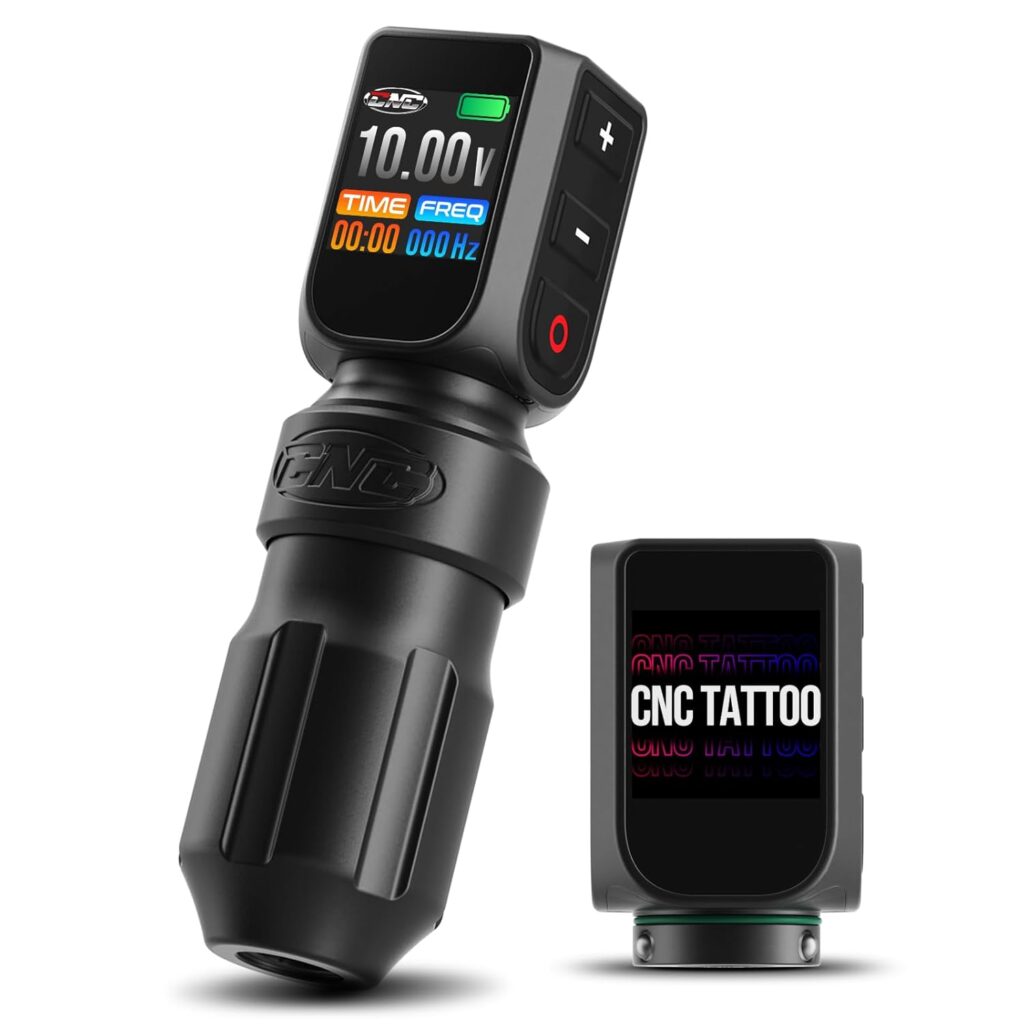
We’ve been burned by “all-day battery” claims more times than we care to count. So when we picked up the CNC Tattoo Machine Wireless Tattoo Gun Rotary Pen with 3200mAh Dual Batteries 3.5 Stroke Power Supply Digital LED Display Coreless/Brushless Motor for Tattoo Professionals and Beginners (CNC-M2-E77-1), we went in with equal parts hope and skepticism. We wanted a travel-friendly, no-cord setup that didn’t make us miss our wired workhorse five minutes in.
We also wanted a machine we could hand to a beginner on practice skin without a full safety-briefing lecture, but that still had the finesse to line cleanly, shade smoothly, and color-pack without tantrums. Spoiler: we kept putting this one back in our bag, and not just because it looks snazzy on the tray.

CNC Tattoo Machine Wireless Tattoo Gun Rotary Pen with 3200mAh Dual Batteries 3.5 Stroke Power Supply Digital LED Display Coreless Motor for Tattoo Professionals and Beginners CNC-M2-E77-1
Unboxing and First Impressions
We opened the box like people who’ve learned that love means new O-rings. Inside: the E77 machine body, two 1600mAh RCA batteries, a charging cable, and documentation that doesn’t read like stereo instructions from 1984. There’s a pleasing heft to the pen without it feeling like a dumbbell, and the matte finish makes it easier to handle with gloved hands.
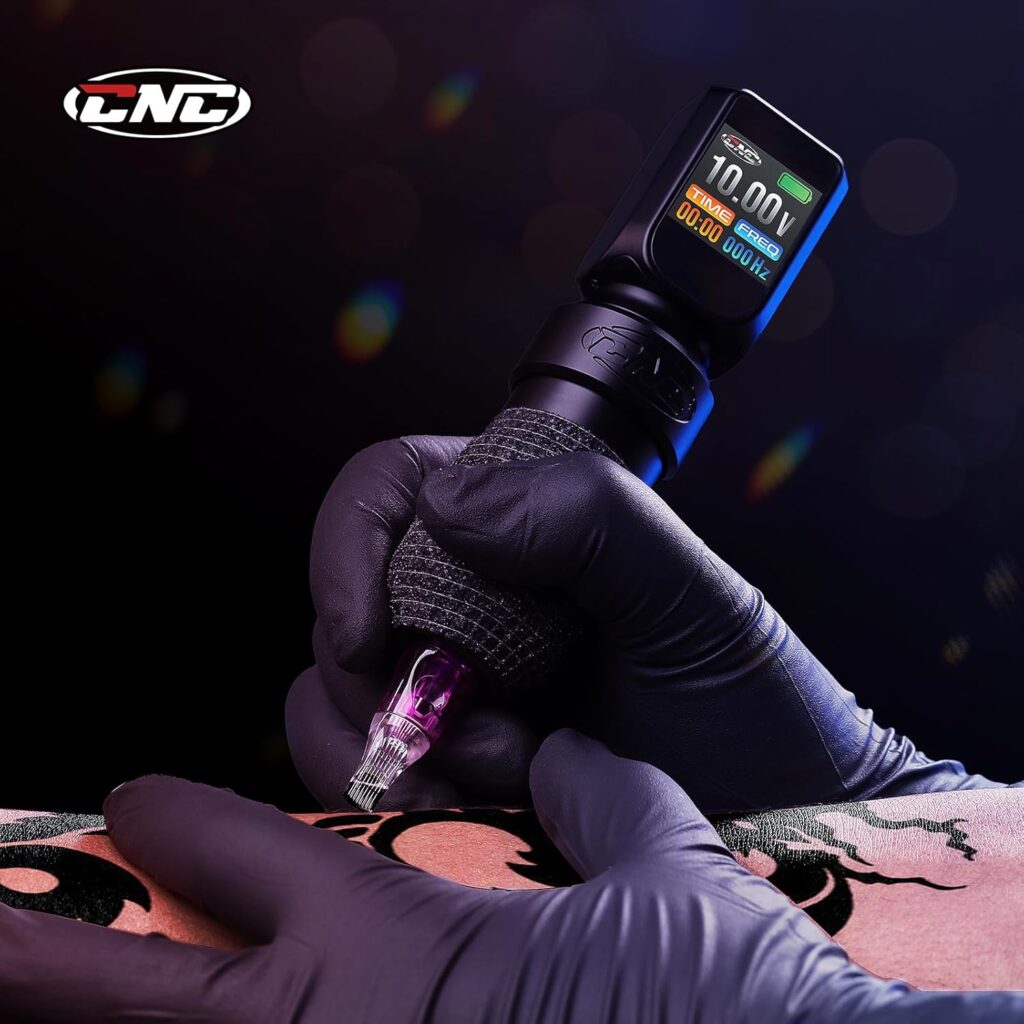
Right away, the bright color LED screen had our attention. We’ve squinted at enough dim readouts to appreciate when numbers look like numbers. If you care about exact voltage, timer, and battery percentage at a glance, this display does the courtesy of being obvious.
Design and Ergonomics
We live with gravity and slippery disinfectant wipes like everyone else. The E77’s body has a subtle anti-roll shape that means we can set it down and it stays put, instead of making a break for the edge of the tray like a rebellious hot dog.
The grip feels friendly to both small and large hands. We’ve used it with nitrile gloves in various weights and never felt like we were white-knuckling to keep it steady. The weight distribution lands closer to balanced than top-heavy, even with the battery attached, which makes longer passes less punishing on our wrist.
The No-Roll Body
Let’s not pretend this isn’t a big deal. We set the E77 down fifteen times per session: to wipe, to stretch, to squint thoughtfully into the middle distance. Watching it stay where we left it kept us from punching the air. It’s one of those design decisions that feels like an apology for every runaway pen we’ve chased across a station.
Grip and Balance
Balance is where “this is nice” becomes “we can keep using this at 4 p.m.” The pen feels neutral, neither blade-heavy nor weightlifting top. On large color pieces, our forearm didn’t complain as much as usual, and line polish around corners felt predictably seated.
Power System: Dual 1600mAh Batteries
Two batteries in the box—each 1600mAh—mean we have 3200mAh total capacity on hand. This is not theoretical relief; it’s real-world convenience. When one battery dips, we pop it off, click the fresh one on, and we’re back in motion faster than a client can say, “Wait, is that going to hurt?”
The batteries attach via RCA, which also means we can use them with other RCA-input machines. Versatility is a love language, and this setup speaks it fluently.
Battery Life in Real Sessions
Numbers matter, but bodies vary. Our mileage looked like this:
- Lining at moderate voltage with a 7RL: around 5–6 hours on a single 1600mAh battery.
- Soft black-and-grey with smaller mags: closer to 6–7 hours.
- Heavy color packing with larger mags: 3.5–5 hours.
That depends on voltage, needle grouping, and how often we pause to talk about vacations with clients. Still, we comfortably ran the duo over a full day without scraping for a wall outlet.
Charging and Swapping
We charged one while using the other, and the swap is so quick we started to treat it like a water break. Quick-connect batteries are one of those tiny joys that make the day feel more professional and less like a scavenger hunt for power bricks.
LED Display and Controls
We like the little things that keep the big things on track. The E77’s high-definition color LED screen shows voltage, battery percentage, and usually a runtime indicator. The buttons are positive, with no vague mush to them, and they respond to gloved hands without fuss.
We could set voltage in precise increments, then glance back mid-pass and see exactly where we’d landed. That sounds simple, but it reduces micro-anxiety in a session: fewer little questions biting at our ankles while we chase consistency in the skin.
Voltage Range and Adjustments
We primarily ran between 6.5V and 9.5V depending on the job. Our sweet spots looked like this:
- Single needle and 3RL: 6.5–7.5V for controlled, gentle lining
- 5–9RL lining: 7.5–8.8V for crisp pull without chatter
- 7–11 curved mags for black-and-grey: 6.3–7.2V for soft shade
- 11–15 curved mags for color packing: 8.5–9.5V for turn-and-burn consistency
Your touch, cartridge brand, and skin type will push you up or down. The important part is that the machine stays consistent as you tune, not acting like a moody roommate when you nudge 0.2V higher.
Motor and Stroke: That 3.5mm Sweet Spot
We’re fond of the 3.5mm stroke for its do-most-things competence. It’s a Goldilocks travel companion: long enough to pack color and build structured lines, short enough to do smooth blends with the right hand and needle.
There’s a quirk in the listing: the product title references a coreless motor, while the detailed description talks up a brushless motor. Coreless and brushless are different beasts—one is a type of brushed motor with no iron core in the rotor, the other eliminates brushes entirely. Either way, what we felt in the hand was steady torque, predictable recovery, and notably low heat, which is what we actually care about when we’re crouching over a forearm.
About That Motor Label
We’ll say this plainly because we’ve been in tattoo rooms long enough to appreciate honesty: the label discrepancy doesn’t change our experience with the machine. Whether coreless or brushless, the E77 maintained output well over longer sits, didn’t get squirrelly under back pressure, and kept a calm temperature profile. Our ears told us it runs quietly for a wireless, and the vibration stays in the agreeable zone where details don’t buzz away like jumpy moths.
Lining Performance
With a 7RL at 8.2V, we kept lines crisp on both bouncy and tougher skin. Corners bit in without tears, and long pulls didn’t wobble. With a 3RL, dropping to 6.9–7.2V gave us the room to finesse slower curves without overcooking the top layer.
We did notice that, compared to a pure lining specialist with a longer stroke, we needed to adjust hand speed on very saturated bold lines. That’s not a complaint; it’s just how the 3.5mm compromise works. The E77 rewards a methodical, even pace with consistent penetration and less trauma.
Shading and Color Packing
If lining is the resume, shading and packing are the performance review. With 9CM and 11CM mags in the 6.5–7.2V range, gradients landed like buttered toast: smooth, predictable, quick to settle. For heavy saturation—solid red fills, for example—8.8–9.3V with 11–15 mags let us build density without bulldozing.
We appreciated how the machine seemed to hold its composure as we switched techniques on the fly. Pendulum shading stayed smooth around awkward topography (think elbows and calves), and whip shading remained controlled, letting us feather out without a surprise bite at the end of the stroke.
Noise, Vibration, and Heat
We’ve worked with wireless setups that growl like an annoyed terrier by mid-session. The E77 stayed relatively quiet, and the vibration felt polite. Less hum means more attention left over for texture and line weight.
On heat, it stayed cool. After two hours of continuous use in a heavy color session, the body was warm but not alarming, making it easier to bag and handle without playing hot potato.
Cartridge Compatibility and Needle Guidance
The RCA battery format pairs with an RCA machine input, which means we were free to use our usual cartridges. We tried Cheyenne-type universal carts, budget-friendly disposables, and mid-tier crisp liners. Everything clicked in, held, and sat properly.
- Small liners (1–3): Keep voltage modest, use gentle hand speed, rely on the machine’s consistency rather than brute force.
- Standard liners (5–9): Middle-of-the-road voltage, steady hand, nice and clean.
- Mags (7–15): Run the values suggested above, adjust to skin, and enjoy the stable torque.
If you’re new to mags, we recommend starting with curved mags for a more forgiving edge. The E77’s even hit helps you find the sweet spot faster.
Hygiene and Maintenance
A wireless pen makes barrier protection simpler. We bagged the pen with a machine sleeve, used clip cord covers on the battery and body as needed, and threw on a rubber band to snug the sleeve below the tip of the grip. Afterward, a wipe-down with an approved disinfectant kept things tidy.
Maintenance was minimal: a touch of lubrication or tension check if your specific cartridge system calls for it, and a quick visual check of the RCA connection for dust or residue. Batteries benefit from occasional full cycles—run them down, charge to full—to keep the readout accurate.
What We Loved and What Gave Us Pause
We like a pros-and-cons moment because it gives us a structured place to be honest.
What We Loved
- Two 1600mAh batteries included: Real relief during long days, zero waiting around.
- Color LED screen: Big, bright, readable—no squinting, even in odd lighting.
- No-roll body: It sits, it stays, it behaves like an adult.
- Consistent output: Linework and shading felt controlled and repeatable.
- Low heat and modest vibration: Easier on our hands and our patience.
- User-friendly for beginners, capable for pros: A comfortable learning curve with room to grow.
- RCA flexibility: Batteries can be used with other RCA machines, and the pen takes common cartridges.
What Gave Us Pause
- Motor labeling (coreless vs brushless): A mismatch in the listing that may confuse buyers, even if performance is solid.
- 3.5mm stroke only: Versatile, yes, but specialists who like 4.0–4.2mm for aggressive lining or 3.0mm for ultra-soft shading might want modularity.
- No hardshell case in our box: Not a dealbreaker, but a travel case would have felt right for a wireless kit.
Side-by-Side Context: Where It Sits in the Market
We’ve worked with bulky wireless bodies that feel like a marble rolling pin, and with sleek pens that sag on battery life by lunchtime. The E77 lands in that rare overlap of practical ergonomics, honest runtime, and calm behavior in skin.
Compared to pricier flagship wireless machines, the E77 doesn’t feel like a compromise build. The screen is better than many. The dual battery pack-in is more generous than most. Performance-wise, the torque feels competitive for the price tier, with shading ability that stands out. If you’re jumping from a budget wired rotary, this will feel like stepping into the present tense.
Table: Key Specs, Our Notes, and Session Guidance
| Item | What’s Listed/Observed | Our Take | Session Guidance |
|---|---|---|---|
| Product name | CNC-M2-E77-1 Wireless Rotary Pen | Clean design, travel-friendly | Good for shops and mobile setups |
| Batteries | Two 1600mAh RCA batteries (3200mAh total on hand) | Real all-day capability | Swap at ~20% to avoid surprise shutdown |
| Display | Color LED, high-definition | Clear and bright | Easy mid-session checks |
| Motor | Listed as brushless in details; coreless in title | Regardless, output felt steady | Low heat, low vibration |
| Stroke | 3.5mm | Do-it-all sweet spot | Great for mixed sessions |
| Power | Wireless with RCA battery packs | Versatile with other RCA pens | Keep contacts clean |
| Runtime | 3.5–7 hours per battery depending on workload | Matching our expectations | Rotate batteries between long sessions |
| Lining | Clean with 3–9RL | Stable recovery | 7.5–8.8V depending on grouping |
| Shading | Smooth with 7–11 mags | Soft gradients, low trauma | 6.3–7.2V for black-and-grey |
| Color packing | Confident with 11–15 mags | Dense fills, minimal stall | 8.5–9.5V, steady pace |
| Ergonomics | Anti-roll, balanced grip | Less fatigue | Good for smaller hands too |
| After-sales | CNC support | Responsive brand reputation | Register and keep receipts |
Setup Guide: From Box to Bicep
We like a quick, clean start. Here’s how we got rolling without a tangle.
- Unbox and inspect
- Take a moment to check for shipping bumps or loose parts.
- Confirm both batteries power on and show a charge level.
- Bag and prep
- Sleeve the machine body with a disposable barrier.
- If you’re covering the battery too, use a clip cord sleeve or a second barrier sleeve so the display remains readable.
- Secure the barrier near the grip with a band if it shifts.
- Fit your cartridge
- Insert your preferred cartridge until it clicks and seats firmly.
- Twist the grip adjustment (if applicable) to set needle protrusion—usually 1.5–2.5mm outside the tip, depending on style.
- Attach a charged battery
- Click the RCA battery onto the machine input firmly.
- Confirm power and voltage display.
- Set voltage
- Start low for shading or fine lines, higher for bold lines and color packing.
- Keep a log of your favorite pairings (needle grouping, voltage, hand speed) for consistency.
- Patch test on practice skin or paper towel
- Run a few short bursts to feel the hit and sound before you touch real skin.
- Adjust in small increments—0.1–0.2V changes can matter.
- Tattoo like a civilized human
- Steady hand, stretch, clean lines. We say this aloud to ourselves sometimes because kindness matters—even to our wrists.
Tips for Beginners Using This Machine
We remember our early days—the jittery grip, the anxious voltage toggling, and the profound realization that skin is not paper. The E77 helps in a few kind ways.
- Start with practice skin. Use a 5RL and a 7CM mag to learn basic line consistency and soft shading. Make swatches: voltage on one axis, hand speed on the other.
- Use the screen as a teacher. Note the voltage where your lines look right and where they are too shallow or too aggressive.
- Keep your wrist neutral. Let the machine’s steady hit do part of the work; don’t strangle the pen.
- Listen to the sound. Smooth and even is the goal; if it strains, adjust voltage or your speed.
- Be gentle on color packing at first. Patience means fewer passes, which means happier skin.
- Embrace cleaning rituals. Barrier everything. Wipe with purpose. Your future self will thank you.
Notes for Professionals
We know you’ve formed opinions stronger than espresso. Here’s what stood out for us in a pro workflow.
- Cartridge variability: The E77 felt consistent across mid- and high-end cartridges. Budget carts ran fine too, though you’ll hear and feel more variance.
- Long-run stability: We ran a six-hour back-to-back with heavy packing. Output remained predictably steady after the two-hour mark, which is where some wireless pens go mushy.
- Control at low voltage: For delicate stipple gradients, the machine gave good nuance in the 6.3–6.8V range with 7–9 mags and a feather hand.
- Torque under pressure: Using 13CM and 15CM mags at 8.7–9.4V, the machine held pace without noticeable stall on tight curves and denser areas.
- Power-on-off rhythm: Swapping batteries mid-session is painless—screen comes up fast, memory retains last settings well.
Real-World Sessions We Ran
We always learn more by doing than by nodding politely at a spec sheet, so we put the E77 through some sessions that usually expose flaws.
- Script with flourishes on a wrist: 3RL, 6.9–7.2V, stretchy skin, odd angles. The pen felt poised; curves stayed consistent with minimal needle wander.
- Black-and-grey floral on a forearm: 9CM, 6.4–6.8V for soft shading. Blend transitions landed without fuss, and our client didn’t get that “why is this taking forever” fidget.
- Solid red fill on a calf: 11CM, 8.9–9.3V. We built saturation in fewer passes than expected for a wireless pen, and post-session redness was manageable.
- Bold old-school lines on an upper arm: 9RL, 8.3–8.7V. Clean bites, no chattering on corners, and the stroke depth felt forgiving enough not to punish a slightly off stretch.
The Learning Curve: Minimal, Honest, Kind
A lot of machines feel like they require insider knowledge to unlock. We appreciated that the E77 reads as “what you set is what you get.” Once we found our baseline voltages for each needle group, we felt free to think about art again. That’s the mark of a tool doing its job, not auditioning for attention.
QC and Reliability
We’ve used enough equipment to know that one person’s gem can be another’s headache because of quality control. Our unit arrived cleanly machined, with no burrs or play in the grip threads, and the RCA fit was snug. Over several weeks, there were no sudden power dips or screen glitches.
We’d still suggest registering the product with CNC and keeping your receipt, because even reliable brands can have the occasional Monday unit. The upside here is that CNC has a reputation for standing behind its gear.
Travel, Conventions, and Guest Spots
Wireless is the dream at busy conventions: no power strip wars, fewer tangled lines on a crowded table, and quick resets between clients. The E77 kept a low profile in our bag. Even without a hardshell case, it slid into our wrap roll nicely, and the batteries tucked into a side pocket without wandering off.
International travel pro tip: bring a compact multi-port charger so you can juice both batteries and your phone at once. And, if you’re that person who always forgets, toss a spare USB-C or micro-USB cable into the same pouch—IYKYK.
Safety and Skin Kindness
We’re not here to hand out medical advice, but we’ll happily advocate for skin kindness. The E77’s even hit and consistent voltage help us stick to fewer passes, which means easier healing. That shows up as happier clients a week later, and fewer “did I chew this area up?” regrets on our end.
We also like how the balanced grip lets us keep consistent depth without hunting. The result is geometry that looks the same on day one and day ten, which is what we’re all trying to hand to our clients.
What We Wish for the Next Version
We’re fond of wish lists because they’re a form of affection. If we didn’t like the E77, we wouldn’t hope for refinements.
- Clear motor labeling: Choose “brushless” or “coreless” and commit, because shoppers want to know.
- Optional stroke cam: A 4.0mm option would make some bold-line specialists giddy.
- Hardshell case: Even a compact one with battery slots would feel right.
- Haptic or audible low-battery cue: Subtle feedback so we don’t watch the screen as often.
Frequently Not-So-Frequently Asked Questions
We get these in DMs and overhear them in studios. Here’s the short version.
- Can we use these batteries on another RCA machine? Yes. Just click them on and confirm fit and clearance under your barrier setup.
- Is the screen visible through a sleeve? With a clear or thin sleeve and decent lighting, yes. Otherwise, we leave the battery partially uncovered with a separate cover to keep visibility high.
- How many sessions per charge? Depends on voltage and needle, but think of one 1600mAh battery as one client, possibly two, with the second battery waiting in the wings.
- Does it overheat? Not in our tests. It gets warm like a machine that’s doing its job, not like a toaster.
- Is it beginner friendly? Absolutely. The learning curve is more about you and the skin than about the machine’s quirks.
Price-to-Value Thoughts
We’ve spent more and gotten less. With two batteries included, a bright screen, and a body design that behaves, the E77 feels fairly priced for what it delivers. It’s especially compelling if you run a hybrid kit—wired and wireless—and want a wireless that actually shows up without excuses.
We also like that switching to wireless doesn’t mean relearning our voltage notes from scratch. Our wired settings ported over with minor tweaks, which made the transition almost boring, in the best sense of the word.
After-Sales, Warranty, and Support Experience
CNC’s been around long enough for our DMs to include plenty of stories, most of them positive. Our own note: the brand answered pre-sale questions quickly and clearly. If something goes sideways, we feel better when a company exists in the daylight and not as a return label to nowhere.
We suggest registering your unit and testing both batteries immediately so any issues can be resolved while you’re still inside the return window. Keep your packaging until you’ve run the machine through a few practice and real sessions.
Who This Machine Is For
- Working artists who want a reliable wireless to handle everyday walk-ins and booked pieces without babysitting battery levels.
- Apprentices and beginners who need a forgiving 3.5mm stroke, stable output, and a screen that teaches by being obvious.
- Travel and convention artists who want to keep cables to a minimum and speed up teardown between clients.
- Mixed-style artists who do a bit of everything: script, small realism, black-and-grey, and color blocking.
If your heart belongs to extremely bold, single-pass 14RL lines all day long, you might wish for a longer stroke. If your daily bread is whisper-soft pepper shading only, you might be tempted by a shorter stroke. But if you do both—like we do most weeks—this machine hits the versatile middle lane that earns its chair time.
Little Joys, Big Differences
We like it when the screen wakes up fast and the voltage number doesn’t flutter. We like it when the body doesn’t pirouette off the tray. We like it when a second battery is right there, charged and waiting, like a friend who shows up on time with snacks. The E77 gave us those small, constant yeses that make a long day feel smoother.
And every time we looked up and remembered there wasn’t a cable tugging at our elbow, we felt a flicker of gratitude. Not the fireworks kind—more like the quiet cheer of a green light turning just as we roll up.
The Bottom Line We Work By
We keep gear that does the job and moves out of our way. The CNC Tattoo Machine Wireless Tattoo Gun Rotary Pen with 3200mAh Dual Batteries, 3.5mm stroke, color LED screen, and steady motor—whatever we call it under the hood—earned a repeat invite to our station. It’s easy to set, comfortable to hold, and consistent in the ways that matter.
We’ll keep a wired machine on hand because we’re practical, but when we reach for wireless, we want it to feel like a tool, not a compromise. The E77 felt like a tool. We lined with it, shaded with it, packed with it, handed it to a beginner on practice skin without flinching, and took it to a busy day without building a shrine to the nearest outlet.
If your kit has been waiting for a wireless pen that behaves like a grown-up, this is a solid, confidence-friendly contender. And if you’re like us, the anti-roll body alone will save you enough tiny heart attacks in a week to pay for itself in emotional interest.
Disclosure: As an Amazon Associate, I earn from qualifying purchases.