Have we been waiting for a compact CNC that behaves like it has something to prove, refuses to chatter when things get tough, and still lets us keep all ten fingers?

Our Take on the CNC Router Machine 500W Spindle CNC Laser Cutter
We approached the CNC Router Machine 500W Spindle CNC Laser Cutter, Machine for Metal High Torque NEMA 23 Stepper Motor, Linear Rails & Ball Screws 3-Axis Engraving Milling Machine for Wood Cutting (try saying that three times fast) with equal parts curiosity and suspicion. We’ve met plenty of machines that promise industrial swagger on a hobbyist budget. Most underwhelm. This one clearly wants to be the exception.
Quick Summary Before We Go Long
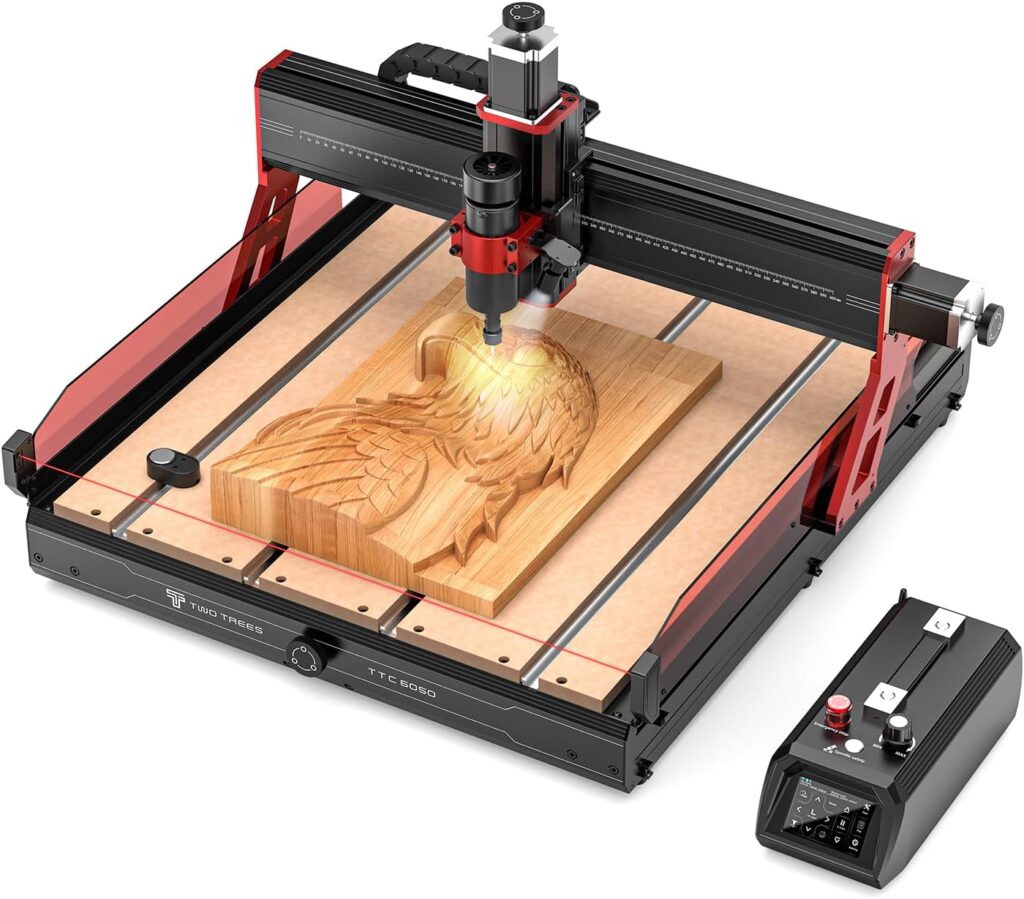
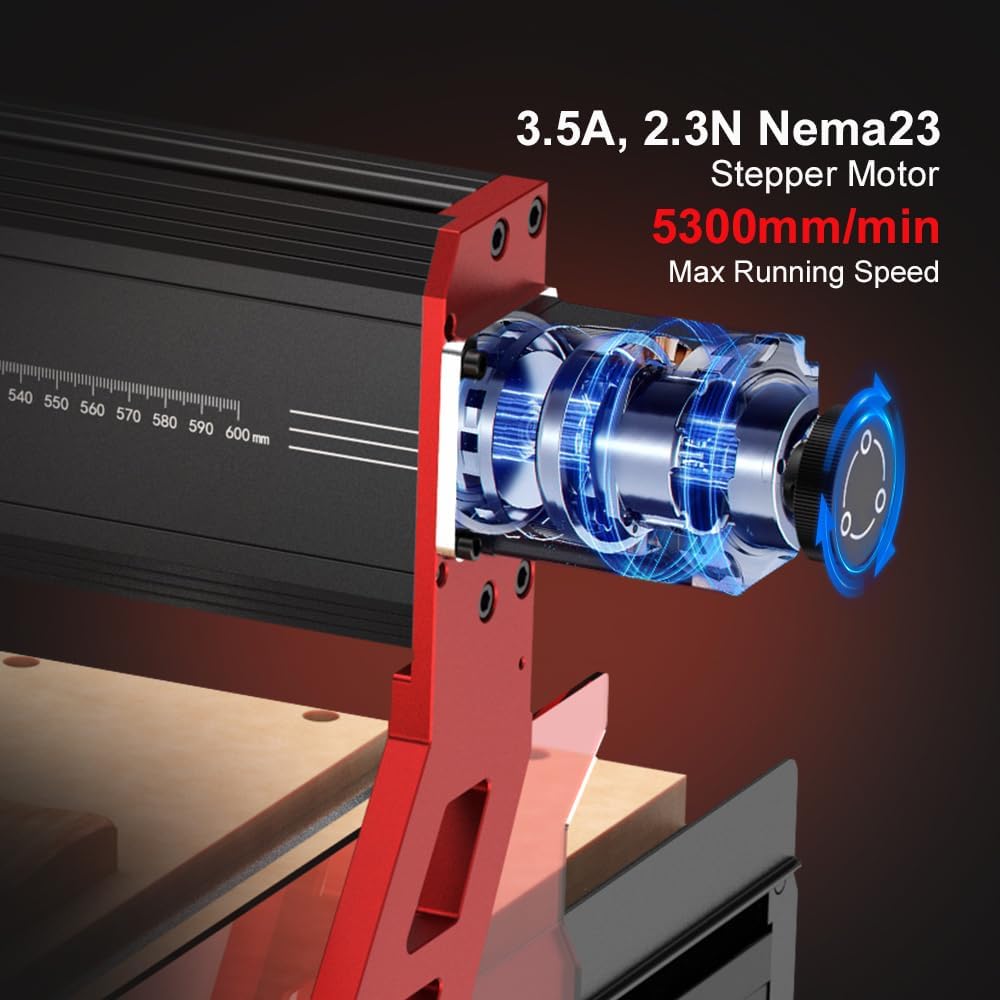
We’re looking at a 500W spindle, NEMA 23 stepper motors with 2.3 Nm torque, linear rails on all three axes, ball screws instead of belts, and an effective work area of 600 x 500 x 100 mm (23.6 x 19.6 x 3.9 inches). There’s a robust aluminum T-track base supporting replaceable MDF slats, and a dust-resistant controller box with handy shortcut buttons. The stated engraving accuracy is 0.05 mm, and the maximum travel speed is 5300 mm/min.
In short, it’s a sturdy, thoughtfully designed 3-axis CNC router that can do wood, plastics, and soft metals like aluminum with confidence. It also ships with two extra spindle clamps (65 mm and 69 mm) so we can upgrade to a common trim router later if we choose.

CNC Router Machine 500W Spindle CNC Laser Cutter, Machine for Metal High Torque NEMA 23 Stepper Motor, Linear Rails & Ball Screws 3-Axis Engraving Milling Machine for Wood Cutting
Why We Considered This Machine
We wanted a compact gantry-style CNC that doesn’t behave like a wobbly folding chair. Ball screws and linear rails are the closest thing to a “cheat code” for rigidity and repeatability in this price range. That combo alone moved this model higher on our list than most belt-driven options. The effective working area also hits a sweet spot: large enough for cabinet doors, signs, guitar bodies, and aluminum plates, but still small enough to fit in a shop where the laundry machines are unreasonably judgmental.
The Audience We Think It Suits
This machine suits ambitious hobbyists and small shops doing prototyping, custom plaques, furniture joinery, RC parts, jigs, fixtures, and aluminum front panels. If we’re chasing aerospace tolerances, this isn’t that. But for woodworking, signage, and well-behaved soft metals, it’s surprisingly capable.
Unboxing and First Impressions
We’ve had machines arrive like emotional baggage: dented, missing parts, and smelling faintly of regret. Not here. The packaging was tight and boring—in a good way. Extrusions and assemblies were wrapped, boxed, and methodically supported, which is all we ask when our weekend hinges on a UPS driver.
The first thing we noticed was weight. The thickened plate profiles and aluminum extrusions give off a “we’re going to be here a while” vibe. It’s not gym-equipment heavy, but it’s not toy-light either. That weight pays dividends when a tool hits a knot or an aluminum chip decides to behave like confetti.
The Controller Box: Boring, Useful, Exactly What We Wanted
The revamped controller box looks sensible and is, we’re happy to report, very dust-averse. The shortcut buttons may not change our life, but they shave seconds off every job, which adds up. It feels like the designers knew we’d be running this in a real shop with dust swirling like it’s auditioning for a weather report.
Assembly Experience
We’ve built kits that felt like a scavenger hunt designed by someone who didn’t like us. This wasn’t that. The assembly was straightforward, the fasteners were labeled, and the subassemblies felt properly machined. A square, a couple of hex keys, and a healthy respect for the difference between snug and stripped got us there.
We took our time squaring the gantry and tramming the spindle. With ball screws and linear rails, the reward for patience shows up in the first cut: smoother passes, fewer tool marks, and less drama when we change direction.
Tips That Saved Us Time
- We loosely assembled the frame, squared it corner-to-corner, then tightened in a star pattern. Simple, effective.
- We measured gantry-to-rail spacing at both ends before final tightening. Parallel is more than a suggestion here.
- We checked Z tram with a simple homemade tramming arm. Even a small skew shows up in pocket bottoms and facing operations.
Build Quality and Design Choices We Appreciate
Someone in the design room respected physics. That’s our overarching impression.
T-Track Base and MDF Slats
The aluminum T-track extrusions provide flexible fixturing. We can clamp odd shapes, use cam clamps, or drop in a low-profile vise. The MDF slats are replaceable, and that’s useful because MDF ages the way fruit does: one day it’s fine, the next day it’s trying out new personalities. Replacing a single panel is cheaper, tidier, and substantially less emotionally fraught than re-decking an entire wasteboard.
Linear Rails and Ball Screws on X/Y/Z
Belt drives have their place, but they stretch, they complain, and they make us adjust things when we’d rather be cutting. Ball screws plus linear rails are a more serious proposition. Motion is smoother, backlash is reduced, and the machine’s cutting behavior feels more authoritative. The sealed design helps keep dust out of the transmission structure, which prolongs life and keeps maintenance from turning into a part-time job.
NEMA 23 Stepper Motors with 2.3 Nm Torque
The NEMA 23s, rated at 2.3 Nm, are the quiet backbone here. Higher torque means fewer missed steps and better acceleration without turning the machine into a maraca. We felt confident pushing feeds steadily without the motors staging a mutiny.
The 500W Spindle and Upgrade Options
The 500W spindle is a fair balance: strong enough to cut hardwoods and aluminum when used with the right feeds and tooling, but not so overpowered that it burns its way through hardwood like a misdirected flamethrower. It’s a DC-style spindle, relatively quiet by shop standards, with a tone we’d describe as “determined hair dryer.” The included 65 mm and 69 mm clamps are thoughtful—handy if we want to upgrade to a common trim router down the line. The ability to switch spindles is future-proofing we genuinely appreciate.
Specs at a Glance
Sometimes it helps to see things side by side. Here’s the summary we wish every product page provided.
| Feature | What We Got | Why It Matters |
|---|---|---|
| Spindle | 500W DC spindle; includes 65 mm and 69 mm extra clamps | Enough power for hardwood and soft metals; future router upgrade path |
| Motors | NEMA 23 steppers, 2.3 Nm torque | Faster, smoother motion with fewer missed steps |
| Motion System | Linear rails + ball screws on X/Y/Z | Reduced backlash, higher precision, longer life |
| Accuracy | Engraving accuracy up to 0.05 mm | Crisp details for inlay, text, and aluminum plates |
| Max Travel Speed | 5300 mm/min | Rapid moves feel snappy; time savings add up |
| Work Area | 600 x 500 x 100 mm (23.6 x 19.6 x 3.9 in) | Big enough for signs, panels, fixtures, and guitar bodies |
| Bed | Aluminum T-tracks with replaceable MDF slats | Flexible clamping and easy maintenance |
| Controller | Dust-resistant box with shortcut buttons | Reliable performance in dusty shops; quick operations |
| Construction | Thickened plate profiles; sealed design | Better rigidity and longer service life |
Real-World Performance: What We Cut and How It Felt
We didn’t treat it gently, but we did treat it like we wanted it to be around next year.
Wood: Plywood, Walnut, Maple, and the Occasional Knot
In hardwoods, the 500W spindle is brave but not reckless. We used sharp tools, sane stepdowns, and the machine rewarded us with clean profiles and tidy pockets. For a 1/4-inch two-flute upcut in maple, we started with something like 1.0–1.5 mm stepdown and roughly 900–1400 mm/min feed at a mid-to-high spindle speed. Not blazing fast, but very dependable. Face milling with a small surfacing bit felt smooth, leaving a nice finish that didn’t require a novel-length sanding session.
Softwood and baltic birch were easygoing. V-carved signs, inlays, and 3D reliefs looked crisp. We used compression bits on plywood when possible to keep edges neat. The T-track clamping made odd-shaped projects less of a circus act.
Aluminum: Sensible, Confident, and Chip-Happy
Cutting aluminum on a hobby-class CNC is where the real test begins. We kept our expectations realistic: smaller tools, conservative stepdowns, and a love affair with chip evacuation. With 3 mm and 1/8-inch single-flute end mills, and a light mist/coolant spritz or a regimented pause to brush chips, we got clean slots and pockets. We stayed mindful of chatter, avoided burying the tool, and kept the spindle speed on the high side with lighter passes. The linear rails and ball screws gave us the confidence to keep feeds steady. It’s not a VMC, but it’s not a jittery arts-and-crafts robot either.
Plastics: Acrylic and ABS Without Melt Drama
Plastics can be petty—too slow and they melt, too aggressive and they chip. We ran a single-flute bit, kept chips clearing, and chose moderate feeds. The results were clear edges, smooth pockets, and a notable lack of molten spaghetti. We also used a finishing pass on acrylic edges, and the polished result was delightful.
Accuracy and Repeatability
The stated 0.05 mm engraving accuracy lines up with what we saw in practice. Tight-fitting inlays fit tight. Alignment across multiple tool changes stayed honest when we used a touch probe or consistent manual zeroing. The ball screws and rail stiffness reduced backlash enough that facing passes and contour finishes looked clean, even when we doubled back.
The 5300 mm/min rapid speed kept our non-cutting moves from feeling like waiting for an elevator in an old building. We wouldn’t race a high-end unit, but we didn’t feel held back either.
Noise, Dust, and Vibration
Noise: somewhere between vacuum cleaner and hair dryer, with a bit of “I mean business” when cutting hardwood. The machine’s mass helps reduce shriek. If we plan to run it in a basement or attached garage, ear protection is smart. Our neighbors did not file formal complaints.
Dust: wood dust goes everywhere unless we plan for it. We recommend a dust shoe and a small dust collector or shop vac with a cyclone. The controller’s dust-resistant design felt sensible and grown-up. If we do aluminum, chip management is non-negotiable. We used an air blast or periodic brushing, and our end mills stayed happier.
Vibration: the structure and ball screws keep vibration under control. We set ours on a sturdy bench and checked for any sympathetic oscillations. None. If our table wobbles, that’s a table issue, not a machine issue.
Software and Workflow
We used a standard CAD/CAM-to-G-code workflow. It plays well with popular CAM tools that output standard G-code, and G-code senders that communicate with the controller via the usual USB approach. If in doubt, we’d check the included manual for the exact controller protocol. Our habit is to run a dry pass at Z+10 mm for any job we care about, mostly because it’s nice to catch surprises while nothing is getting carved.
Any of the usual suspects for CAD/CAM will do as long as we can define the toolpaths, feeds, and post-processor correctly. Simple 2D work is well served by beginner-friendly toolchains, while 3D reliefs and advanced aluminum jobs benefit from something more mature. Our advice: pick something we’re willing to learn and stick with it for a month. The gains in speed and confidence are huge.
The Controller Box and Shortcuts We Actually Used
The “shortcut buttons” are more than gimmicks; they helped with:
- Homing and setting zero quickly
- Pausing a job without panic-clicking our laptop
- Jogging to specific increments for setup
- Clearing chips mid-job when we felt the tiniest twinge of superstition
We also liked the maintenance access. CNCs invite tinkering; there’s nothing worse than a controller case designed like a secret puzzle box. This one’s straightforward.
Workholding: The Unsung Hero
We can’t overstate this: flexible workholding in the T-tracks is a quality-of-life improvement. We used:
- Low-profile clamps for sheet goods
- Soft jaws in a small vise for aluminum
- Cam clamps for odd shapes
- Blue tape and CA glue for thin decorative pieces
The ability to replace individual MDF slats keeps the top flat enough that fly-cutting the surface doesn’t feel like a math problem.
Upgrades and Accessories We Recommend
We promised ourselves not to become That Person who buys accessories to procrastinate on making things. That said, a few additions made a big difference.
- Dust shoe and a small dust collector or shop vac with a cyclone
- Touch probe for setting Z-zero on tools and overall repeatability
- 65 mm or 69 mm trim router upgrade (if we want more torque at the spindle)
- Assorted end mills: 1/8-inch single-flute for aluminum and plastics; 1/4-inch two- or three-flute for wood; V-bits for signage
- A decent LED lamp aimed at the work area; visibility is half the battle
- Chip brush and compressed air for aluminum work
- Calipers and a 1-2-3 block for setup; these turn “close enough” into “that looks intentional”
- A simple enclosure if noise or dust is a concern in shared spaces
Maintenance: The Ten-Minute Habit
This machine is built to last, but that only holds if we show it a little love.
- After dusty jobs: wipe rails and screws; keep the dust-resistant design honest by not pushing our luck
- Weekly (or after heavy use): check fasteners for tightness, especially on the spindle mount and frame
- Light lubrication on ball screws and rails following the manual’s guidelines
- Keep the bed flat: resurface MDF slats occasionally; replace a tired slat rather than cursing it
- Watch for signs of missed steps or inconsistent dimensions; that’s our cue to check tram or squareness
Cutting Parameters: Sensible Starting Points
Every setup, tool, and material stack-up is different, but here are conservative starting points we used and then tuned by ear and finish quality.
-
Hardwood (maple, walnut) with 1/4-inch 2-flute upcut:
- Stepdown: 1.0–1.5 mm
- Stepover: 40–50%
- Feed: 900–1400 mm/min
- Spindle: mid-to-high speed on the 500W spindle
- Finish pass: 0.3 mm for clean edges
-
Plywood with 1/4-inch compression bit:
- Stepdown: 1.5 mm
- Feed: 1200–1600 mm/min
- Spindle: mid speed
- Tabs: more than we think, then remove one for bravery
-
Aluminum 6061 with 1/8-inch single-flute:
- Stepdown: 0.2–0.5 mm
- Stepover: 30%
- Feed: 300–700 mm/min
- Spindle: high speed
- Air blast or frequent chip clearing; optional light mist
- Finish pass: 0.1 mm for clean walls
These are intentionally gentle. Once we feel the machine’s personality, we can push.
Troubleshooting Without Drama
We bribed our future selves by keeping a short log of changes and results. When something went sideways, we checked the usual suspects.
- Ragged edges in wood: dull bit or wrong chipload. Try a sharper tool and a faster feed with shallower stepdown.
- Chatter in aluminum: reduce stepdown, add chip clearing, verify the work is clamped like it owes us money.
- Inconsistent Z depth: tram the spindle, resurface the bed, double-check the collet and tool shank for dust.
- Lost steps: lower acceleration or feed slightly, check for binding on the rails, verify motor connections.
- Melted plastic edges: faster feed, slower spindle, single-flute bit, and better chip evacuation.
The Whole “Laser” Question
The product name references a CNC laser cutter, but the core package described centers on a router with a 500W spindle. If we plan to add a laser, we’d confirm compatibility with the specific controller and mount. Some users add bolt-on laser modules, but it depends on available ports and control software. We treated this unit as a router-first machine, and for that, it delivers.
Safety, Because We Like Our Fingers
- Eye protection is non-negotiable. Wood chips and aluminum shavings are like tiny volunteers who signed up to be a problem.
- Hearing protection is kind. The spindle won’t rupture eardrums, but long sessions add up.
- Dust collection isn’t just cleanliness; it’s lungs. We like ours.
- Keep loose clothing and long hair secured. This machine does not understand fashion.
- Never leave the machine unattended. Even a perfect toolpath can go rogue if a clamp loosens.
Comparing It to Other Options
We’ve used smaller 3018-style machines. They’re fine for learning and PCB engraving, but they lack the rigidity for serious wood or aluminum work. Belt-driven midsize machines can be faster on paper, but they tend to show their frustration in deeper passes or thick hardwoods.
Higher-end machines with 1.5 kW spindles and thicker frames can cut faster and harder, but they cost more and demand more space. This machine sits in a useful middle: big enough and rigid enough to make real projects with clean results, without turning our garage into a CNC temple.
Value for Money
We judge value by projects completed without complaint. Between the sturdy construction, ball screws, linear rails, and those humane touches like extra spindle clamps and replaceable MDF slats, this model punches above its weight. The controller’s dust resistance and shortcut buttons feel like the kind of detail that signals, “We know how you actually use this.”
If we’re cost-sensitive and want a platform we won’t outgrow in six months, this is an appealing lane. The included 500W spindle gets us productive quickly, and the path to a trim router upgrade is simple if we want more torque at the business end.
Pros and Cons
Because every machine is a set of trade-offs, here’s how we’d summarize this one.
| What We Loved | Where We’d Be Careful |
|---|---|
| Linear rails + ball screws on all axes for rigidity and precision | 500W spindle is capable but not a powerhouse; heavier cuts require restraint |
| NEMA 23 motors with 2.3 Nm torque deliver smooth power | If we plan heavy aluminum work, expect slower passes and diligent chip clearing |
| T-track bed with replaceable MDF slats is practical and flexible | Laser capability isn’t clearly defined in the core package; verify add-on compatibility |
| Extra 65 mm and 69 mm clamps make spindle upgrades easy | Requires thoughtful assembly and tramming to get the best results |
| Dust-resistant controller box with shortcut buttons | Needs dust collection for pleasant daily use (as all routers do) |
| Large effective area for a benchtop unit | Takes up meaningful bench space; deserves a stout table |
| 0.05 mm accuracy suitable for inlays and detailed engraving | Learning curve on CAM and feeds/speeds if we’re new to CNC |
Project Ideas That Played to Its Strengths
We made a list, then accidentally made the list into a schedule. That’s how it goes.
- Custom hardwood signs with V-carving and inlays
- Cutting boards with juice grooves, finger holds, and engraved monograms
- Aluminum control panels for DIY audio or electronics projects
- Tool trays and drawer organizers with tight-fitting pockets
- Guitar bodies and pickguards, if we’re musically inclined or pretending to be
- Jigs and fixtures that turn repetitive tasks into something vaguely satisfying
- Decorative wall art in layered plywood and acrylic
- Wooden gears and mechanical models that confuse house guests
The Learning Curve We’d Plan For
The machine is cooperative, but CNC is a three-part relationship: design, toolpath, and fixturing. We’d budget a few weekends to get comfortable with:
- Tool libraries and feeds/speeds that match our bits and materials
- Workholding that’s secure and not in the toolpath’s line of fire
- Zeroing routines that are consistent across jobs and tools
- Running a short test carve in scrap before anything precious
Once that muscle memory forms, we can take on larger projects with that pleasing sense that we’ve gamed the system.
How It Fits in a Small Shop
We put it on a bench with locking casters and parked a compact dust collector underneath. Bits, wrenches, and a tramming gauge went into a drawer so they’re not making guest appearances all over the shop. We ran the power and USB in a simple cable chain to keep them under control. Our laptop sits on a small shelf to the side, far from danger but close enough to jab the spacebar when things get exciting.
If we worked in a shared space, we’d add an enclosure made from polycarbonate and plywood. It helps with noise, dust, and our tendency to gesticulate wildly near moving machinery.
Reliability Over Time
The sealed design around the motion components, plus the heavier plates on the axes, is the kind of thing we don’t fully appreciate until month three, when everything still feels tight. We prefer machines that start out impressive and remain impressed with themselves. With light, regular maintenance, we expect this one to stay accurate and pleasant to use.
When to Upgrade the Spindle
The stock 500W spindle is a great starting point. If we plan to hog material or use larger tools more often, a 65 mm or 69 mm trim router with more torque will speed things up. The included clamps simplify that swap. If we’re mostly doing detailed wood work and occasional aluminum, the stock spindle holds its own. The biggest difference we noticed with a router upgrade is better torque at lower RPM, letting us push slightly deeper passes in hardwood.
Kerf, Runout, and Surface Finish Notes
- Runout: With a clean collet and proper tool seating, we saw good surface finishes and reliable cut widths. Keeping the collet spotless is a small habit with outsized payoffs.
- Surface finish in wood: Finishing passes make the results look intentional. We like a 0.3 mm cleanup for contours and a slower, shallow final pass on pockets.
- Surface finish in aluminum: Two-step finishing (roughing to leave 0.2–0.3 mm, then a light finish pass) produced walls that felt almost polished by hobby standards.
The Secret Joy of Shortcut Buttons
It’s not the reason we buy a CNC, but convenient controls make setup and recovery nicer. When a clamp needed nudging mid-job or we wanted to touch off with a new tool, those buttons saved time and our patience. Fewer trips to the laptop in a sawdust storm is always a win.
The Kind of Projects That Change Our Workflow
What surprised us most wasn’t any single part of the machine—it was how often we reached for it once it was set up. Need a precise spacer? Cut it. Want evenly spaced holes in a panel? Drill them on the CNC. T-slot nuts not quite flush? Mill a recess. Once the machine becomes “the fast way” to make consistent, clean parts, we start designing our shop around its capabilities. That’s the shift from novelty to instrument.
Who Should Buy This
- Hobbyists who want a serious machine but don’t have space for a behemoth
- Small shops adding CNC capability for signs, fixtures, and aluminum panels
- Woodworkers tired of template routing who still want consistent, repeatable edges
- Tinkerers who enjoy dialing in a machine and keeping it tight
Who Might Want Something Else
- Those needing industrial throughput with high horsepower and flood coolant
- People who plan to do heavy steel machining (this machine is for wood, plastics, and soft metals)
- Anyone allergic to maintenance; even low-maintenance machines need basic care
The Bottom Line We’d Give a Friend
This machine feels like it was designed by people who have spent time sweeping chips off the floor and wanted to make that part of the job less maddening. The 500W spindle gets us working quickly; the NEMA 23 steppers keep motion steady; linear rails and ball screws bring seriousness; the T-track bed and MDF slats make daily life easier. The controller box is dust-resistant and user-friendly, which matters far more than we expected.
We’d buy it if we wanted a dependable, mid-size CNC router that handles wood with finesse and aluminum with respect. It’s the sort of machine that nudges us to take on projects we used to talk ourselves out of—without demanding a second mortgage or a dedicated room.
Final Thoughts on the CNC Router Machine 500W Spindle CNC Laser Cutter
We came in wary and left optimistic. For a benchtop CNC, this one hits the notes we care about: rigidity, repeatability, reasonable power, practical features, and a layout that respects real shops. The large effective area makes it more than a trinket-maker; the motion system gives it the composure to cut cleanly; and the service-life touches—sealed design, thicker plates, replaceable MDF—show that longevity was part of the plan.
We judge machines by whether they make us want to build, not tinker. This one does both, but on our terms. If our projects live at the intersection of wood, plastic, and aluminum, and our space lives somewhere between a spare room and a working garage, this CNC earns its keep.
Disclosure: As an Amazon Associate, I earn from qualifying purchases.