Have you ever felt a small, inexplicable pang of guilt when a machine part chooses the wrong path and you’re the one left to sort it out?
Ball Screws Vs. Lead Screws In 2026: The Definitive Engineering Breakdown
You’re about to get a comprehensive, slightly opinionated, and oddly conversational guide to ball screws and lead screws as they stand in 2026. The goal is simple: give you the facts, the tradeoffs, practical selection advice, and a few wry observations so you don’t have to learn the hard way.
Why this matters in 2026
You already know motion control is the backbone of modern machines — from tiny medical devices to massive CNC gantries. As demands for speed, precision, and lower energy use increase, the choice between ball screws and lead screws can make or break a design. This guide will help you weigh those choices with up-to-date context, industry trends, and practical rules of thumb.
Basic principles: how each screw moves things
You like simple metaphors, so think of a ball screw as a roller coaster guiding tiny steel marbles in a loop, while a lead screw is a determined slug pushing itself along a helical hill. Ball screws convert rotary motion to linear motion with rolling elements (balls), minimizing friction. Lead screws use sliding contact between the screw and nut, relying on surface friction and geometry.
Ball screw fundamentals
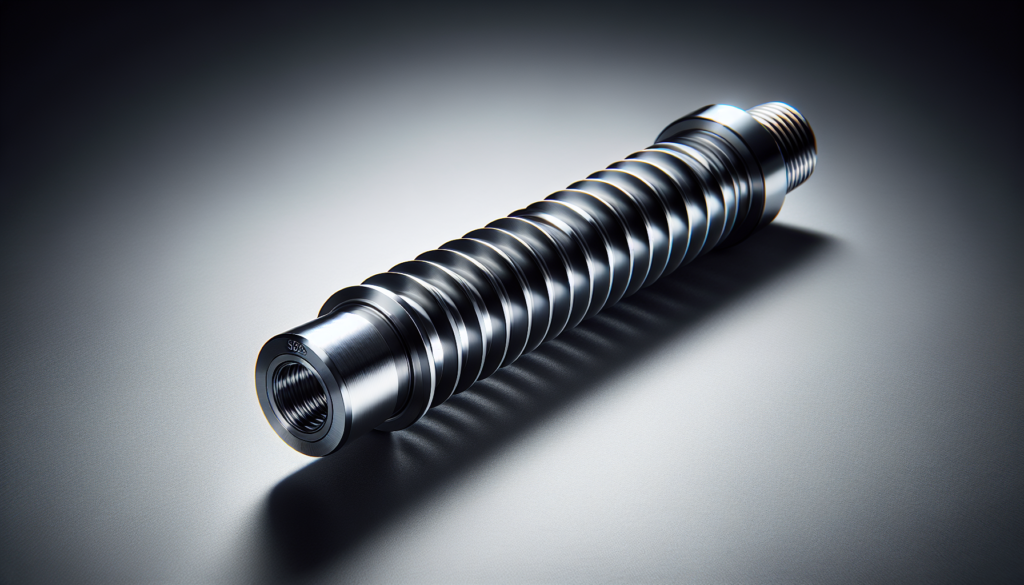
Ball screws have a helical groove on the shaft and a matching nut with ball return paths. Balls circulate through the nut and reuse paths, producing high efficiency and low friction. You’ll see this in systems where speed, low power loss, and repeatability matter.
Lead screw fundamentals
Lead screws typically have a trapezoidal or Acme thread and transfer motion through sliding contact. They can be single-start or multi-start, and you’ll often find variants with nuts made of polymers, bronze, or plated metals. They’re simple, inexpensive, and sometimes naturally self-locking — a property that can be a boon or a curse.
Quick visual comparison (at a glance)
You’ll appreciate quick takeaways before the details. This table gives a high-level comparison so you can keep the big picture in mind as you read the finer points.
| Characteristic | Ball Screw | Lead Screw |
|---|---|---|
| Efficiency | Very high (70–98%) depending on type and preload | Moderate to low (10–60%) depending on profile and material |
| Backdrivability | Easily backdriven (low friction) | Often self-locking (high friction) |
| Accuracy & Repeatability | High (ground, precision classes) | Moderate (varies by manufacturing) |
| Load capacity | High for given diameter (rolling contact) | Moderate to high for larger diameters (sliding contact) |
| Speed capability | High (suitable for high rpm) | Limited by heat and wear at high speeds |
| Wear & Maintenance | Lower wear if well-lubricated; requires contamination control | Higher wear; material-dependent; may need frequent replacement |
| Cost | Higher initial cost | Lower initial cost |
| Typical applications | CNC, robotics, injection molding | Valves, low-speed actuators, linear stages, clamps |
| Environmental tolerance | Sensitive to contaminants unless sealed | Often more tolerant depending on nut material |
Efficiency, energy use, and what that means for your design
You care about power budgets, battery life, thermal issues, and electricity bills. In simple terms, ball screws are more efficient because rolling friction is much lower than sliding friction. A ball screw running at 90% efficiency wastes far less power than a lead screw at 30% efficiency.
Typical efficiency ranges and the practical effect
Modern recirculating ball screws typically range from about 70% to 98% efficiency depending on preload and lubrication. Lead screws can range from around 10% for unlubricated, self-locking designs to 60% for low-friction polymer nuts under ideal lubrication.
If you need to transmit 1 kW of mechanical power, a 90% efficient ball screw draws ~1.11 kW, while a 30% efficient lead screw draws >3.3 kW — and that excess is converted into heat. You’ll find that heat matters: thermal growth changes accuracy, and overheating damages lubricants and polymers.
Accuracy, precision, and repeatability: what each gives you
If you build machines, you know that “accurate” and “repeatable” are siblings with different personalities. Accuracy is how close you come to a target position; repeatability is how well you return to the same position repeatedly.
Ball screw accuracy
Ball screws offer high accuracy and repeatability, particularly when ground and manufactured to precision classes. You can expect minimal hysteresis and tight positioning down to microns in controlled environments. Preloading can eliminate backlash and improve stiffness, but it increases friction and wear slightly.
Lead screw accuracy
Lead screws can be very accurate when ground and paired with high-quality nuts, but many low-cost lead screws are rolled and have larger pitch errors. Polymer nuts can introduce more compliance and wear over time, which reduces repeatability under load.
Backlash, preload, and control of play
You want your system to move where you tell it to, not ambulate whimsically. Backlash — unwanted play between screw and nut — is one of the main culprits.
How ball screws handle backlash
Ball screws can be preloaded with double nuts, spring packs, or angular contact configurations to remove backlash and increase stiffness. Preloading reduces deadband and improves positional responsiveness, which you’ll appreciate in servo systems. The tradeoff is slightly higher running torque and heat.
How lead screws handle backlash
Lead screws often use split nuts, adjustable nuts, or anti-backlash designs with spring loading. Polymer nuts can conform somewhat, reducing initial play, but they tend to wear and develop backlash over time. You’ll find that for low-speed holding or clamping, the natural friction may be enough without fancy anti-backlash measures.
Load capacity and stiffness: how to size for your load
You need to think about static loads (holding a mass) and dynamic loads (acceleration, shock). Ball screws distribute load across multiple rolling contacts and tend to have higher load ratings for their size. They also exhibit higher stiffness for the same diameter.
Dynamic and static load basics
Ball screw life is often calculated with a dynamic load rating (C) and equivalent load (P) using a life equation similar to bearing L10 life: L(rev) = (C / P)^3 × 10^6 This gives you a ballpark of expected revolutions before 90% reliability life is reached. You’ll use equivalent loads that combine axial, radial, and moment components.
For lead screws, load capacity is more dependent on material strength, nut wear, and contact stresses. There isn’t a universal L10 formula because wear is dominant, but you can estimate life by modeling wear rates or using manufacturer wear data. If you expect long life under heavy repetitive loads, ball screws are usually the safer bet.
Speed and acceleration: where ball screws shine
If you plan high speed or high acceleration, ball screws are often the clear choice. They tolerate higher linear velocities because rolling elements dissipate less heat, and dynamic balance is easier.
Limits on lead screw speeds
Lead screws generate heat through sliding friction. Polymer nuts will soften and change properties when hot; metal-on-metal contact gets noisy and wears faster. Practically, lead screws are suited to low- to medium-speed applications unless you use specialized materials and cooling.
Self-locking and safety: sometimes you want friction
You might want your actuator to hold a load without power. Lead screws can be self-locking; that is, the screw won’t backdrive under load because friction dominates over the lead angle.
The math of self-locking
A screw is self-locking if: tan(λ)