Have you ever tried to haul a compact laser setup to a craft fair, client site, or friend’s garage and realized you’d packed everything except the crucial bits that make it safe, quiet, and useful?
Air Assist, Enclosures, And Accessories: What Matters For Portable Use
You’re carrying more than a machine when you move a laser system; you’re carrying consequences, expectations, and the faint smell of burning acrylic. This article walks you through the practical realities of air assist, enclosures, and accessories so you can make portable laser work feel less like improvisational theater and more like confident design.
Why portability changes the rules
You can treat a benchtop laser as a permanent fixture, but when you make it portable, weight, setup time, power, and safety all become constraints. Portability forces trade-offs between performance, convenience, and regulatory compliance, so understanding which features are critical will save you headaches on the road.
What is Air Assist and why it matters
Air assist is a stream of air directed at the laser’s cut or engrave point to remove smoke, molten material, and debris. It improves cutting speed and quality, reduces charring, and protects optics by keeping particles away from focus areas. On portable setups, air assist also reduces the burden on your extraction system because you’re limiting fume production at the source.
Typical benefits of air assist
You’ll notice cleaner edges, fewer flare-ups, and longer laser tube life when you use air assist correctly. Even a modest stream of air can drastically cut down on back-reflection contamination and the tendency of small sparks to ignite nearby materials.
Types of air assist for portable use
There are several practical ways to supply air assist when you’re mobile. Each option has trade-offs in terms of noise, portability, weight, and performance.
- Small onboard fans: Light and simple, often built into cheap engravers.
- Portable compressors (oil-free): Compact and purpose-built for air assist applications.
- Aquarium or diaphragm pumps: Quiet and low-pressure choices for low-power lasers.
- CO2 tanks or compressed gas cylinders: High-pressure, heavier, and require safety considerations.
- Canned air/air duster: Poor long-term solution; only useful in emergencies.
| Type | Typical Pressure | Flow | Noise | Portability | Pros | Cons | Best for |
|---|---|---|---|---|---|---|---|
| Onboard fan | <1 psi< />d> | Low | Low | Very high | Built-in, no extra gear | Limited effectiveness | Small diode lasers (engraving only) |
| Small compressor (oil-free) | 20–60 psi | Medium | Medium | High | Good pressure, consistent | Heavier, needs power | CO2 desktop lasers, thicker cuts |
| Diaphragm/aquarium pump | <10 psi< />d> | Low-Med | Low | Very high | Quiet, light, inexpensive | Low pressure, not for heavy cutting | Small engraving, assist for diode lasers |
| Compressed gas cylinder | >60 psi | High | Low | Low | Powerful, consistent | Heavy, regulated, safety concerns | Industrial portable cuts where gas is allowed |
| Canned air | n/a | Burst | Silent | High (but short) | Emergency cleaning | Expensive, finishes quickly, cold propellant | Never as primary aid |
How to size air assist for your portable laser
You don’t need a formula from a physics textbook, but you should know a few figures. For many CO2 and larger diode hybrid machines, aim for 20–40 psi at the nozzle for effective cutting. Lower-power diode engravers often do fine at much lower pressures; what matters is the nozzle and how close it sits to the material.
- Check nozzle diameter: smaller nozzles increase velocity for a given flow.
- Measure pressure at the nozzle: pressure gauges at source can be misleading without accounting for hose loss.
- Consider flow (L/min): consistent flow prevents local overheating and keeps smoke away.
Practical tips for using air assist on the go
You’ll want equipment that’s quick to connect, simple to maintain, and not a source of new problems.
- Use quick-connect fittings to speed setup and teardown.
- Carry an inline moisture trap and particulate filter to protect optics and the laser tube.
- Use an adjustable regulator so you can quickly tune pressure for different materials.
- Bring extra hoses and fittings; tiny leaks are the most stubborn travel companions.
Enclosures: safety, containment, and portability
An enclosure does three essential jobs: it keeps fumes under control, prevents accidental eye exposure to beams or reflections, and contains debris and fire hazards. When you’re portable, the enclosure is often the heaviest and bulkiest component, but you can design it so it folds, breaks into panels, or uses lightweight materials.
Why an enclosure is non-negotiable
Regulatory frameworks and common sense both expect lasers to have a protective barrier between the beam and anyone nearby. Portable workspaces tend to be less controlled, so a reliable enclosure reduces risk and increases your credibility with clients and event organizers.
Types of enclosures for portable setups
There are many enclosure designs—each suited to different levels of portability and protection.
- Hard acrylic or metal boxes: Rigid and protective, generally used for tabletop portability.
- Foldable panels (plywood, composite): Relatively light, stored flat, assembled on-site.
- Fabric tent enclosures with rigid frames: Very portable for light-duty protection; less fume control.
- Soft cases with integrated removable sides: Designed for specific tabletop lasers and easy transport.
| Enclosure Type | Weight | Pack Size | Fume Control | Safety Level | Pros | Cons |
|---|---|---|---|---|---|---|
| Hard acrylic/metal | Medium-High | Bulky | Good (with extraction) | High | Durable, good visibility | Heavy, susceptible to damage |
| Foldable panels | Medium | Flat | Moderate | Moderate | Lightweight, customizable | Assembly time, sealing issues |
| Fabric tent | Low | Small | Poor | Low-Moderate | Extremely portable | Poor fume control, flammable materials |
| Integrated soft case | Low-Med | Compact | Variable | Moderate | Designed for device, fast setup | Limited customization |
Materials and design considerations
Choose materials that block the laser wavelength and are robust enough to handle sparks. For diode lasers (visible/near-IR), use the appropriate viewing windows/filters. For CO2 lasers (far infrared), many plastics absorb the beam, which can be useful but also risky because the material can heat and deform.
- Use polycarbonate or rated filters for viewing windows.
- Ensure seams and joints can be sealed or fit tightly to prevent fume leaks.
- Include access panels with interlocks to cut power when opened.
- Pick surfaces that resist flaming and reflectivity that won’t redirect the beam unexpectedly.
Venting vs. extraction: what to do on the road
When you move, extracting fumes becomes harder because you may not have ducting or building-level vents. You’ll need portable extraction options that work in tight environments.
- Passive venting: opens the enclosure to ambient air—simple but often insufficient.
- Portable extractors: small inline fans or smoke absorbers powered by mains or battery.
- Activated carbon or HEPA units: good for odor and particulates but add weight.
| Method | Portability | Effectiveness | Power Needs | Best Use |
|---|---|---|---|---|
| Passive venting | Excellent | Low | None | Only for benign materials and demos |
| Portable extractor (blower) | Good | Medium-High | Moderate | Trade shows, client sites |
| Filtration units (HEPA/Carbon) | Medium | High for particulates/odors | High | Indoor use where exhaust is impossible |
| Water-based trap | Low-Med | Medium | Low | Small operations for mild fumes |
Safety features you’d want in a portable enclosure
You won’t regret adding redundant safety measures. They’re the small things that keep you from making expensive mistakes.
- Interlock switches that cut the laser when a door opens.
- Emergency stop button easily reachable from outside.
- Smoke detector or flame sensor inside the enclosure.
- Heat-resistant mats and fire blankets nearby.
- Grounding and secure cable routing to prevent trips.
Accessories that matter for portable use
Accessories make the difference between a working laser and a working laser that produces professional results. Prioritize accessories that add safety, reduce setup time, and compactly store.
Essential accessories
You’ll find these items on every road-ready kit checklist.
- Air assist nozzle and hoses (compact, quick-disconnect).
- Portable compressor (or pump) with regulator and moisture trap.
- Portable extraction unit or filtration system.
- Interlock wiring and a reliable emergency stop.
- Compact honeycomb bed or removable slats for cut support.
- Protective eyewear rated for your laser wavelength.
Very useful accessories
These make your life easier and improve output consistency.
- Camera or webcam alignment system.
- Focus gauge and calipers for quick focal adjustment.
- Spare lenses and mirrors (stored in protective cases).
- Rotational attachment (lightweight for trophies and cups).
- Small fire extinguisher and removable fire-retardant blanket.
Optional accessories
Good to have if you can afford the weight and space.
- Rotary chucks for cylinders larger than typical rotary attachments handle.
- Automatic material sensing or active camera-based registration.
- Professional-grade HEPA + carbon filtration units.
- Custom crating with foam-cut padding for fragile optics.
| Accessory | Purpose | Weight Impact | Power Draw | Portability Rating | Priority |
|---|---|---|---|---|---|
| Portable compressor | Air assist source | Medium | Moderate | High | Essential |
| Moisture trap/filter | Protect optics | Low | None | Very High | Essential |
| Portable extractor | Fume control | Medium-High | High | Medium | Essential for indoor work |
| Honeycomb bed | Cutting support | Low | None | Very High | Essential |
| Protective eyewear | Eye safety | Negligible | None | Very High | Essential |
| Camera alignment | Precision placement | Low | Low | High | Very Useful |
| Rotary attachment | Cylindrical work | Medium | Low | Medium | Very Useful |
| Spare mirrors/lenses | Quick repairs | Low | None | High | Very Useful |
| HEPA/Carbon unit | Filtration | High | High | Low | Optional |
| Fire extinguisher | Fire safety | Medium | None | High | Essential |
Choosing compact accessories that still perform
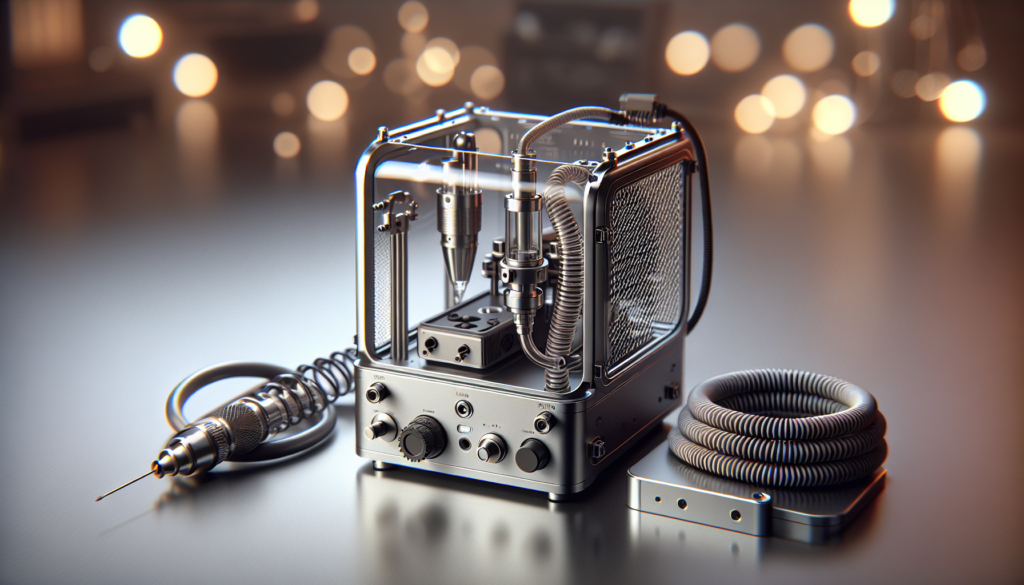
When weighing accessories for portability, think modular. Bring the smallest version that still accomplishes the job. For example, a small diaphragm pump might work well enough instead of a full compressor for engraving tasks, and a lightweight rotary can handle most drinkware.
Power solutions for portable use
Power is the shadow companion of every portable tool. You have options: mains power, inverters and batteries, or dedicated portable generators. Each introduces noise, weight, and complexity.
Mains versus battery
If you can rely on mains power, life is simpler: compressors, extractors, and lasers behave predictably. Batteries and inverters introduce voltage variability and capacity concerns, but they free you to work in remote places.
- Small diode lasers often run on 12–24V and can be powered by large battery packs.
- CO2 lasers require high-voltage supplies and aren’t practical on small battery setups.
- Inverters must be rated for surge currents; otherwise, you’ll trip breakers or damage equipment.
Portable generator and inverter considerations
If you take a generator, keep noise and emissions in mind—trade show organizers and clients may restrict them. Choose a quiet, inverter-style generator and ensure it can handle surge loads for compressors.
- Factor in starting currents for compressors and extractors when sizing a generator.
- Use a UPS where voltage stability is important; many laser controllers are sensitive to voltage spikes.
- Carry spare batteries or fuel for longer jobs.
Practical power checklist
- Verify voltage and current requirements for laser, compressor, and extractor.
- Use a clamp meter or inline watt meter to confirm actual draw during startup and operation.
- Bring surge protection and a stable inverter or generator rated above peak demand by 20–30%.
- Pack extension cords rated for outdoor use and the appropriate amp rating.
Setup and teardown workflow for portability
If you treat setup like a ritual, you’ll be faster and less likely to forget something important. A consistent workflow minimizes risk and gets you cutting faster.
- Unpack in a clean, flat area. Lay out each major component and verify condition.
- Connect the enclosure panels and verify interlocks and seals.
- Position and secure the laser on a stable surface; avoid laying fragile optics on soft materials.
- Hook up air assist: check hoses, fittings, regulator, and moisture trap in sequence.
- Connect extraction and ensure exhaust path or filtration placement is correct.
- Power sequence: turn on the laser controller last and run a quick test at low power with protective eyewear on.
- After finishing, power down extraction and compressor first to minimize contamination backflow, then the laser, then lights.
Quick packing checklist
- Laser unit with cables
- Enclosure panels with interlock wiring
- Portable compressor/pump with hoses
- Moisture trap, regulator, and fittings
- Extraction/filtration unit with ducting
- Safety eyewear and gloves
- Spare parts (belts, fuses, lenses, mirrors)
- Fire extinguisher and blanket
- Tool kit (screwdrivers, hex keys, multimeter)
- Documentation and material safety data sheets (MSDS) for materials you’ll process
Maintenance and troubleshooting on the road
Being away from your usual bench means you must be proactive with maintenance and realistic about fixes. Some tasks you can’t do in a parking lot; others are simple life-savers.
Daily checks before operation
- Clean the lens and mirrors with proper solvents and lint-free wipes.
- Check belts and rail lubrication; leave heavy lubrication tasks for the shop.
- Inspect hoses and electrical connections for frays or leaks.
- Empty moisture traps and reseal fittings.
Common portable problems and quick fixes
- Weak cut: check focus, clean lens, confirm air assist pressure.
- Excessive smoke/odor: increase air assist, check extraction, confirm material suitability.
- Compressor not starting: check power source and start-up surge; consider using soft-start if available.
- Interlock faults: verify wiring connections and reset switches; carry spare microswitches.
Caring for portable compressors and extractors
- Drain any water traps after each job to prevent moisture buildup.
- Replace filters on a schedule suited to use; saturated filters reduce extraction efficiency dramatically.
- Keep compressor inlet clean and avoid dusty storage environments.
When accessories complicate portability
You’ll be tempted to bring everything. Resist. Each accessory adds weight and setup complexity, which may be counterproductive on a short job.
- Prioritize items that directly affect safety and result quality.
- Skip large filtration units for simple on-site demonstrations and instead use strong air assist and post-job ventilation.
- Consider modular kits: core essentials in one pack and optional gadgets in another you can leave behind if needed.
Scenario-based recommendations
Different portable scenarios call for different kits. Here are quick, practical configurations.
Trade show demo (indoor, public)
- Priorities: safety, noise control, aesthetics.
- Kit: compact enclosure with proper windows and interlocks, portable extractor with HEPA/carbon, small quiet compressor, camera alignment, protective eyewear, fire extinguisher.
Client site installation (indoor, controlled)
- Priorities: speed, capability, professional output.
- Kit: foldable panels or lightweight enclosure, robust compressor, exhaust hose to nearest window, spare lenses/mirrors, full tool kit, portable generator if mains are suspect.
Outdoor festival (open-air)
- Priorities: weatherproofing, power, containment for small debris.
- Kit: tented enclosure with wind barriers, quiet generator or battery pack, small compressor, sandbag weights, fire suppression, strong anchoring.
Mobile repair/engraving (on-the-go)
- Priorities: flexibility, minimal footprint.
- Kit: smallest workable laser, battery or inverter power, diaphragm pump, fold-out honeycomb bed, minimal extraction (open-air), comprehensive safety gear.
Buying guide and checklist
You’ll have better outcomes if you make purchasing decisions deliberately. Here’s a condensed buying checklist to help you choose components and accessories.
- Verify laser wavelength and match protective eyewear and window filters.
- Check compressor specs: PSI range, flow (L/min), noise level, weight, and oil-free design.
- Confirm enclosure materials block your laser wavelength and have required interlocks.
- Confirm extraction capability in CFM relative to your expected fume load.
- Ask about spare parts availability for optics, belts, and electronics.
- Prioritize modular components that break down and pack efficiently.
- Check warranty and service options—moving equipment gets bumped and dropped.
Regulatory and material safety notes
Different materials create different hazards. You must know what you’re cutting and whether your portable environment allows it.
- Never cut PVC or vinyl; they make hydrochloric acid fumes and corrode components.
- Wood, leather, and some plastics release particulate and volatile organics—use active extraction.
- Check local regulations for indoor air emissions and required extraction levels for public venues.
- Maintain MSDS sheets for materials you process and be ready to show them to venue managers or clients.
Final thoughts on balancing mobility and performance
You want to be nimble without compromising quality or safety. The best portable kit is designed around the tasks you actually accept most often rather than the aspirational projects you might do once. Prioritize safety items, compact high-impact accessories, and flexible air assist and extraction. If it feels like packing for an apocalypse, you’re probably taking too much.
- Keep a kit inventory and update it after each job with items that were missed or redundant.
- Train a simple, repeatable setup ritual that you can do in low-light or cramped conditions.
- Accept trade-offs but never cut corners on safety: a burned edge is fixable; a burned person is not.
If you treat portability as a design constraint rather than an annoyance, you’ll start choosing equipment that actually gets used, and you’ll find the right combination of air assist, enclosure, and accessories that makes your mobile laser setup both reliable and delightfully portable.