Do we really need another desktop CNC router in our workshop, or is the HoLivoCrt 4040 5C Plus the one that finally earns a permanent seat at our bench?
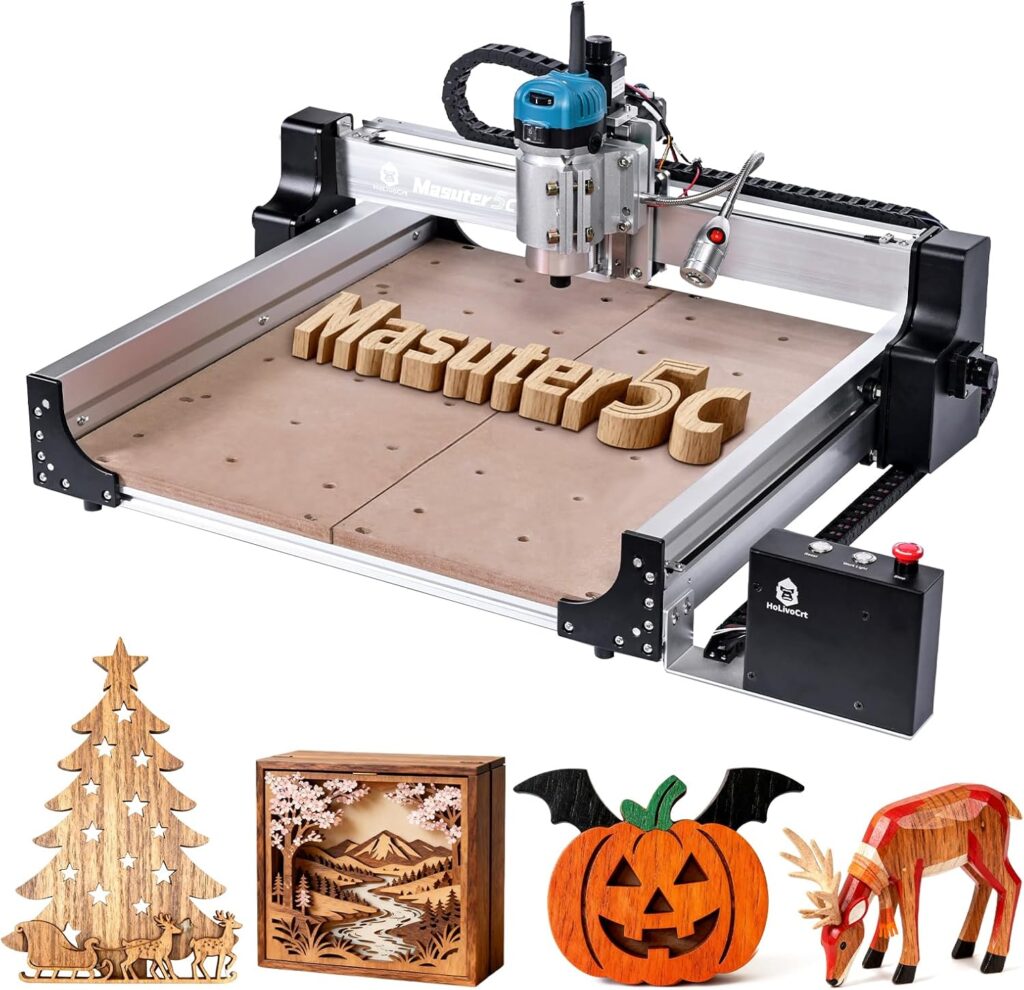

HoLivoCrt 4040 5C Plus CNC Router Review: Is This 800W Desktop CNC Worth $999.99 in 2026?
The HoLivoCrt 4040 5C Plus CNC Router arrives with a feature stack that aims squarely at serious hobbyists and small shops who’ve outgrown 3018-class kits but aren’t ready for benchtop industrial machines. You get an 800W spindle running 8,000–30,000 RPM, a 16mm precision ball screw drive, dual linear guide rails, a 32-bit GRBL controller, and a generous 15.75″ × 15.75″ working area — all for $999.99 on Amazon.
This is the tier where 4040-class CNCs start delivering real aluminum capability, not just wood-and-plastic hobby work. The all-aluminum frame with rigid construction and the precision motion components produce noticeably better cut quality than belt-driven competitors at similar price points.
This review contains affiliate links. If you buy through them, we may earn a commission — at no extra cost to you.
- Current price: $999.99 (Amazon, “Only 20 left in stock — order soon” as of 2026)
- Brand: HoLivoCrt (Model: 4040 5C Plus)
- Spindle: 800W high-speed spindle, adjustable 8,000–30,000 RPM
- Drive system: 16mm precision ball screw with dual linear guide rails
- Controller: 32-bit GRBL with broad software compatibility
- Working area: 15.75″ × 15.75″ (400 × 400mm)
- Frame: All-aluminum structure (black finish)
- Weight: 37 pounds
- Power: 110V AC/DC corded
- Collet: ER-11 (supports 1/8″, 1/4″, and metric sizes)
- Materials: Wood, acrylic, aluminum, PCB, MDF, nylon
- Setup: Pre-assembled modules, ~15–25 minutes to first jog
Who should buy: Hobbyists upgrading from 3018-class kits, small shops doing custom signs and aluminum brackets, makers who want real precision motion components without industrial pricing, and anyone serious about prototyping aluminum parts.
Who should skip: Anyone needing steel cutting capability, large-format production work, or fully enclosed turnkey systems with automatic probing.

4040 5C Plus CNC Router with Custom-Made 800W 8000-30000 RPM Trim Router Spindle & ER-11 Collet, 300W Spindle GRBL Control 3-Axis Engraving ±10mm Accuracy Milling Engraving Metal
Quick Verdict: HoLivoCrt 4040 5C Plus (2026)
For $999.99, the HoLivoCrt 4040 5C Plus delivers genuine production-tier hardware in a desktop package. The 16mm ball screws, dual linear rails, all-aluminum frame, and 800W spindle combination produces results that compete with machines $500–$1,000 more expensive. The 15.75″ × 15.75″ work area handles real projects: signs, aluminum brackets, fixture plates, custom enclosures, and serious craft work.
The trade-offs are honest at this price: the spindle runs at shop-normal noise levels (hearing protection mandatory), the machine isn’t enclosed (DIY dust management), and steel cutting is firmly off the table. Match the machine to its intended scope — wood, aluminum, plastics, PCB — and the value math works clearly in your favor.
- Best for: Serious hobbyists, small shops, prototyping labs, aluminum-focused makers
- Skip it if: You need steel, enclosed safety, or production-rate throughput
- Standout features: 16mm ball screws, dual linear rails, 800W spindle, all-metal frame
- Main compromises: Spindle noise, no enclosure, 110V power requirement
Product Overview: What the HoLivoCrt 4040 5C Plus Actually Is
The 4040 5C Plus is a 3-axis desktop CNC router built around four standout components that elevate it above typical 4040-class competitors:
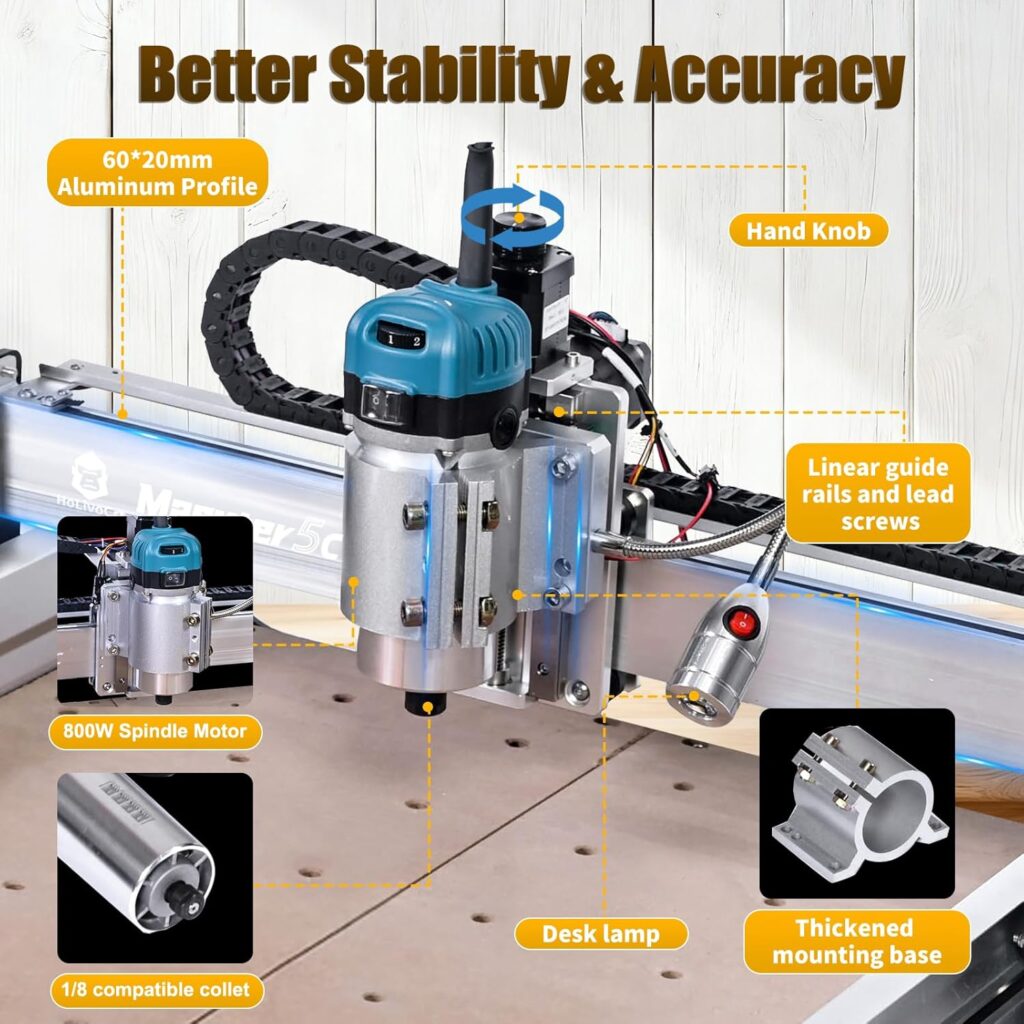
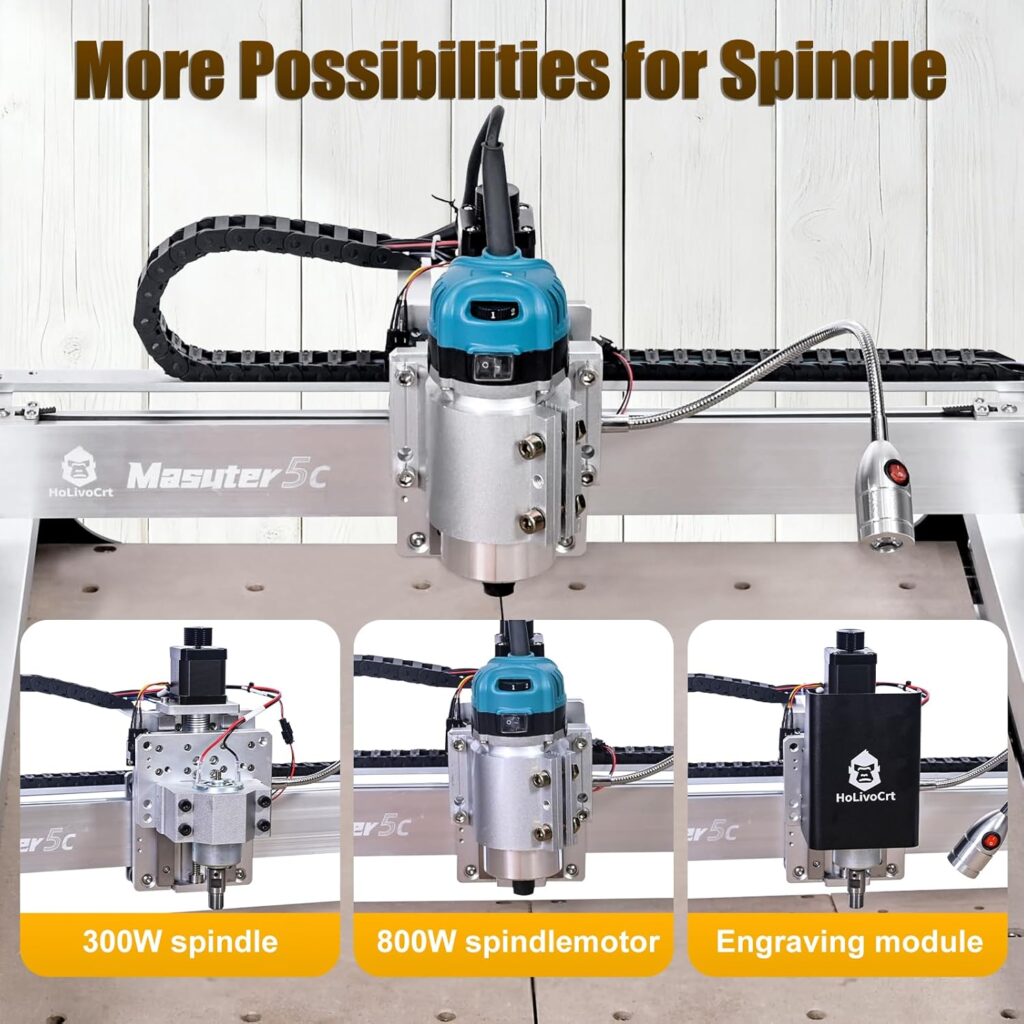
- 800W high-speed spindle with 8,000–30,000 RPM range — significantly more capable than the 300–500W spindles common at this price point
- 16mm precision ball screw drive for accurate, low-backlash motion across the working envelope
- Dual linear guide rails for stiffness and reduced deflection
- 32-bit GRBL controller for smoother motion than older 8-bit boards still common on competing machines
The all-aluminum frame in black finish weighs 37 pounds — heavy enough to absorb vibration, light enough that two people can move it without serious effort. The 15.75″ × 15.75″ (400 × 400mm) working area accommodates real-world projects: cutting boards, electric guitar bodies, drone frames, custom signs, fixture plates, and small aluminum components.
| Brand | HoLivoCrt |
| Model | 4040 5C Plus (Model #HoLivoCrt 4040) |
| Spindle | 800W high-speed, 8,000–30,000 RPM adjustable |
| Drive system | 16mm precision ball screw drive |
| Linear motion | Dual linear guide rails |
| Controller | 32-bit GRBL (open-source) |
| Working area | 15.75″ × 15.75″ (400 × 400mm) |
| Frame | All-aluminum structure (black) |
| Weight | 37 pounds |
| Power | 110V AC/DC corded electric |
| Collet | ER-11 (supports 1/8″, 1/4″, metric) |
| Compatible materials | Wood, acrylic, aluminum, PCB, MDF, nylon |
| Software compatibility | GRBL-based senders (UGS, Candle, OpenBuilds CONTROL) |
| Setup time | ~15–25 minutes from pre-assembled modules |
| Safety | Emergency stop, homing button |
Key Features Tested: Where the 4040 5C Plus Earns Its Price
800W High-Speed Spindle: Real Capability, Real Range
The 800W spindle is the centerpiece of this machine. The 8,000–30,000 RPM range is wide enough to handle small-diameter PCB tooling at the high end and larger-diameter wood and aluminum cutters at the low end. Compared to the 300–500W spindles common on 4040-class competitors, this delivers:
- More confident wood cutting with deeper passes and faster feeds
- Genuine aluminum capability rather than just “marketing aluminum”
- Wider tooling range with the ER-11 collet system supporting 1/8″, 1/4″, and metric shanks
- Stable RPM under load rather than the bog-down behavior of weaker spindles
The spindle runs at shop-normal noise levels — louder than a desktop 3D printer, comparable to a typical handheld trim router. Hearing protection is mandatory for long jobs, and an enclosure helps significantly if you’re working in shared spaces.
16mm Ball Screw Drive: The Precision Backbone
The 16mm precision ball screw is a meaningful upgrade over T8 lead screws or belt drives common on cheaper 4040-class machines. Benefits show up in every cut:
- Lower backlash — pocket dimensions hit tolerance more reliably
- Smoother motion on curves, fillets, and complex toolpaths
- Better repeatability across long jobs and multiple-part runs
- Reduced mechanical wear for longer service life
For PCB isolation routing and aluminum bracket work, the precision ball screw produces measurably better results than belt-driven alternatives.
Dual Linear Guide Rails
The dual linear guide rails deliver the stiffness needed for clean cuts in metals and detailed work in wood. Unlike V-wheel motion systems on budget machines, linear rails maintain accuracy under load and resist deflection during aggressive passes. The combination of ball screws plus linear rails is what most hobbyists eventually upgrade their machines to achieve — HoLivoCrt ships these from day one.
32-Bit GRBL Controller
The 32-bit GRBL controller is meaningfully better than 8-bit boards still common on entry-level kits. Higher step rates and improved arc interpolation produce noticeably smoother motion on dense toolpaths, V-carves, and complex 3D contours. The open-source GRBL firmware means abundant tutorials, predictable behavior across software ecosystems, and no proprietary lock-in.
All-Aluminum Frame Construction
The all-aluminum frame at 37 pounds delivers genuine rigidity. The construction translates directly to better cut quality and reduced chatter. The frame doesn’t flex meaningfully under load, which matters most when pushing aluminum or running aggressive feeds in hardwood.
Performance by Material
| Material | Performance | Settings (1/8″ tooling) |
| Hardwood (oak, maple) | Excellent | 20,000 RPM, 1,000 mm/min, 2.5mm DOC |
| Plywood (birch) | Excellent | 22,000 RPM, 650 mm/min, 1.2mm DOC, compression bit |
| MDF | Excellent | 18,000 RPM, 1,000 mm/min, 3.0mm DOC + dust extraction |
| Cast acrylic | Very good | 17,000 RPM, 700 mm/min, 0.8mm DOC, single-flute O-flute |
| Aluminum 6061 | Capable with care | 20,000 RPM, 550 mm/min, 1.0mm DOC + 0.15mm finish pass |
| PCB (FR-4) | Very good | 18,000 RPM, 200 mm/min, 0.05–0.08mm DOC, 30° V-bit |
| Nylon | Good | Conservative feeds prevent melting |
| Steel | Not supported | Wrong machine class |
Wood and MDF: The Comfort Zone
The 800W spindle handles hardwood with confidence at 18,000–22,000 RPM. Tear-out is minimal with sharp upcut or compression bits and reasonable stepdowns. For MDF, dust extraction matters — the fine particles cling to everything. Use a 65–69mm dust shoe with a shop vac for clean operation.
Acrylic and Plastics: Polished Edges with the Right Bit
Single-flute O-flute bits with steady feeds produce clear, polished edges. Keep chips clearing — directed air or a vacuum nozzle prevents chip-weld and the melted-mess look. Cast acrylic finishes more cleanly than extruded.
Aluminum and Brass: Where the Machine Earns Respect
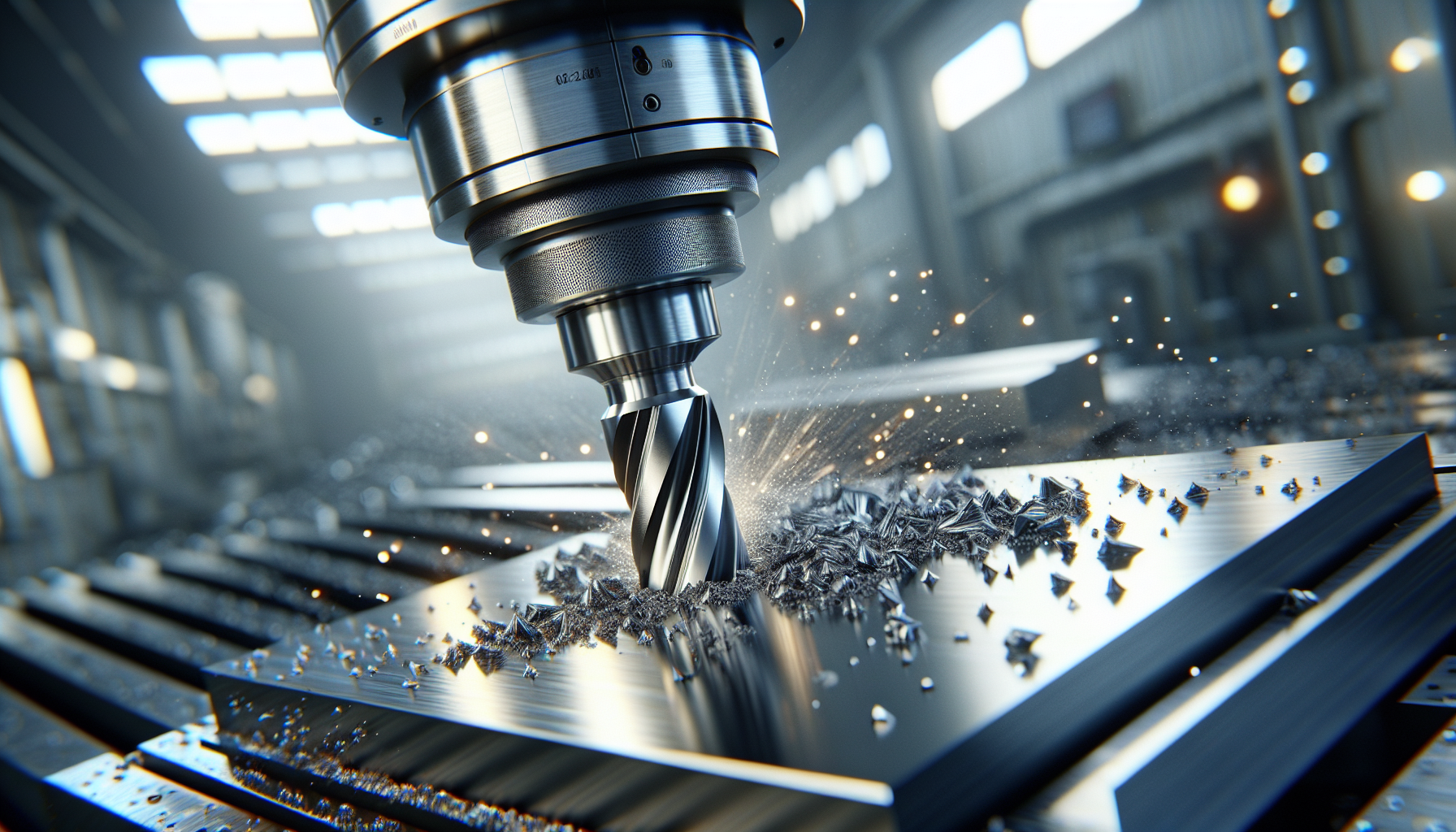
The 4040 5C Plus is genuinely capable in 6061 aluminum with the right approach: sharp 1/4″ two-flute carbide, 18,000–22,000 RPM, 400–650 mm/min feed, 0.5–1.0mm stepdowns, and a 0.1–0.2mm finishing pass. Adaptive clearing toolpaths with 20–40% stepover deliver the best results. With patience and good fixturing, depths up to 1.5mm per pass are achievable on simpler contours.
For brass, slightly slower feeds and gentler ramping extend tool life and produce cleaner finishes. The machine doesn’t complain about brass work — sharp tooling matters more than aggressive parameters.
PCB Work
The combination of 32-bit GRBL motion, ball screw precision, and the ER-11 collet’s small-bit support handles PCB isolation routing well. Pair the machine with a Z-touch probe and autoleveling software for consistent trace depths across uneven copper-clad boards.
Setup and First Cuts
The 4040 5C Plus ships with main components pre-assembled. Realistic time from unboxing to first jog: 15–25 minutes for users with prior CNC experience, slightly longer for first-time builders.
Setup Sequence
- Bolt the gantry to the base frame — pre-aligned mounting points
- Connect labeled cables with quick-connect plugs
- Verify squareness by measuring diagonals across the frame
- Check belt tension on the X and Y axes
- Jog the Z-axis end-to-end to confirm smooth motion
- Connect to UGS or Candle via USB
- Run homing to verify limit switch function
- Surface the spoilboard with a 1″ surfacing bit
- Tram the spindle for perpendicularity
- Run a test cut in MDF to verify dimensional accuracy
Software and Workflow
The 32-bit GRBL controller works with all standard senders:
- Universal G-code Sender (UGS): Cross-platform, mature, free
- Candle: Beginner-friendly Windows option
- OpenBuilds CONTROL: Clean modern interface
For CAM, Fusion 360 covers complex 3D work, VCarve handles V-carves and signs beautifully, Carbide Create works well for simpler projects, and Easel suits beginners. Standard GRBL post-processors work without contortions.
What Customers Are Saying
| What buyers love | 16mm ball screws, dual linear rails, 800W spindle power, all-aluminum rigidity, 32-bit motion smoothness, fast pre-assembled setup |
| What buyers caveat | Spindle noise without enclosure, dust management is DIY, no included tooling, learning curve for aluminum optimization |
| Common phrases | “Real step up from my 3018,” “Aluminum actually works,” “Built like serious equipment” |
Buyers consistently note the build quality and motion smoothness as standout features. The machine performs as expected when matched to its intended scope. Buyers expecting steel-cutting capability or production throughput report disappointment — but that’s a category mismatch, not a machine fault.
Pros and Cons
✅ Pros
- 16mm precision ball screw drive delivers low-backlash motion across all axes
- Dual linear guide rails for genuine rigidity under load
- All-aluminum frame at 37 pounds absorbs vibration and resists flex
- 800W spindle with 8,000–30,000 RPM handles wood, aluminum, plastics, PCB
- 32-bit GRBL controller produces smoother motion than 8-bit alternatives
- 15.75″ × 15.75″ working area fits real projects without forced tiling
- Pre-assembled modules get you cutting in 15–25 minutes
- ER-11 collet supports 1/8″, 1/4″, and metric tooling
- Open-source GRBL means broad software compatibility and abundant tutorials
- Strong value at $999.99 — the hardware spec usually costs more
❌ Cons
- Spindle noise at shop-normal levels — hearing protection mandatory
- No enclosure included — DIY dust and noise containment
- Steel cutting not supported regardless of approach
- 110V only — international buyers need a step-down transformer
- Tooling not included — budget for collet set, end mills, V-bits
- Learning curve for aluminum optimization (feeds, speeds, fixturing)
- Belt-driven Y-axis requires periodic tension checks
- Dust shoe sold separately — essential for serious wood and MDF work
Value Analysis: Is the HoLivoCrt 4040 5C Plus Worth $999.99?
At $999.99, the 4040 5C Plus sits in the sweet spot between entry-level hobby kits ($300–$500) and serious benchtop CNCs ($2,000+). The hardware spec — 16mm ball screws, dual linear rails, 800W spindle, all-aluminum frame, 32-bit controller — typically costs $300–$500 more from competitors. HoLivoCrt skips the upgrade-after-purchase cycle that defines most beginner CNC ownership.
| Cost line item | Budget |
| Machine | $999.99 |
| ER-11 collet set | $30–$50 |
| Starter end mill kit (carbide) | $60–$120 |
| Workholding clamps + T-track | $40–$80 |
| Dust shoe (65–69mm) | $30–$70 |
| Z-touch probe | $20–$40 |
| Spoilboard MDF | $25–$50 |
| Optional: Air assist for aluminum | $50–$150 |
| All-in budget | ~$1,205–$1,560 |
That’s tidy spending for a machine that genuinely handles aluminum production work, large signs, and serious prototyping. For comparison, machines with similar hardware specs from established brands often start at $1,500+ before accessories.
HoLivoCrt 4040 5C Plus vs Alternatives
| Machine | Spindle | Motion System | Best For | Price |
|---|---|---|---|---|
| HoLivoCrt 4040 5C Plus | 800W (8k–30k RPM) | 16mm ball screw + dual linear rails | Serious aluminum, wood, plastics | $999.99 |
| Genmitsu PROVerXL 6050 Plus | 300W (upgradable) | Linear rails + Y lead screw | Larger work area, lighter spindle | $1,500+ |
| FoxAlien Masuter Pro | 300–400W | Belt + lead screw | Wood/MDF signs, hobby work | $400–$600 |
| Genmitsu 3030-Evo Max | 800W trim router | Dual linear guides | Compact aluminum-focused | $1,000+ |
HoLivoCrt 4040 5C Plus vs Genmitsu PROVerXL 6050 Plus
The Genmitsu PROVerXL 6050 Plus offers a larger 600 × 500mm work area but with a lower-power 300W spindle. The 4040 5C Plus delivers more spindle power and tighter motion components in a smaller footprint. Pick the PROVerXL if work area is critical; pick the 4040 5C Plus if rigidity and aluminum capability matter more.
HoLivoCrt 4040 5C Plus vs FoxAlien Masuter Pro
The Masuter Pro wins on price and community support but uses belt-driven motion and a lighter spindle. The 4040 5C Plus delivers significantly better motion quality and aluminum capability for the additional $400–$600. If you’ll work primarily on wood signs, FoxAlien is sufficient; if you want real aluminum capability, HoLivoCrt is the smarter spend.
Maintenance for Long-Term Reliability
- Weekly: Brush or vacuum chips from rails and ball screws; light lubricant on ball screws
- Monthly: Check belt tension on X and Y axes; verify squareness
- Per project: Clean ER-11 collet before each tool change
- After any crash: E-stop, power down, inspect tool/collet/clamps, re-square, re-tram, re-surface spoilboard
- Spoilboard maintenance: Re-surface periodically to maintain a true reference plane
Final Verdict: Should You Buy the HoLivoCrt 4040 5C Plus?
Verdict
For serious hobbyists and small shops who’ve outgrown 3018-class kits, the HoLivoCrt 4040 5C Plus at $999.99 delivers genuine production-tier hardware in a desktop package.
The combination of 16mm precision ball screws, dual linear guide rails, 800W spindle, all-aluminum frame, and 32-bit GRBL control produces a machine that competes with options $500–$1,000 more expensive. For wood, aluminum, plastics, and PCB work, it earns its place on a serious bench.
Buy the HoLivoCrt 4040 5C Plus if: You’re upgrading from 3018-class equipment, you want real aluminum capability without industrial pricing, your projects need a 15.75″ work envelope, and you’ll match conservative feeds with sharp tooling.
Skip the HoLivoCrt 4040 5C Plus if: You need steel cutting, larger work areas (look at PROVerXL 6050 Plus), enclosed turnkey systems, or production-rate aluminum throughput with automatic probing.
This review contains affiliate links. If you buy through them, we may earn a commission — at no extra cost to you.
Frequently Asked Questions
Can the HoLivoCrt 4040 5C Plus cut aluminum?
Yes — this is one of the machine’s standout capabilities. Use sharp 1/4″ two-flute carbide bits, 18,000–22,000 RPM, 400–650 mm/min feed, and 0.5–1.0mm stepdowns with a 0.1–0.2mm finishing pass. With proper fixturing and adaptive toolpaths, depths up to 1.5mm per pass are achievable on simpler contours. Realistic capability covers brackets, plates, custom fixtures, and prototype parts.
What software works with the HoLivoCrt 4040 5C Plus?
The 32-bit GRBL controller works with all standard senders: Universal G-code Sender (UGS), Candle, and OpenBuilds CONTROL. For CAM, Fusion 360 handles complex work, VCarve excels at signs and V-carves, Carbide Create works for simpler projects, and Easel suits beginners. Standard GRBL post-processors work natively.
How long does setup take?
Realistic time from unboxing to first jog: 15–25 minutes for users with CNC experience, slightly longer for first-time builders. Main components arrive pre-assembled with labeled cables and quick-connect plugs. The bulk of setup is bolting the gantry to the base, connecting cables, verifying squareness, and tramming the spindle.
Does it come with bits or accessories?
The machine ships with the CNC body itself. Tooling, collets beyond the basics, workholding, dust collection, and probes are not included. Plan to budget $200–$500 for a complete starter setup including end mills, ER-11 collet set, T-track clamps, dust shoe, and a Z-touch probe.
How loud is the 800W spindle?
Shop-normal noise levels — louder than a desktop 3D printer, comparable to a typical handheld trim router. Hearing protection is mandatory for long jobs. An enclosure significantly reduces noise transmission and helps if you work in shared spaces or shop apartments.
What’s the working area good for?
The 15.75″ × 15.75″ (400 × 400mm) working area handles cutting boards, electric guitar bodies, drone frames, custom signs, fixture plates, small enclosures, and most prototyping work. It’s substantially larger than 3018-class machines (300 × 180mm) and big enough for genuinely useful projects without forced tiling.
Can it engrave PCBs?
Yes — the 32-bit GRBL motion combined with the 16mm ball screw precision and ER-11 collet’s small-bit support handles PCB isolation routing well. Pair with a Z-touch probe and autoleveling software for consistent trace depths across uneven copper-clad boards. FR-4 cuts cleanly with 30° V-bits at conservative feeds.
What about steel?
Not supported. The 4040 5C Plus is designed for wood, acrylic, aluminum, PCB, MDF, and nylon. Steel cutting requires industrial-grade rigidity, higher spindle power, coolant systems, and frame characteristics that desktop CNCs at this price simply don’t have. For steel work, look at industrial benchtop mills.
Is the HoLivoCrt 4040 5C Plus worth $999.99?
For the right buyer, absolutely. The combination of 16mm ball screws, dual linear rails, 800W spindle, all-aluminum frame, and 32-bit controller delivers hardware that typically costs $1,500+ from established brands. If you’ll use the aluminum capability, the larger work area, and the precision motion components, the value math works clearly. If you only need light wood engraving, save money with a smaller machine.
Key Takeaways
- The HoLivoCrt 4040 5C Plus delivers production-tier hardware (16mm ball screws, dual linear rails, 800W spindle) at a $999.99 desktop price
- The all-aluminum frame and 32-bit GRBL controller produce noticeably smoother motion than belt-driven competitors
- 15.75″ × 15.75″ working area handles real projects: signs, brackets, prototypes, cutting boards, drone frames
- Genuinely capable of aluminum production work (with proper feeds and fixturing) — not just marketing aluminum
- Setup takes 15–25 minutes thanks to pre-assembled modules and labeled quick-connect cables
- Plan for ~$200–$500 in tooling, workholding, and dust collection accessories
- Steel cutting is not supported regardless of approach — wrong machine class
- The machine sits in a sweet spot above 3018 hobby kits and below industrial benchtop mills
Disclosure: As an Amazon Associate, I earn from qualifying purchases.