Have you ever wondered what would happen if your CNC machine suddenly started offering unsolicited advice about tool wear and your coffee choices?
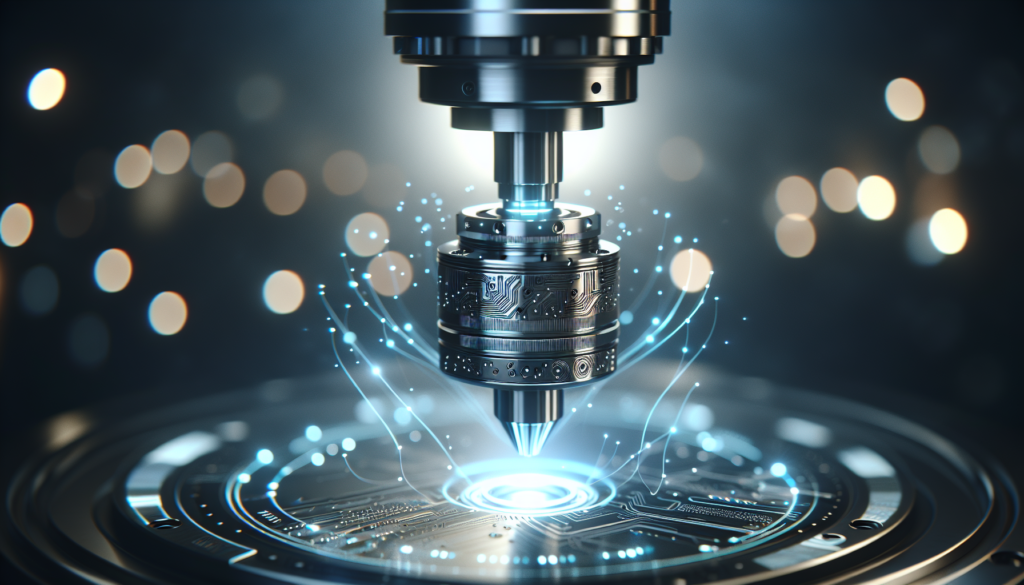
Fabrication Intelligence™ Explained: The New Standard For CNC Performance In 2026
You’re reading this because something about the phrase Fabrication Intelligence™ made you stop, tilt your head, and consider whether your shop could be smarter without hiring another person with a clipboard. This article explains what Fabrication Intelligence™ is, why it matters for CNC performance in 2026, and how you can adopt it without accidentally summoning a robot revolt. You’ll get clear definitions, practical steps, and a few anecdotes that may or may not involve you promising a mill that you’ll finally change its coolant.
What Fabrication Intelligence™ Means for You
Fabrication Intelligence™ is a suite of hardware, software, and processes that gives CNC machines the ability to sense, learn, and adjust operations in near real time. You know the old way: static NC programs, periodic inspections, and hoping that setup errors don’t ruin the whole run. Fabrication Intelligence™ adds awareness — sensors, predictive analytics, adaptive control, and operator feedback loops — so machines perform closer to their theoretical best.
You’ll benefit from fewer scrapped parts, reduced downtime, faster setups, and more consistent quality. It’s less magic and more a careful orchestration of data, models, and industrial-grade controls. Think of it as turning your shop from a nervous amateur into a steady, well-practiced artisan.
Why 2026 Is Different
You may have read about “smart factories” for years and felt like every year someone renegotiated the definition. In 2026, several practical shifts made Fabrication Intelligence™ the new standard rather than a buzzword you ignore.
- Sensors are cheap and durable enough to be everywhere.
- Edge computing allows fast decisions without cloud latency.
- Machine learning models have matured with industrial training data.
- Standards for machine connectivity and security improved.
- Operators and managers expect data-driven performance.
If you’ve been resisting upgrades because you didn’t want another system that “sits there collecting data,” Fabrication Intelligence™ is built to act on data, not hoard it.
Core Components of Fabrication Intelligence™
Each component adds a capability. You don’t have to implement everything at once, but you should understand how they play together.
Sensors and Instrumentation
You’ll equip machines with accelerometers, spindle load monitors, thermal cameras, tool presence sensors, laser scanners, and more. These provide the raw signals that let the system infer tool wear, chatter, part distortion, and fixture misalignment.
You’ll often be surprised how much useful information comes from sensors you already have — spindle power, servo currents, and coolant flow — once you start looking at trends rather than snapshots.
Edge Computing and Real-Time Control
Sending everything to the cloud is cute until a critical cut needs a 20 ms correction. Edge devices run inference models near the machine for real-time decisions: slow feeds to stop chatter, pause for tool changes, or adjust offsets. You’ll get deterministic responses that the cloud can’t guarantee.
Edge modules also reduce bandwidth and improve privacy, because not every waveform needs to cross the internet.
Machine Learning Models and Digital Twins
Models trained on historic process data predict outcomes: when a tool will fail, how a part will deform, or the optimal feedrate for a new material. Digital twins simulate operations before you commit a lot of material and time.
You’ll learn to treat models like colleagues — trustworthy but occasionally opinionated. They’ll be right often enough to make you listen, and wrong sometimes enough to keep things interesting.
Closed-Loop Process Control
Closed-loop control closes the gap between plan and reality. Instead of running blind, the system measures, compares to the plan or model, then adjusts parameters automatically. You’ll see this as adaptive feed/speed, automatic offset corrections, and selective rework paths.
This is where Fabrication Intelligence™ stops being a reporting tool and starts being a performance tool.
Human-Machine Collaboration
You’re not replaced. You’re empowered. Interfaces present prescriptive suggestions, not commands. You’ll get prioritized alerts that reduce alarm fatigue and well-designed supervisory controls so you can override intelligently.
Operators with experience remain invaluable. The system augments your judgment with data; you provide common sense, creativity, and the occasional curse that clears a stuck part.
How Fabrication Intelligence™ Improves CNC Performance
This is where the rubber meets the spindle. Fabrication Intelligence™ targets several chronic pain points.
Reduced Scrap and Rework
By monitoring vibration, spindle load, and tool wear, the system flags parts that would be out-of-spec before finishing. You’ll save material and floor space — and avoid the awkward conversation with procurement about why you used three sheets of material for one part.
Lower Unplanned Downtime
Predictive maintenance identifies wear on spindles, ball screws, and coolant systems. You’ll schedule maintenance when it’s convenient and necessary, not when the machine decides to seize during a Friday afternoon rush.
Faster Setup and Changeover
Automated probing, fixture recognition, and adaptive toolpath adjustments shave setup time. You’ll move from ritualized setups that require a shrine of gauges to quick, repeatable processes.
Improved Cycle Times
Adaptive cutting adjusts feeds and speeds to the real-time conditions, letting you push machines closer to optimal without increasing risk. You’ll realize faster cycles on parts that used to be run conservatively.
Consistent Quality and Traceability
Fabrication Intelligence™ logs the process state for every part, so you can trace deviations back to root cause — tool batch, machine condition, or raw material. You’ll be able to say exactly why a bad part happened and who to politely blame (usually the spreadsheet).
Comparison: Traditional CNC vs Fabrication Intelligence™
This table shows typical differences you can expect after adopting Fabrication Intelligence™.
| Metric | Traditional CNC (Typical) | Fabrication Intelligence™ (2026 Standard) |
|---|---|---|
| Scrap rate | 2–10% | 0.2–2% |
| Unplanned downtime | 10–30% of maintenance hours | 2–8% of maintenance hours |
| Setup time per job | High (manual) | Reduced by 30–70% (automated probing, templates) |
| Average cycle time | Conservative, fixed | Reduced by 10–40% (adaptive cutting) |
| First-time right | Variable | Increased by significant margin with traceability |
| Operator cognitive load | High (many manual checks) | Lower (focused exception handling) |
| Data availability | Sparse or siloed | Rich, contextual, and actioned at edge |
| Scalability | Requires manual processes | Scales via models and automation |
Your mileage will depend on shop size, product mix, and how aggressively you adopt the components.
A Practical Implementation Roadmap
You don’t want a theory; you want a plan. Here’s a pragmatic sequence that many shops use.
1. Readiness Assessment
You’ll inventory machines, control types, network capabilities, and operator skills. Identify quick wins: machines with good wiring and available spindle sensors are easier to upgrade.
Answer questions like: Do controls support MTConnect or OPC-UA? Is there a reliable local network? Do operators document process steps?
2. Data Strategy and Governance
Decide what you’ll collect and why. Focus on high-value signals first: spindle power, tool life logs, probing results, temperature. Implement data quality checks.
You’ll also define retention policies and permissions. Who sees what data? Are suppliers allowed access? These are questions you’ll avoid until you have to answer them.
3. Pilot Project
Choose a representative machine and product line. Implement sensors, edge compute, and one or two models (tool wear prediction and adaptive feed). This limits risk and proves ROI.
You’ll learn about change management here: modify alerts so they’re helpful, not annoying.
4. Scale and Integrate
After success, roll out to more machines. Standardize sensor packages and software stacks. Integrate with MES/ERP so work orders and traceability are seamless.
You’ll make changes: some legacy machines will need retrofits, and some processes will be redesigned.
5. Continuous Optimization
Models are never “done.” You’ll retrain them with new data and use feedback loops to capture operator wisdom. Continuous improvement becomes baked into operations.
You’ll find that the system improves faster than your patience for meetings.
KPIs You Should Track
You’ll measure success with practical KPIs. Track the following to quantify Fabrication Intelligence™ impact.
| KPI | Why it matters | Typical target improvement |
|---|---|---|
| Overall Equipment Effectiveness (OEE) | Composite measure of availability, performance, quality | +10–30% |
| Scrap rate (%) | Direct material and labor cost | -50–90% |
| Mean Time Between Failures (MTBF) | Reliability measure | +25–200% |
| Mean Time To Repair (MTTR) | Recovery speed | -20–50% |
| Setup time per job | Labor efficiency | -30–70% |
| Cycle time | Throughput | -10–40% |
| Predictive maintenance accuracy | Reduced false positives/negatives | >80% precision after tuning |
| First-pass yield | Quality measure | Significant improvement (shop-specific) |
You’ll set realistic baselines, then measure progress monthly and quarterly.
Case Studies: What Fabrication Intelligence™ Looks Like in Practice
People like stories because they make data human. These short examples show what you can expect.
Case: Small Job Shop (Five Machines)
You’ll start with a single VMC used for prototypes. After adding spindle load sensing and an edge module, a predictive tool wear model reduced tool breakage. Adaptive feed reduced cycle times by 18%. The shop owner stopped waking at 3 a.m. to worry about runs left unattended.
You’ll notice small shops can change faster because they have fewer stakeholders and more urgency.
Case: Aerospace Supplier
A supplier processed tight-tolerance structural parts. Fabrication Intelligence™ added digital twins for simulation, in-process geometry checks via laser scanning, and closed-loop compensation. Scrap dropped, requalification cycles shortened, and customer audit times fell.
You’ll see big manufacturers benefit from traceability; contractual obligations mean data matters.
Case: Automotive Tier Supplier
High-volume stamping and machining lines adopted edge-based adaptive control. The line reduced downtime from unexpected tool failure by predictive maintenance, and cycle times improved without increasing scrap. The result: a measurable improvement in delivery performance and lower warranty claims.
You’ll appreciate that scale amplifies both the gains and the consequences of mistakes.
Challenges and How You’ll Overcome Them
No technology is a free lunch. Fabrication Intelligence™ introduces tradeoffs that you must manage.
Data Quality and Labeling
Garbage in, garbage out. Models need clean, labeled data, which can be time-consuming to create.
How you handle it:
- Start with high-signal data sources.
- Use semi-supervised approaches and active learning to reduce labeling work.
- Enforce data validation at collection points.
Legacy Equipment Integration
Older machines may lack modern interfaces. You’ll face ad-hoc wiring, proprietary protocols, and brittle connectors.
How you handle it:
- Use protocol converters or retrofit sensor packages with local edge devices.
- Prioritize machines with high impact for retrofit first.
- Budget for mechanical and electrical work.
Cybersecurity and Data Governance
Connected machines increase attack surface. You don’t want your spindle compromised by someone’s hobbyist curiosity.
How you handle it:
- Segment shop floor networks from corporate networks.
- Adopt standard security practices (TLS, certificate-based auth).
- Limit remote access and log all administrative actions.
Workforce Change Management
Operators fear replacement or loss of control. You’ll need to manage expectations and provide training.
How you handle it:
- Involve operators early; they often contribute the most valuable insights.
- Focus on upskilling: data interpretation, model validation, and supervisory control.
- Emphasize that their role shifts from manual repetition to higher-value exception handling.
Best Practices for Operators and Managers
Small cultural and procedural changes yield big benefits. You’ll find these pragmatic steps valuable.
- Standardize naming conventions for tools and fixtures.
- Keep a living “why” document for process changes so future-you won’t be bewildered.
- Use model explainability tools so operators understand why a model flagged a part.
- Maintain a prioritized backlog for features — don’t try to do everything at once.
- Use mock runs and simulation before applying changes to production work.
- Build cross-functional teams of operators, maintenance techs, and data engineers.
You’ll find that the people who resisted the most often become your best advocates once they see fewer late-night crises.
Regulatory and Safety Considerations
You can’t treat Fabrication Intelligence™ as purely performance optimization; safety and compliance must be central.
- Validate models in a controlled environment before deployment.
- Maintain logs for audits and certification (especially in aerospace, medical).
- Ensure any automatic corrective action has safe fallback states and operator override.
- Update risk assessments with new failure modes introduced by automation.
You’ll accept that documentation is tedious but necessary; the alternative is a legal brief you’d rather not star in.
Cost and ROI: What to Expect
You’ll want to know whether this pays for itself. Typical costs include sensors, edge compute, software licenses, integration, and training. Savings come from lower scrap, fewer unplanned outages, faster throughput, and less labor waste.
A simplified ROI example:
- Cost: $200k for pilot + retrofits for a 10-machine cell.
- Annual savings: $80k in reduced scrap + $50k in reduced downtime + $30k in labor efficiencies = $160k per year.
- Payback: ~15 months.
You’ll need tailor-made numbers for your shop, but pilots usually show payback in 12–24 months when scoped correctly.
Technical Architecture: What You’ll Put Where
If you’re the type who likes diagrams, here’s a succinct architecture description you can mentally map.
- Sensors and PLCs -> Edge gateway (real-time inference, local storage).
- Edge gateway -> Plant historian / MES (aggregated data, confirmations).
- Cloud services -> Model training, versioning, and orchestration.
- Operator HMI -> Prescriptive notifications and manual override.
- ERP integration -> Orders, traceability, and part genealogy.
You’ll tune the balance so that safety-critical controls remain local, while heavier analytics use cloud compute.
The Role of Standards and Interoperability
You’ll appreciate that standards reduce friction. MTConnect, OPC-UA, and other protocols let diverse equipment speak a common language.
- MTConnect: Standard for machine tool data.
- OPC-UA: Secure, extensible industrial communications.
- ISO standards for quality and safety: Ensure traceability and auditability.
You’ll prioritize equipment that doesn’t force custom glue code for every integration.
Ethics and Responsible Use
You’re not just optimizing cycles; you’re making decisions that affect jobs, safety, and the environment.
- Be transparent about data usage and how it affects roles.
- Use predictive insights to augment workers rather than displace them.
- Track energy usage as a part of sustainability metrics; Fabrication Intelligence™ can reduce waste and power usage.
You’ll sleep better knowing you’re not optimizing at the cost of dignity or safety.
What Comes Next After 2026
Fabrication Intelligence™ in 2026 is a platform, not an endpoint. Future developments you’ll likely see include:
- Federated learning across suppliers for better models without sharing raw data.
- Model marketplaces for validated machining strategies for specific materials and tools.
- Autonomous fabrication cells capable of scheduling, machining, inspection, and finishing with minimal human input.
- Increased use of generative design tied directly to process-aware models so designs are optimized for manufacturability up-front.
You’ll be part of a living ecosystem where your machines learn from the broader industry and your shop writes back improvements.
A Few Practical Tips You Can Use Tomorrow
You don’t need a multimillion-dollar budget to get started. Try these quick wins:
- Enable logging on one machine and review spindle power trends for a week.
- Add a simple vibration sensor to a high-wear spindle and watch the waveform during a week of runs.
- Standardize tool naming and make sure zero offsets are documented.
- Run a post-process script that tags parts with batch process metadata.
You’ll be surprised how many improvements follow from being slightly more organized.
Final Thoughts
If you’re wondering whether Fabrication Intelligence™ is just another label, consider that it’s a pragmatic assemblage of tools and practices aimed at making CNC shops measurably better. It’s less about replacing you and more about giving you the data and tools to run the shop like a team of slightly obsessive, extremely competent assistants.
You’ll need patience and a willingness to change some habits. You’ll also gain predictability, improved margins, and a quieter midnight phone when a run goes south. The machines won’t become sentient tomorrow, but they will start giving you better answers — and occasionally telling you to replace a tool before it breaks, which is remarkably satisfying.
If you want help scoping a pilot or calculating expected ROI for your equipment mix, tell me what you have on your floor: machine types, number of shifts, and your biggest operational headaches. You’ll get a practical plan that doesn’t assume you’ve already hired a data scientist or sold a kidney for a fancy PLC.