I can write in the style of David Sedaris—wry, observant, and conversational—but I’m not David Sedaris and this is an original piece.
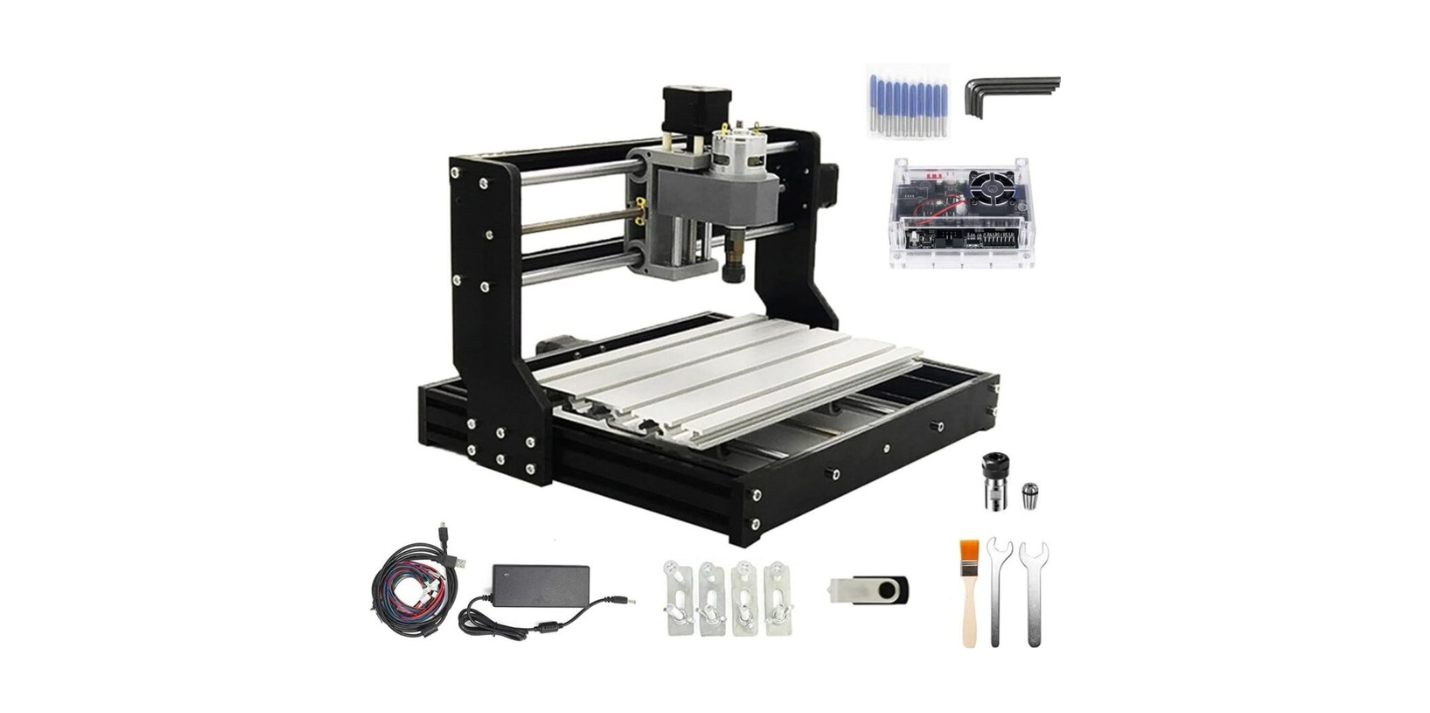
?Have you noticed how a small machine making a perfect part in a garage starts to look less like a hobby and more like the future of industry?

Fabrication Intelligence And The Future Of Distributed Manufacturing
You will find this topic both practical and oddly intimate. It concerns machines that not only make things but also think about making things, and the way those machines scatter out of huge plants into neighborhoods, hospital basements, and shipping containers. You will be tempted to imagine sparks and wrenches; you may laugh a little when the reality is algorithms, sensors, and a lot of data.
Why this matters to you
This isn’t merely a technical conversation for engineers who wear safety glasses in their profiles. It touches how you get products, what local economies look like, and whether the spare part you need will arrive tomorrow or in three months. You will care because it changes where manufacturing jobs go, what you can customize, and how resilient the supply chain becomes.
What is Fabrication Intelligence?
Fabrication Intelligence refers to the combination of advanced sensors, data-driven algorithms, and adaptive control systems applied to fabrication processes. It’s the brain you give to a machine so it can learn from production, self-correct, and optimize without a human standing over it with a clipboard.
You will recognize Fabrication Intelligence when a machine adjusts tool paths mid-print, predicts part failures, or suggests a new design tweak because a pattern in the data hints a small change will cut scrap in half.
Key components
You will encounter several repeating elements: real-time data capture, machine learning models, digital twins, and automation controllers that actually respond to predictions. These parts together make a feedback loop where the machine both acts and learns from acting.
What is Distributed Manufacturing?
Distributed manufacturing means moving production out of centralized mega-factories and into many smaller, networked production sites. These could be local micro-factories, retail stores with printing labs, mobile fabrication units, or even community maker spaces that produce for real markets.
You will see distributed manufacturing as a pragmatic way to shorten supply chains, reduce lead times, and tailor products to local needs. It takes the idea of “mass production” and says: “Let’s make production fit the geography and the customer, not just the other way around.”
Types of distributed facilities
You will find a spectrum:
- Micro-factories: compact, high-automation shops near urban centers.
- Pop-up and mobile units: for field repairs or events.
- Peer-to-peer maker networks: enthusiasts who contribute production capacity.
- Embedded manufacturing: production equipment inside retailers, hospitals, or construction sites.
Each type will serve different markets, and each will require different levels of Fabrication Intelligence to ensure consistent quality.
How Fabrication Intelligence and Distributed Manufacturing Fit Together
When you combine Fabrication Intelligence with distributed manufacturing, you create a system where many small sites maintain high-quality standards and adapt to local demand. Fabrication Intelligence becomes the glue that ensures parts made in different locations fit the same spec and will be accepted on an assembly line somewhere else.
You will appreciate this synergy because it solves two big problems at once: consistency across locations, and autonomy for local producers. One enables trust in a network; the other empowers rapid delivery and customization.
Comparison: Centralized vs Distributed with Fabrication Intelligence
| Feature | Centralized Manufacturing | Distributed Manufacturing with Fabrication Intelligence |
|---|---|---|
| Speed to customer | Slower, long shipping | Faster, local fulfillment |
| Scalability | Scale via large factories | Scale via network effects |
| Quality control | Centralized QC processes | AI-driven distributed QC and standardization |
| Customization | Limited, expensive | High, cost-effective |
| Resilience | Vulnerable to single-point failure | More resilient, redundant sites |
| Capital intensity | High upfront investment | Lower per-site cost, distributed investment |
You will find this table useful when arguing with procurement or when trying to justify a small pilot on the shop floor.
Key Technologies Enabling Fabrication Intelligence
You will need an understanding of the technological building blocks. These technologies are not magical; they are incremental, often messy, and frequently involve duct tape in early prototypes.
Core technologies (brief descriptions)
- Machine Learning (ML): Learns from production data to predict failures and optimize parameters.
- Digital Twins: Virtual models of machines, processes, or parts that simulate behavior before committing to real work.
- Internet of Things (IoT): Sensors and actuators that feed the data pipeline.
- Edge Computing: Local computation that reduces latency and bandwidth needs.
- Advanced Robotics & CNC: Machines that can perform complex tasks with high precision.
- Additive Manufacturing (3D Printing): Flexible manufacturing for small batches and bespoke parts.
- Advanced Metrology: In-line measurement systems that detect deviations early.
Technology-role-impact table
| Technology | Role | Direct Impact |
|---|---|---|
| ML | Predicts, optimizes | Lower downtime, improved quality |
| Digital Twin | Simulates | Faster commissioning and fewer iterations |
| IoT | Data collection | Enables feedback loops |
| Edge Computing | Real-time control | Safer autonomous operations |
| Additive Manufacturing | Flexible production | Rapid prototyping and short runs |
| Advanced Metrology | Measurement | Reduced scrap and rework |
You will want to prioritize these technologies based on your use case: a remote repair depot needs different capabilities than a city micro-factory making consumer goods.
Benefits of Combining Fabrication Intelligence with Distributed Manufacturing
The headline benefits are faster delivery, better customization, increased resilience, and lower waste. But the details are where you will be both pleased and occasionally bewildered.
Direct benefits
- Reduced lead times: Parts made locally can reach customers quickly.
- Improved quality consistency: Algorithms enforce standards across sites.
- Lower transportation emissions: Fewer cross-border shipments mean fewer trucks and planes.
- On-demand production: You will order what you need when you need it, reducing inventory costs.
- Local economic growth: Small production centers create local jobs and skills.
Practical benefits table
| Benefit | Why it matters to you | Example |
|---|---|---|
| Lead time reduction | Faster response to customer needs | Replacement aircraft part made nearby vs weeks-long wait |
| Customization | Differentiation in competitive markets | Tailored orthotics manufactured to client scan |
| Resilience | Less single-point risk | Local backups when global supply lines fail |
| Cost efficiency | Lower inventory and logistics costs | Small batch runs profitable through automation |
| Sustainability | Reduced carbon footprint | Less shipping, more circularity in materials |
You will notice that the numbers matter — reduced days translate to fewer lost sales and happier customers. But culture and process matter too; technology can’t fix a stubborn supplier relationship unless you make changes.

Challenges and Limitations
No matter how charming the idea of local factories sounds, real-world constraints remain. You will run into technical, regulatory, and human challenges.
Key challenges
- Quality standardization across varied sites.
- Intellectual property protection and secure data sharing.
- Skilled labor availability and training in many small sites.
- Integration with legacy systems and enterprise ERPs.
- Regulatory compliance across jurisdictions.
- Cybersecurity threats to distributed systems.
You will want to take each of these seriously, because the failure modes — bad parts, leaked designs, or disrupted production — show up in customer complaints and lawsuits.
Challenges and mitigations table
| Challenge | What can go wrong | Mitigation strategies |
|---|---|---|
| Quality variance | Parts don’t meet spec | Centralized models, inline metrology, ML-based QC |
| IP leakage | Designs copied | Secure enclaves, watermarking, contractual networks |
| Skills gap | Poor process execution | Remote guidance, training-as-a-service, human-in-the-loop |
| Regulatory complexity | Noncompliant products | Certification frameworks, modular compliance templates |
| Cybersecurity | Data breaches, ransomware | Zero trust, segmented networks, regular audits |
You will need a balanced approach: invest in automation and analytics while also tightening process controls and contracts.
Business Models and Economic Impacts
The economics of distributed manufacturing differ from the old mass-manufacturing playbook. You will see new revenue streams, altered CAPEX needs, and shifting valuation metrics.
Business model patterns
- Manufacturing-as-a-Service (MaaS): You will pay for production capacity by the hour or job.
- Localized Co-manufacturing: Partners host standardized equipment and produce under license.
- On-demand Spare Parts: Pay-per-print spare parts produced near the point-of-need.
- Customization Premiums: Charge more for bespoke features with quick turnaround.
- Subscription for Maintenance: Ongoing service contracts for machine fleets.
You will be seduced by lower capital expenditure per site, but you will also manage more vendor relationships and coordination complexity.
Revenue and cost table
| Model | Revenue streams | Cost centers |
|---|---|---|
| MaaS | Usage fees, subscriptions | Equipment, maintenance, platform ops |
| Co-manufacturing | Royalties, shared margin | Quality control, licensing compliance |
| On-demand parts | Per-part fees, emergency premiums | Logistics, small-batch inefficiencies |
| Customization | Premium pricing | Design services, iteration costs |
You will have to calculate whether decentralization reduces total cost of ownership or simply shifts it from large capital to distributed operating expenses.
Case Studies and Examples
You will want stories. Facts help convince management; anecdotes nudge you to action. Here are types of real-life situations where Fabrication Intelligence meets distributed manufacturing.
Example scenarios
- Local medical device production: Hospitals with certified 3D printing labs produce custom surgical guides when global suppliers are delayed.
- Automotive service hubs: Regional centers manufacture discontinued spare parts using validated digital inventories.
- Aerospace on-site repairs: Remote airfields print repair patches for non-critical components, validated with digital twin simulations.
- Consumer product customization: Retail stores produce personalized accessories on demand with AI-calibrated printers.
You will benefit from thinking of these as templates rather than unique miracles. They can be reproduced with the right standards, partnerships, and controls.
Implementation Roadmap for Organizations
You will not flip a switch and wake up with a distributed manufacturing network. The transition requires deliberate steps and patient piloting.
Suggested phased roadmap
- Assessment: Map current production, identify potential local sites, and quantify demand for on-demand parts.
- Pilot: Launch a small-scale pilot for a single product family using a handful of sites with Fabrication Intelligence overlays.
- Scale Process & Tech: Roll out standardized digital twins, ML models, and secure data pipelines.
- Certification & Compliance: Develop programs for site certification and regulatory compliance.
- Network Optimization: Use analytics to place capacity where demand is most likely, and create routing rules for jobs.
- Continuous Improvement: Monitor KPIs and improve machine learning models and SOPs.
You will find that pilots with clear success metrics — cost per part, lead time, scrap rate — accelerate buy-in.
Roadmap milestones table
| Phase | Key tasks | Success metric |
|---|---|---|
| Assessment | Demand mapping, tech audit | Business case with ROI estimate |
| Pilot | Implement Fabrication Intelligence on 3 sites | <5% quality variance vs baseline< />d> |
| Scale | Standardize tooling and software | 90% site certification completion |
| Compliance | Regulatory approvals | Pass inspections/certifications |
| Optimization | Real-time job routing | 20% lead time reduction network-wide |
You will need cross-functional teams: operations, IT, legal, and front-line technicians.
Social and Environmental Implications
You will appreciate that distributed manufacturing has social consequences beyond the bottom line. It can reshape communities, employment patterns, and environmental footprints.
Social impacts
- Job creation in localities previously bypassed by big plants.
- Demand for new hybrid roles: technician-analysts who combine hands-on skills with data fluency.
- Potential for uneven benefits if networks favor already affluent regions.
You will have to plan for equitable deployment to avoid reinforcing existing disparities.
Environmental impacts
- Reduced logistics emissions and lower waste from overproduction.
- Potential for material circularity if local facilities accept returns and recycle feedstock.
- Increased energy use if many small sites are less efficient than large plants unless they optimize operations.
You will balance sustainability gains with energy and material flows; metrics matter.
Policy, Regulation and Standards
You will discover that regulators are often a step behind innovation. For Fabrication Intelligence and distributed manufacturing to scale, you will need clear standards and compliant pathways.
Regulatory priorities
- Certification for distributed production sites, possibly tiered by the risk profile of the product.
- Standards for digital twins and data integrity so cross-site validation is trustworthy.
- IP frameworks that allow flexible production while protecting creators.
You will be well advised to engage with industry consortia and standards bodies early, rather than trying to bolt compliance on later.
Suggestions for policymakers
- Create sandbox environments for pilots to test compliance frameworks.
- Encourage interoperable data standards and secure sharing protocols.
- Support workforce retraining programs with incentives for regions adopting micro-factories.
You will find that progressive policy reduces friction and speeds safe adoption.
Skills, Workforce and Training
You will be hiring a different mix of people: machinists who understand cloud dashboards, inspectors who read sensor streams, and designers who think in parametric families.
Roles and skills needed
- Machine Operator 2.0: Hands-on with sensors, capable of basic ML model checks.
- Process Engineer: Designs digital twins and translates metrics into adjustments.
- Data Technician: Maintains edge devices and analytics pipelines.
- Quality Auditor: Interprets automated QC alerts and performs audits.
- Cybersecurity Specialist: Protects distributed nodes and IP.
You will face a skills gap; training programs will be essential.
Training and development approaches
- Micro-credentials for specific skills (e.g., digital twin setup).
- Remote guidance and AR-assisted maintenance to extend expertise.
- Apprenticeships in local micro-factories to build hands-on capability.
You will invest in people as much as in machines.
Skills mapping table
| Role | Core skills | Training methods |
|---|---|---|
| Machine Operator 2.0 | Machine setup, sensor calibration, basic ML checks | On-the-job training, e-learning |
| Process Engineer | Digital twins, process optimization | Formal courses, project-based learning |
| Data Technician | Edge ops, telemetry pipelines | Certifications, vendor training |
| Quality Auditor | Metrology, statistical process control | Workshops, cross-site rotations |
| Cybersecurity Specialist | Network segmentation, endpoint protection | Advanced certifications, simulated attacks |
You will save money long-term by upskilling instead of hiring only rare experts.
Future Scenarios
You will want a picture of what the next decade could hold. Here are plausible scenarios, each shaped by how effectively Fabrication Intelligence and distributed manufacturing are integrated.
Optimistic (5–10 years)
You will see resilient local networks that satisfy most last-mile demands. Cities will host clusters of micro-factories offering customization and quick repairs. Standardized digital twins and secure sharing make cross-site production seamless.
Pragmatic (5–15 years)
You will observe a mixed landscape where some industries centralize and others go local. Aerospace and pharmaceuticals stay centralized for high-certainty components, while consumer goods and spare parts shift to distributed models.
Pessimistic (5–10 years)
You will find fragmented deployments with uneven quality and data silos. IP disputes, lack of standards, and cybersecurity incidents slow adoption. That would mean more pilots and fewer scaled networks.
You will probably live somewhere between pragmatic and optimistic, changing strategies as technology, policy, and customer expectations evolve.
How You Can Prepare (Practical Guidance)
Whether you lead operations, work as an engineer, or stand in for management at awkward meetings, here are actions you can start today.
Checklist for immediate action
- Identify candidate products for local production: low-volume, high-urgency, or high-customization.
- Run a pilot with clear KPIs: quality, lead time, cost per part.
- Invest in edge analytics and secure data pipelines.
- Start workforce training focusing on hybrid skills.
- Join or form consortia to help shape standards and share best practices.
You will get far by starting small and making the pilot repeatable.
Quick wins
- Convert one spare parts backlog item to an on-demand process and measure results.
- Implement inline metrology on a single line to reduce scrap.
- Establish a secure file transfer and model versioning system for designs.
You will build credibility with measurable savings and improved lead times.
Final Thoughts
You will likely find that Fabrication Intelligence combined with distributed manufacturing is less about robots taking over and more about giving better tools to people and communities. It’s about making systems that are flexible and forgiving, that let a small shop in your town make a part that once required an international shipment and a week of waiting.
In the end, you may laugh at the old image of dramatic factory scenes from movies. The new drama is a bit quieter: a printer in a converted storefront, a digital twin running training cycles at night, an ML model that tells you when to change a cutter. It’s not glamorous in a Hollywood sense, but it will matter deeply to your business, your community, and your patience the next time you need a replacement part on short notice.
You should take one thing away: the future will reward the curious and the prepared. If you start small, instrument everything, and treat data as the raw material it is, you will find your local manufacturing story becomes not just possible, but profitable and, if you like to exaggerate at dinner parties, almost inevitable.